


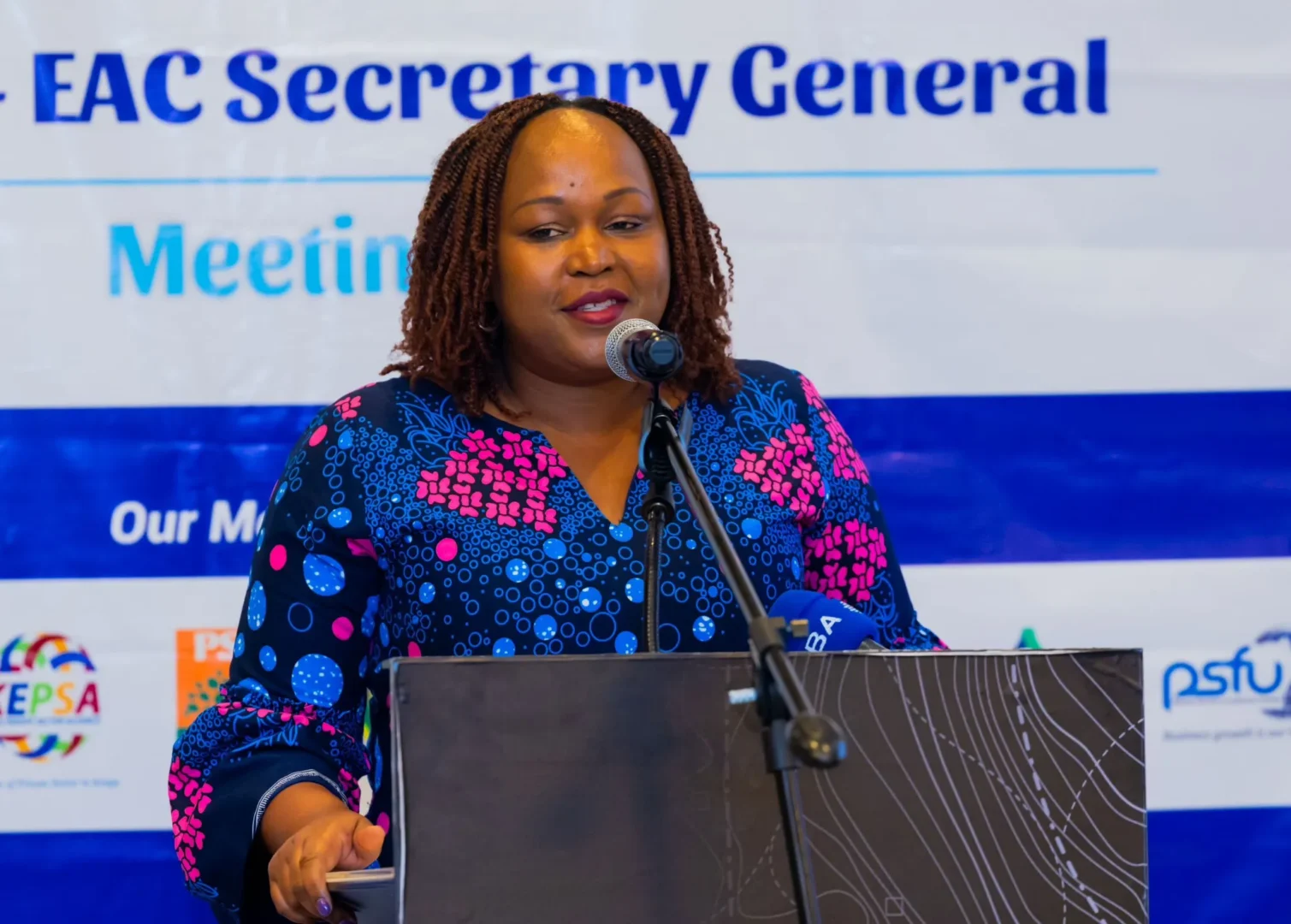
NAIROBI, Kenya — The Government of Kenya has formally announced that it will vacate the position of the East African Community (EAC) Secretary-General when the current term expires in April next year.
The decision, communicated through the Ministry of EAC, Arid and Semi-Arid Lands (ASALs), and Regional Development, puts an end to persistent rumors that Nairobi was lobbying for a tenure extension for Ms. Veronica M. Nduva, the current Secretary-General.
Ms. Nduva was appointed in May 2024 to serve out the remainder of the five-year term originally held by Dr. Peter Mathuki, who was recalled by President William Ruto and subsequently appointed as Kenya’s Ambassador to Russia.
Under the EAC Treaty, the position of Secretary-General is a non-renewable five-year term. Because Dr. Mathuki’s term began in April 2021, the technical expiration of that mandate falls in April 2026.
Regional diplomatic sources had recently suggested that because Ms. Nduva had served less than two years of the term, Kenya might seek a three-year “completion extension.”
However, Nairobi has firmly rejected this path, citing the need to uphold the bloc’s rotational principles and treaty integrity.
Also Read: Martha Karua’s deportation from Tanzania exposes cracks in East African integration
“Kenya remains a steadfast believer in the rule of law and the institutional frameworks of the EAC,” a senior official from the Ministry of EAC Affairs stated. “There is no talk of an extension. We are preparing for a smooth handover in April to ensure the Community’s administrative stability.”
Context of the transition
The upcoming relinquishment comes at a time when the EAC is navigating complex internal dynamics, including:
- Financial sustainability: Member states are currently debating a sustainable funding model to clear millions in arrears.
- Expanding membership: With the recent integration of Somalia and the Democratic Republic of Congo (DRC), the Secretariat is under pressure to harmonize regional trade and security protocols.
- Rotational fairness: The post of Secretary-General is traditionally rotated among the partner states (Burundi, DRC, Kenya, Rwanda, South Sudan, Tanzania, Uganda, and Somalia). By stepping down as scheduled, Kenya paves the way for the next member state—potentially South Sudan or the DRC—to nominate a candidate.
What’s at stake?
The Secretary-General is the principal executive officer of the Community and serves as the Secretary to the Summit of Heads of State.
The officeholder is responsible for the day-to-day management of the Secretariat and the implementation of programs related to the Customs Union and Common Market.
By rejecting a term extension, President William Ruto’s administration is signaling a “leadership by example” approach, discouraging the “tenure elongation” culture that has occasionally sparked friction within regional bodies.
