


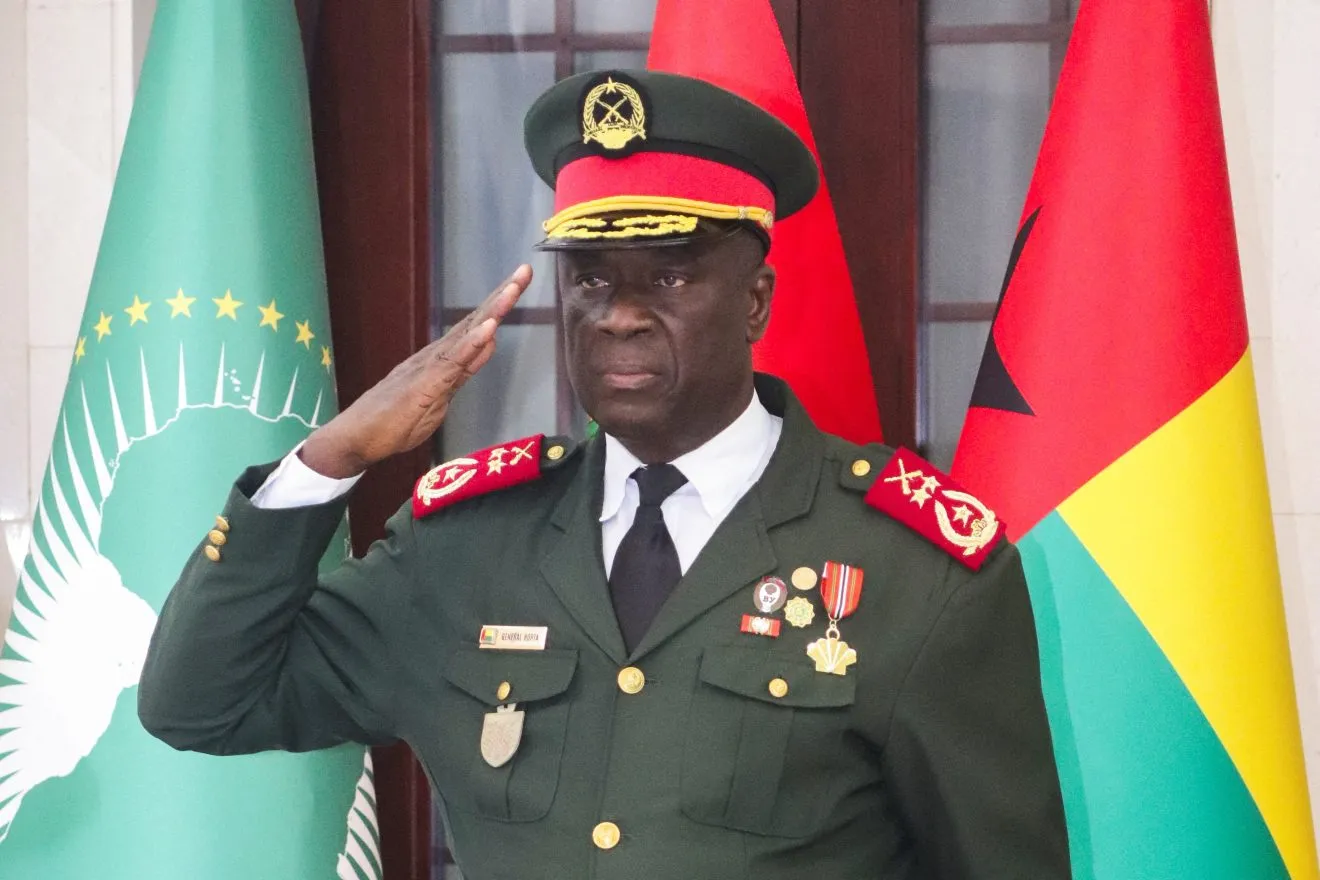
BISSAU, Guinea-Bissau — Major-General Horta Inta-a was installed as Guinea-Bissau’s transitional president on Thursday, a day after soldiers executed a swift power grab that toppled the civilian government and preempted the announcement of weekend election results.
This military takeover marks the ninth coup in West and Central Africa in the last five years, continuing the pattern of political instability in the cocaine transit hub.
The self-styled “High Military Command for the Restoration of Order,” the junta responsible for the coup, announced on state television Wednesday that they had seized power from President Umaro Sissoco Embalo. They justified the move by citing a destabilization plot allegedly involving politicians and “drug barons.”
Transitional leadership and security concerns
General Inta-a, who was flanked by other military officials and dressed in uniform during his first public appearance, echoed the junta’s justification.
He stated that the coup was necessary to stave off a plot by “narcotraffickers” to “capture Guinean democracy” and declared that the transition would last for one year, beginning immediately. Later on Thursday, he appointed Major-General Tomas Djassi as the new army chief of staff.
Ousted President Umaro Sissoco Embalo has since arrived in Senegal aboard a special flight, following an intervention by the West African regional bloc, Senegal’s foreign ministry confirmed late Thursday.
Prior to his evacuation, an army statement published Thursday said Embalo and other top officials were “under the control of the High Military Command.”
The power grab occurred just one day before provisional results were due to be announced in the presidential race between Embalo and his top challenger, political newcomer Fernando Dias.
Before the coup announcement, gunfire had been reported near the electoral commission headquarters and presidential palace in Bissau.
Rival alleges ‘false coup attempt’
The opposition quickly issued counter-claims regarding the nature of the coup. Presidential challenger Fernando Dias accused Embalo in a video statement of orchestrating a “false coup attempt” to derail the election, believing he was destined to lose the vote.
The coalition backing Dias demanded that authorities be allowed to release the results from Sunday’s election and called for the release of former Prime Minister Domingos Simoes Pereira, who was detained on Wednesday.
Security forces reportedly used tear gas and fired live rounds to break up small protests outside the building where Pereira is believed to be held and near Dias’s home.
International outcry over drug trafficking and instability
The coup drew swift and widespread international condemnation:
- African Union (AU) Chairperson Mahmoud Ali Youssouf condemned the coup and called for the release of Embalo “and all detained officials.”
- ECOWAS, the West African regional bloc, also condemned the coup and held an emergency virtual meeting to discuss the situation, later suspending Guinea-Bissau from its decision-making bodies.
- The European Union urged the restoration of constitutional order and demanded that the vote count be allowed to proceed.
Also Read: Guinea’s coup leader enters presidential race, breaking promise to cede power to civilians
The military takeover is the latest in a chronic cycle of political instability for the small coastal nation. With at least nine coups or attempted coups since 1974, Guinea-Bissau is a recognized transit point for cocaine destined for Europe.
Lucia Bird Ruiz-Benitez de Lugo, director of the Observatory of Illicit Economies in West Africa, stated that the cocaine trade’s influence on the country’s governance is unlikely to diminish: “Major traffickers financed electoral campaigns in these elections. There is no sign the impact of cocaine on politics and governance in Bissau will decrease,” she said.
The whereabouts of election observers from the African Union and ECOWAS, including former Nigerian President Goodluck Jonathan, remain a concern, with Nigeria’s foreign ministry warning that the safety of observers must be guaranteed and that “those behind this act will be held accountable for their actions.”
