


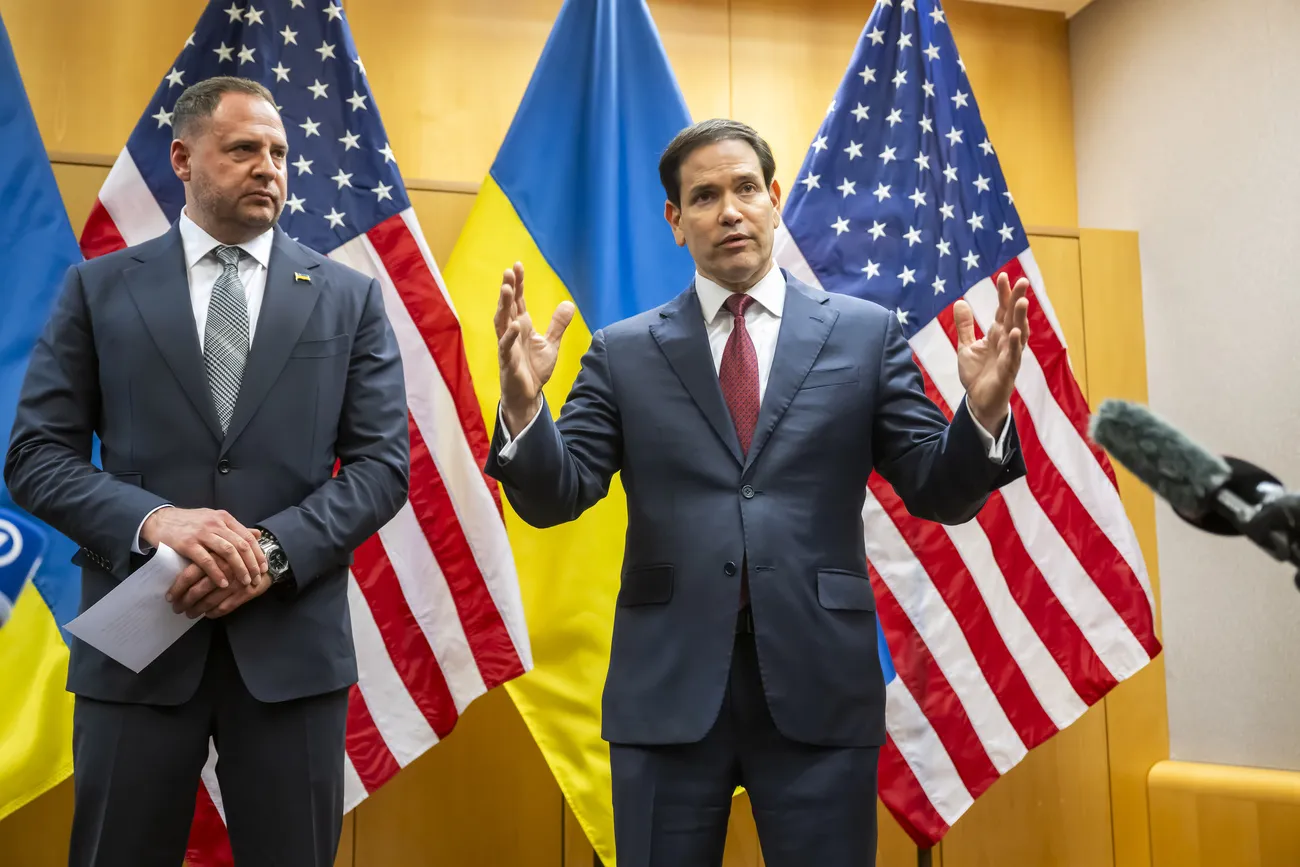
GENEVA, Switzerland — Negotiations between US and Ukrainian representatives in Geneva have concluded, yielding what officials called an “updated and refined peace framework.”
The countries announced on Sunday that the talks were “highly productive” and that work would continue over the coming days to finalize a peace plan intended for eventual presentation to Russia.
US Secretary of State Marco Rubio praised the efforts to hone the plan’s details, stating there had been a “tremendous amount of progress” but acknowledged there was “still some work to be done” before a final agreement could be formalized.
Zelensky warns against recognizing theft
The push to finalize the agreement comes as Kyiv continues to fiercely resist any proposal that legitimizes Russian territorial gains.
Addressing the Swedish parliament on Monday morning, Ukrainian President Volodymyr Zelensky labeled the current phase a “critical moment” for his nation.
While stating there were “signals that President [Donald] Trump’s team is hearing us,” Zelensky issued a stern warning against the core demands of the Kremlin.
“Putin wants legal recognition for what he has stolen, to break the principle of territorial integrity and sovereignty. That’s the main problem,” he said, adding that the Russian president wants it not only from Ukraine “but from the whole world.”
Zelensky confirmed that sensitive issues, such as the release of all Ukrainian prisoners of war, remain on the table, emphasizing that achieving “real peace” requires further dedicated negotiation.
The contentious leaked provisions
The US-backed plan drew intense skepticism from European allies and Kyiv upon being leaked last week, primarily due to terms seen as too favourable to Moscow. Controversial provisions in the draft include:
- Territorial concessions: Ukraine would agree to international recognition of de facto Russian control of the Crimea peninsula (annexed in 2014), the Luhansk region, and the Donetsk region. The plan also suggests freezing the borders of the southern Kherson and Zaporizhzhia regions along the current battle lines.
- Military reduction: Ukraine would agree to limit the size of its military to 600,000 personnel, down from approximately 880,000 now.
- NATO pledge: The document includes a pledge for Ukraine not to seek membership of Nato, instead receiving unspecified “reliable security guarantees.”
- Russian reintegration: The draft suggests Russia will be “reintegrated into the global economy” through the lifting of sanctions and by inviting Russia to rejoin the G7 group, thereby making it the G8 again.
Allies insist on separate track
Positive accounts of the Geneva talks were tempered by European leaders insisting that their interests must be fully represented.
Speaking to reporters late on Sunday, Secretary Rubio had stated the teams had a “very good day” and that they had achieved the goal of narrowing “open items” in a “substantial way.”
However, Europe stressed that consensus is mandatory for any final action.
Finnish President Alexander Stubb posted on X: “The negotiations were a step forward, but there are still major issues which remain to be resolved.” He stressed that “Any decision falling in the remit of EU or Nato will be discussed and decided by EU and Nato members in a separate track.”
Also Read: Trump urges Putin: “Stop shooting” and sign Ukraine peace deal
German Foreign Minister Johann Wadephul called the meetings a “decisive success” for Europeans, adding to Deutschlandfunk radio: “It was clear from the outset, as we have repeatedly said, that any agreement must not be reached over the heads of Europeans and Ukrainians.”
European Council President Antonio Costa echoed this sentiment: “A united and coordinated EU position is key in ensuring a good outcome of peace negotiations – for Ukraine and for Europe,” he wrote on X.
Trump’s pressure and Moscow’s silence
The push for a quick agreement came hours after President Donald Trump accused Ukraine’s leaders of showing “zero gratitude” for US efforts.
While Trump had previously set an aggressive deadline, Secretary Rubio told reporters on Sunday he was “very optimistic that we’re going to get there in a very reasonable period of time very soon,” indicating that the timeline remained fluid.
Meanwhile, Moscow has yet to acknowledge the outcome, as Kremlin spokesman Dmitry Peskov told journalists on Monday that “Moscow has not yet received any information about the outcome of the US-Ukraine talks in Geneva.”
