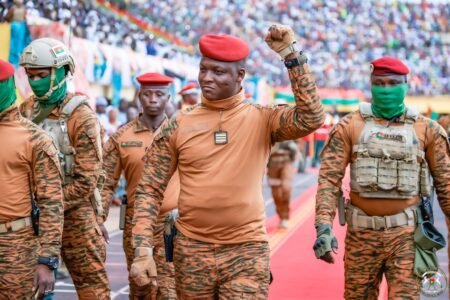


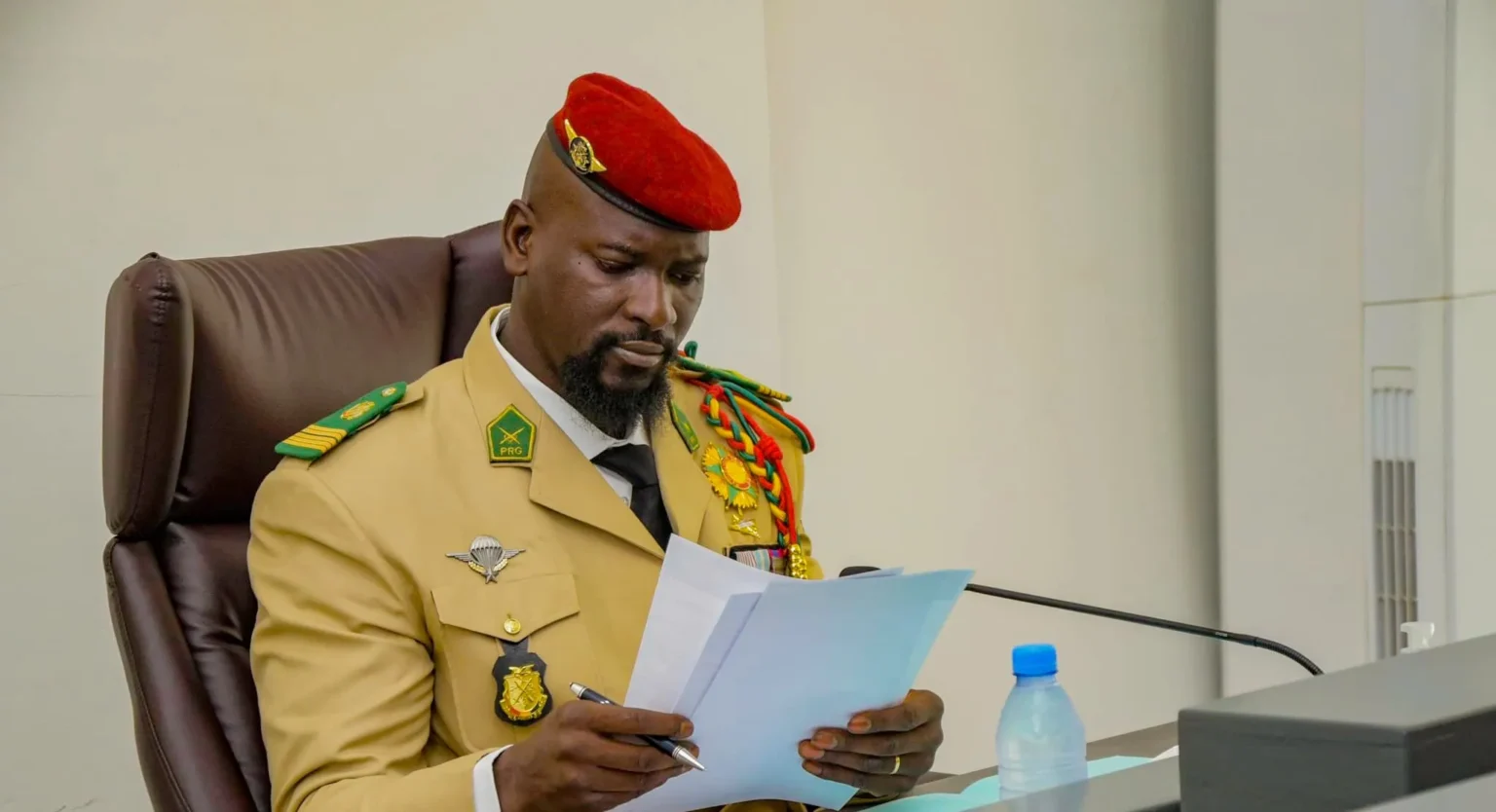
CONAKRY, Guinea — Colonel Mamadi Doumbouya, the military commander who seized power in a coup four years ago, has formally entered the presidential race, reneging on an earlier public commitment to restore civilian rule without seeking office himself.
On Monday, Colonel Doumbouya, flanked by soldiers and wearing his signature black sunglasses, submitted his official candidacy documents at the Supreme Court. He made no public statement regarding the move.
Electoral exclusions and financial barriers
His bid comes amidst mounting concerns regarding the integrity of the forthcoming December election. Two of Guinea’s most significant opposition parties, RPG Arc en Ciel and UFDG, have been barred from participating in the contest.
The credibility of the election has been further strained by a controversial financial requirement. Guineans reacted with shock last month upon the announcement that presidential candidates would be required to pay a substantial deposit of 875 million Guinean francs ($100,000; £75,000) to stand.
Although the previous deposit was nearly as high at 800 million francs, political analysts had hoped for a reduction to encourage broader participation in what were intended to be historic elections.
The broken pledge
Colonel Doumbouya’s candidacy directly contradicts a solemn assurance he gave four years ago following the 2021 coup, when he deposed then-President Alpha Condé.
At that time, he had publicly pledged to hand power back to civilians, making this categorical statement:
“Neither I nor any member of this transition will be a candidate for anything… As soldiers, we value our word very much.”
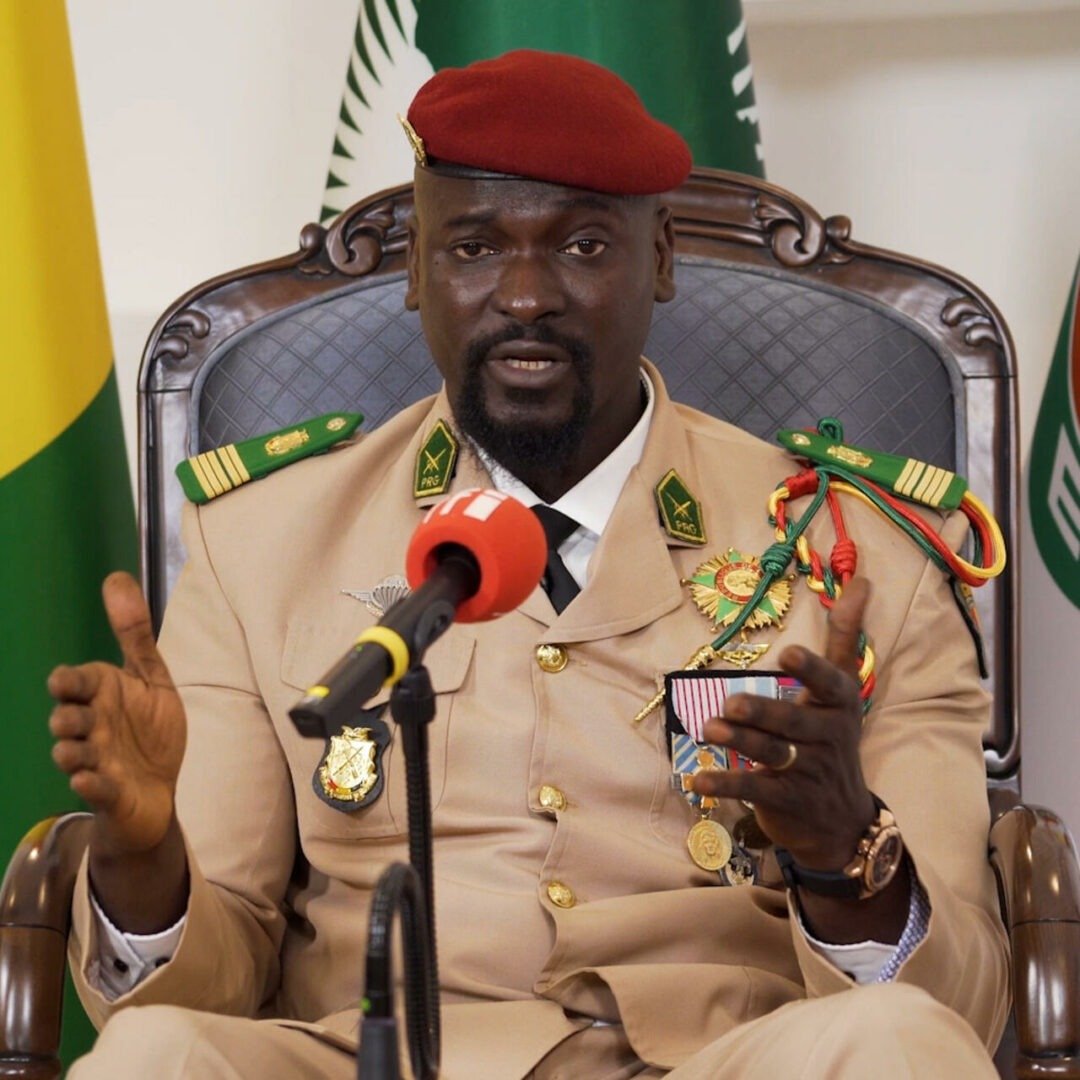
However, the upcoming election is being held under a new national constitution, which conveniently permits Colonel Doumbouya to seek the presidency.
Crackdown on dissent
Since assuming leadership, the Guinean authorities under Colonel Doumbouya’s military junta have been widely criticized for escalating crackdowns on peaceful dissent.
This suppression includes attempts to mobilize public support for a prompt return to democratic governance.
Also Read: From reformer to autocrat: How authoritarian regimes adapt — The case of Samia Suluhu
The junta has faced accusations of suspending critical media outlets, imposing restrictions on internet access, and brutally suppressing public demonstrations.
This pattern of behavior is notably similar to the issues Colonel Doumbouya used to justify overthrowing 83-year-old President Alpha Condé, which included charges of pervasive corruption, human rights violations, and economic mismanagement.
The commander’s background
Before orchestrating the 2021 coup, Colonel Doumbouya was a middle-ranking soldier. His 15-year military career included high-profile operational deployments in Afghanistan, Ivory Coast, Djibouti, and the Central African Republic.
He also conducted close protection missions in various international locations, including Israel, Cyprus, the UK, and Guinea.
At the age of 40, Colonel Doumbouya is currently the youngest head of state on the African continent.
The December election will proceed without several prominent Guinean political figures, such as former President Alpha Condé and former Prime Ministers Cellou Dalein Diallo and Sidya Touré, all of whom are currently residing abroad.