


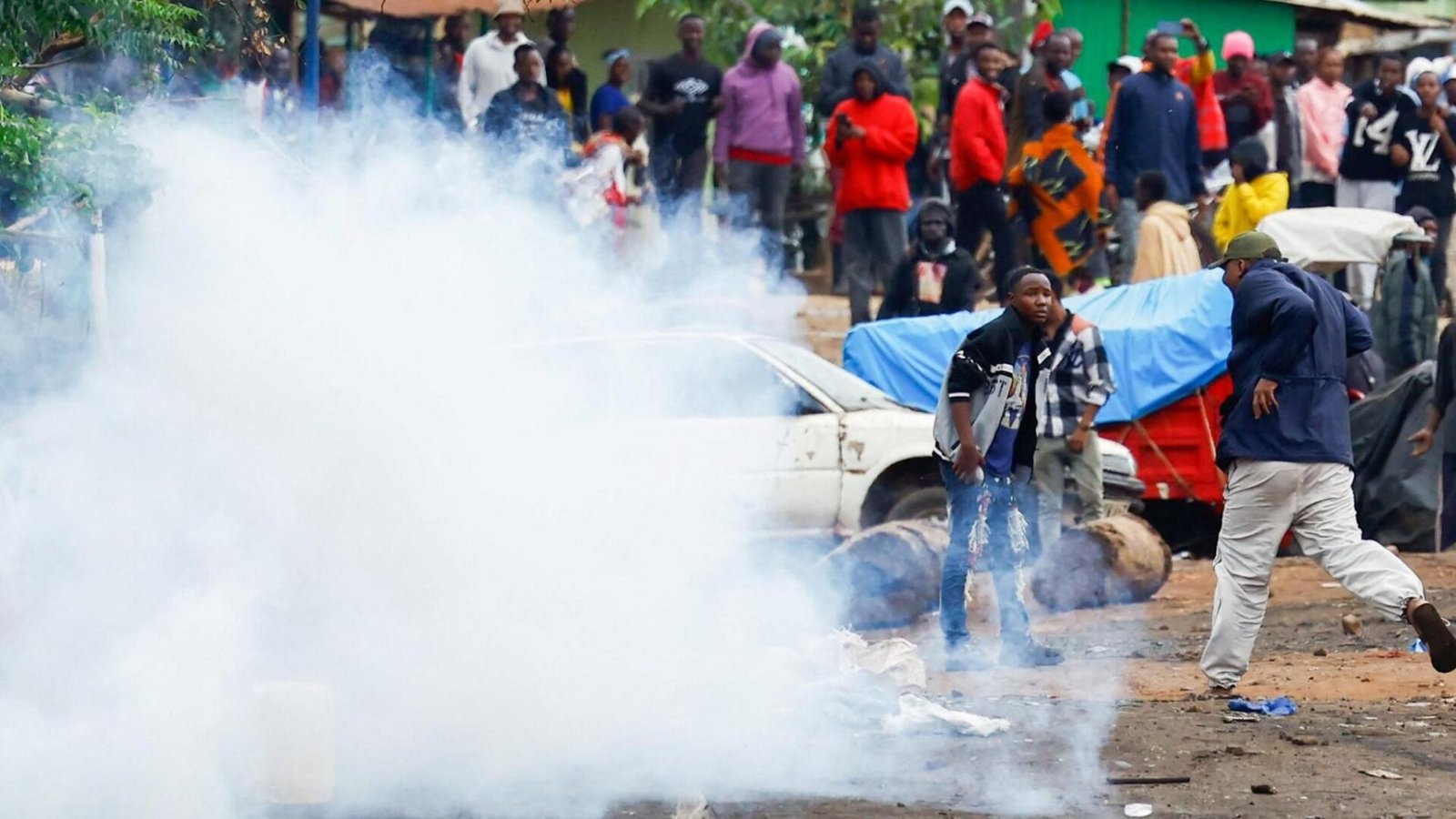
DAR ES SALAAM, Tanzania — Violent protests have erupted across Tanzania following Wednesday’s general election, with the main opposition party claiming that hundreds of people have been killed in clashes with security forces.
The widespread violence and a nationwide internet shutdown have made it extremely difficult for journalists and human rights groups to verify the escalating death toll.
Contested casualty figures
The opposition Chadema party has cited grim figures regarding the unrest: a spokesperson told news agency AFP that “around 700” people had been killed in clashes.
Separately, a diplomatic source in Tanzania told Vivid Voice News there was credible evidence that at least 500 people had died.
Reporters seeking to confirm casualties have been hampered, with hospitals reportedly refusing to give out information.
A source at one hospital in Dar es Salaam told this publication it had been overwhelmed with casualties since Thursday, with most public hospitals in the city being in the same position, reportedly with full morgues.
Government response and crackdown
The government has moved to downplay the scale of the violence and has imposed an extended curfew to quell the unrest. Foreign Minister Mahmoud Kombo Thabit described the violence as a “few isolated pockets of incidents here and there” and asserted that “security forces acted very swiftly and decisively to address the situation.”
The Minister justified the communications blackout, telling Vivid Voice News that the internet disruption was necessary to stop vandalism and save lives, adding: “We are [also] continuing to receive reports of vandalised properties.”
Chadema’s director of foreign and diaspora affairs, John Kitoka, voiced grave fears for the party’s officials and protesters:
“The security forces] are tracking down all our leaders and some have had to leave the country. These people kill with impunity,” Kitoka told Vivid Voice News.
“We remain concerned that the run-up to the elections was marked by harassment, abductions and intimidation of opposition figures, journalists and civil society actors,” he added, also expressing fears that “massacres are carried out during night hours when no-one is there to witness them.”
Political background and international concern
The demonstrations have seen mostly young protesters take to the streets in cities across Tanzania to denounce the election as unfair. Critics accuse the ruling Chama Cha Mapinduzi (CCM) party of undermining democracy by suppressing the main opposition leaders, thereby bolstering President Samia Suluhu Hassan’s expected victory.
The two main opposition contenders were Tundu Lissu (Chadema), who is currently being held on treason charges he denies, and Luhaga Mpina (ACT-Wazalendo), who was excluded on legal technicalities.
In Zanzibar, the semi-autonomous archipelago, the CCM’s Hussein Mwinyi was declared the winner with nearly 80% of the vote, a result the opposition has also labelled “massive fraud,” according to the AP news agency.
Tourists on the island are reportedly stranded at the airport, with protests on the mainland and the internet shutdown delaying flights.
The international community has reacted with concern: the UN has called on Tanzania’s security forces to refrain from using unnecessary force, and foreign ministers from the UK, Canada, and Norway issued a joint statement urging authorities “to act with maximum restraint” and respect “freedom of expression.”
President Hassan came to power in 2021 as Tanzania’s first female president following the death of her predecessor, John Magufuli. While initially praised for easing political repression, her government has since been accused of targeting critics through arrests and abductions, leading to a narrowed political space.
Official results are anticipated on Saturday, with President Hassan widely expected to secure the victory for the CCM party, which has governed the country since independence in 1961.
