
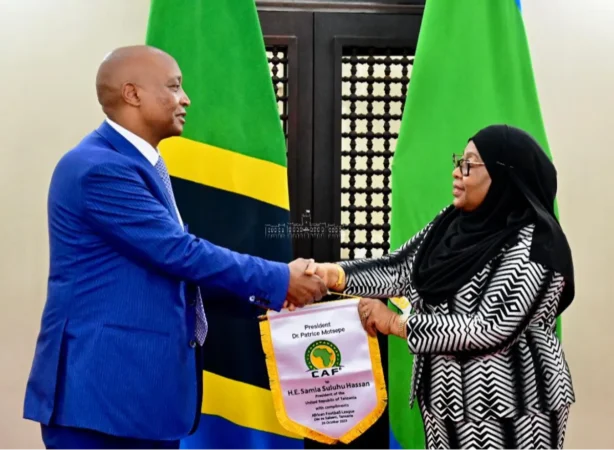



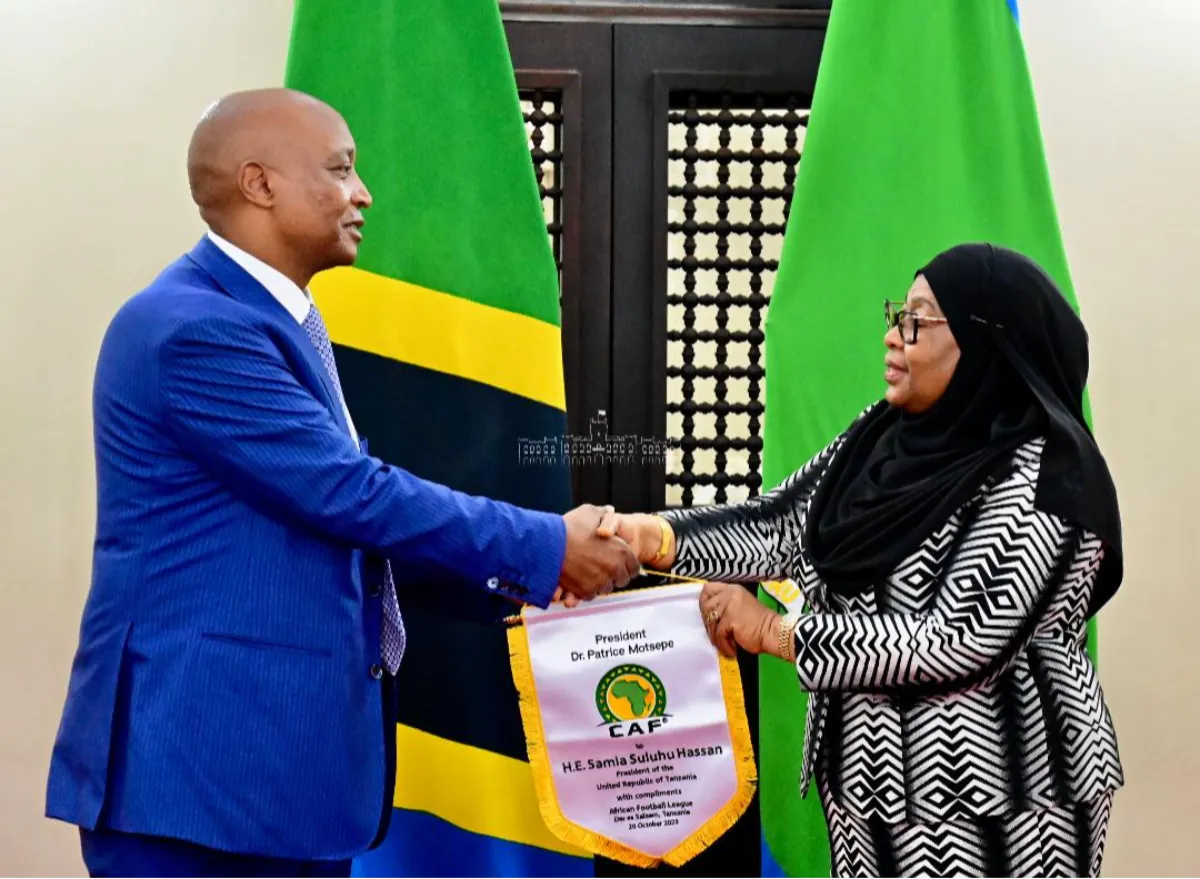
DAR ES SALAAM, Tanzania — Kenya has suffered a significant administrative setback in preparations for the 2027 Africa Cup of Nations after the Confederation of African Football (CAF) reportedly relocated the tournament’s coordination headquarters from Nairobi to Dar es Salaam, Tanzania.
Sources familiar with the development told Vivid Voice News that the decision is intended to streamline coordination between the Tanzania Football Federation, the Tanzanian government and the tournament’s Local Organising Committee (LOC).
The reported relocation comes as Kenya, Tanzania and Uganda intensify preparations for the continental competition, which will return to East Africa for the first time in more than five decades.
Although the move shifts an important coordination function away from Nairobi, it does not automatically mean Kenya has lost its position as a co-host or that its allocated matches have been transferred to Tanzania.
CAF has not publicly provided an explanation for the reported decision, leaving questions about the administrative considerations behind the change.
The development is nevertheless likely to attract attention in Kenya, where the government has invested heavily in stadium construction, renovations and supporting infrastructure ahead of the tournament.
Why the headquarters move matters
The coordination headquarters is expected to play an important role in overseeing the administrative and operational requirements of a tournament involving three countries.
Unlike previous editions hosted by a single nation, AFCON 2027 presents a more complex organisational challenge because preparations must be aligned across Kenya, Tanzania and Uganda.
The three countries must coordinate stadium readiness, transport arrangements, security, accommodation, medical services, accreditation, broadcasting and the movement of teams and supporters across national borders.
Locating a central coordination office in Dar es Salaam could therefore give Tanzanian football authorities and government officials a more direct role in managing certain tournament operations.
However, the relocation does not necessarily transfer CAF’s overall authority to Tanzania. CAF remains the continental governing body responsible for the competition’s regulations, operational requirements and final decisions.
The precise responsibilities of the Dar es Salaam headquarters, including whether it will oversee regional operations or concentrate on specific administrative functions, have not been publicly clarified.
Kenya’s preparations face renewed scrutiny
The reported development comes at a sensitive stage for Kenya, which is racing to complete key sporting facilities and supporting infrastructure before CAF’s final assessments.
The country’s preparations centre on the newly constructed Talanta Sports International Stadium and upgrades at Moi International Sports Centre Kasarani, Nyayo National Stadium and Kipchoge Keino Stadium in Eldoret.
The government has also been working on training facilities, accommodation, transport networks and other services required to host teams, match officials, journalists and thousands of travelling supporters.
Kenya’s preparations have faced scrutiny over construction timelines, funding requirements and whether all designated facilities will meet CAF’s technical standards.
In November, AFCON 2027 Local Organising Committee chairman Nicholas Musonye said Kasarani and Talanta were expected to be ready for handover to CAF by the end of December 2026.
The wider challenge extends beyond completing the main stadiums. Tournament organisers must also ensure that training grounds, security installations, access roads, hotels, hospitals and airport facilities are operational.
CAF’s September inspection mission covered facilities across the three host countries, including stadiums, training venues, hotels and airport infrastructure.
The inspection involved officials from CAF’s competitions, safety and security, transport, marketing, media, television and logistics departments, demonstrating the scale of preparations required before the tournament begins.
Tanzania’s growing role in AFCON preparations
Dar es Salaam is already an important centre for Tanzania’s tournament preparations, with the Benjamin Mkapa Stadium among the facilities inspected by CAF.
Tanzania has also been developing other proposed tournament venues and supporting facilities, including infrastructure in Arusha and Zanzibar.
The Tanzania Football Federation has maintained that preparations are progressing, with federation president Wallace Karia saying the country remained within its planned timelines following CAF’s September inspection.
The reported headquarters relocation could strengthen Dar es Salaam’s administrative position within the three-country arrangement, although CAF has yet to explain whether the move reflects differences in infrastructure readiness, logistical considerations or another operational requirement.
It would be premature, however, to interpret the decision as evidence that Tanzania has been selected to host more matches or that Kenya’s preparations have been formally downgraded.
CAF had previously backed East Africa’s hosting arrangement
The reported change comes months after CAF President Patrice Motsepe publicly defended the decision to award the 2027 tournament to Kenya, Tanzania and Uganda despite questions about infrastructure readiness.
During a press conference in Morocco in January 2026, Motsepe dismissed calls to move the competition away from East Africa, insisting that the three countries should be given the opportunity to deliver the tournament.
He reiterated CAF’s support during a September visit to Tanzania and Kenya, when he assessed preparations and met government officials.
Motsepe said he remained confident that the three countries could host the competition as planned, while acknowledging that substantial work remained to meet the required standards.
Also Read: Bayern vs Ajax tickets: Prices start at Ksh2,500 for Talanta Stadium opener
In May 2026, CAF and representatives from the three host nations established the PAMOJA Oversight Committee to provide strategic direction and coordinate preparations across the region.
The committee brought together government ministers, football federation presidents and other tournament officials from Kenya, Tanzania and Uganda.
Its responsibilities include monitoring stadium development, transport, security, medical preparedness and cross-border arrangements.
The relocation of the coordination headquarters therefore introduces a new administrative development into an arrangement that was designed around shared responsibility among the three hosts.
What the move means for Kenya
For Kenya, the immediate concern is whether the relocation will affect its influence over tournament planning, operational decision-making and the coordination of activities taking place within its borders.
Nairobi had been an important centre for regional preparations, including high-level meetings involving CAF, government representatives and football officials from the three countries.
Moving the coordination headquarters to Dar es Salaam could change the administrative balance, although the extent of that change remains unclear.
Kenya’s ability to deliver its assigned venues and supporting infrastructure will remain central to its role as a host, regardless of where CAF locates its coordination office.
The tournament is scheduled to run from June 19 to July 17, 2027, with Kenya, Tanzania and Uganda sharing hosting responsibilities.
For now, the reported relocation raises more questions than it answers. CAF’s explanation, the scope of the headquarters’ responsibilities and any changes to the existing coordination structure will be crucial in determining the significance of the decision for Kenya and the wider PAMOJA 2027 project.