

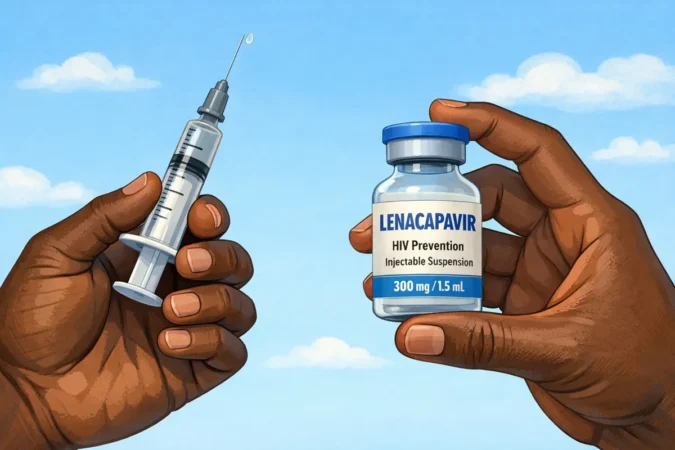


WASHINGTON, D.C., United States — The United States Food and Drug Administration (FDA) has granted tentative approval to the first generic version of lenacapavir, a long-acting HIV prevention injection that could become available in 120 low- and middle-income countries at an annual cost of just US$40 per person.
The development marks a significant step towards making one of the most promising HIV prevention medicines more affordable, particularly in countries across Africa where the burden of new infections remains high.
India’s Dr. Reddy’s Laboratories, which developed the generic version, announced the regulatory milestone on Monday, November 2, 2026, alongside global health organisation Unitaid and other partners involved in accelerating the medicine’s development and introduction.
The injection is administered twice a year and offers an alternative to daily oral pre-exposure prophylaxis (PrEP), which requires users to take preventive medication consistently to maintain protection against HIV.
Under a pricing agreement announced in September 2025 between Dr. Reddy’s, Unitaid, the Wits Reproductive Health and HIV Institute (Wits RHI) and the Clinton Health Access Initiative (CHAI), the generic medicine is expected to cost US$40 per person annually in the 120 countries covered by Gilead Sciences’ voluntary licensing arrangements.
The agreement is intended to bring the price of the long-acting injection closer to that of existing oral HIV prevention medicines, potentially expanding access among populations that face barriers to taking daily medication.
“This is an extraordinary milestone for global health. For too long, people in lower- and middle-income countries have had to wait a decade or more to access breakthrough medicines already available elsewhere,” Carmen Perez-Casas, Unitaid’s senior strategy lead for HIV and pandemic preparedness, told Vivid Voice News.
“With lenacapavir, we’ve reduced that gap to little more than a year. Having an FDA-approved generic at $40 per person per year — a price comparable to daily HIV prevention pills — is a remarkable achievement.”
What FDA’s tentative approval means
Although the announcement has been described as an FDA approval, the regulatory designation is specifically known as tentative approval.
The FDA uses this designation for generic medicines that have met its scientific and quality requirements but cannot yet be marketed in the United States because of patent or other market-exclusivity restrictions affecting the original product.
In this case, the designation provides an important regulatory foundation for the generic version of lenacapavir and can help accelerate procurement and regulatory decisions in eligible countries.
It does not mean that the generic can immediately be sold in the United States or that it is already available in every one of the 120 countries.
According to the partners involved in the programme, initial supplies are expected to reach some countries before the end of 2026, with wider availability anticipated in 2027.
The FDA assessment could also help countries that operate regulatory reliance mechanisms use the agency’s evaluation to accelerate their own approval processes.
Dr. Reddy’s is the first of six generic manufacturers licensed by Gilead Sciences to reach this regulatory milestone, marking progress towards establishing a broader supply of affordable long-acting HIV prevention medicines.
How the $40 generic deal was secured
Lenacapavir was originally developed by American pharmaceutical company Gilead Sciences, which received FDA approval for its branded HIV prevention product, marketed as Yeztugo, in June 2025.
However, its high price in wealthier markets presented a major obstacle to widespread adoption in countries with limited healthcare resources.
The branded product’s US list price is approximately $28,218 per person annually, although insurance and other arrangements can reduce the amount paid by individual patients.
To address the affordability challenge, Gilead granted voluntary licences to six generic manufacturers in October 2024, allowing them to develop and supply generic versions of lenacapavir in 120 low- and middle-income countries.
Dr. Reddy’s subsequently entered into a partnership with Unitaid, Wits RHI and CHAI in September 2025 to accelerate development, provide technical and regulatory support, and establish an affordable price for the generic injection.
The partnership was designed to shorten the period between the introduction of a breakthrough medicine in wealthier markets and its availability in countries that often experience lengthy delays in accessing new treatments.
“This is a moment of immense pride for all of us at Dr. Reddy’s,” said Deepak Sapra, the company’s chief executive officer for Pharmaceutical Services and Active Pharmaceutical Ingredients.
The approval comes approximately 16 months after Gilead received FDA approval for the original product, a considerably shorter development and regulatory timeline than the delays historically associated with introducing affordable generic versions of new medicines.
Why lenacapavir is a major development in HIV prevention
Lenacapavir works differently from conventional HIV prevention medicines.
It is a long-acting capsid inhibitor, meaning it targets the capsid protein that forms a protective shell around HIV’s genetic material. The capsid plays an important role in the virus’s ability to replicate and infect human cells.
By interfering with different stages of the HIV lifecycle, lenacapavir prevents the virus from establishing an infection when used as prescribed for prevention.
Its twice-yearly administration is particularly significant because traditional oral PrEP generally requires consistent daily use.
For people who struggle with daily medication because of stigma, privacy concerns, access to healthcare or difficulties maintaining a regular routine, a long-acting injection may offer a more convenient prevention option.
The drug has also demonstrated exceptionally high efficacy in major clinical trials.
Studies supporting its approval found near-complete protection against HIV acquisition among participants receiving the injections. The findings attracted international attention because of the potential to expand prevention options for populations at substantial risk of infection.
In 2024, the scientific journal Science named lenacapavir its Breakthrough of the Year, recognising the research behind its development and the significance of targeting HIV’s capsid protein.
The medicine is not a vaccine and does not train the immune system to recognise HIV. Instead, it uses an antiretroviral mechanism to prevent the virus from establishing an infection.
WHO backs twice-yearly lenacapavir for HIV prevention
The World Health Organization (WHO) recommended injectable lenacapavir as an additional HIV prevention option in July 2025, recognising its potential to expand access to pre-exposure prophylaxis.
The recommendation allows countries to consider the injection alongside existing prevention methods as part of comprehensive HIV prevention programmes.
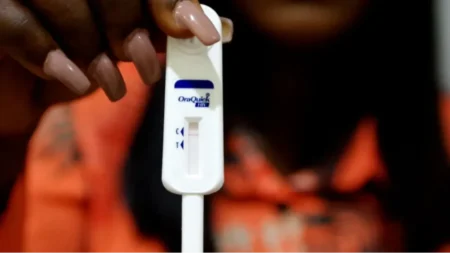
WHO also recommended HIV testing using rapid diagnostic tests for people starting or continuing long-acting injectable PrEP, including lenacapavir.
This is an important safety requirement because individuals must establish that they are HIV-negative before beginning prevention injections and undergo appropriate testing during continued use.
Administering lenacapavir to someone with an undiagnosed HIV infection can create a risk of drug resistance, potentially complicating subsequent treatment.
The medicine is therefore intended for HIV prevention among people who test negative, rather than as a replacement for antiretroviral treatment for people already living with HIV.
It also does not protect against other sexually transmitted infections, making additional prevention measures and appropriate sexual health services important.
From FDA approval to rollout in African countries
Despite the regulatory breakthrough, making the generic injection available to people who need it will require additional work involving governments, health agencies, healthcare providers and community organisations.
Unitaid, Wits RHI and CHAI are working with national authorities and international partners to support country-led introductions, regulatory processes, procurement and community engagement.
The organisations have emphasised that approval alone will not guarantee access. Countries will need to prepare their healthcare systems to administer the injections, provide appropriate HIV testing and establish reliable supply chains.
The Global Fund, the Gates Foundation and other partners are among the organisations involved in broader efforts to expand access to long-acting HIV prevention.
More than 125,000 people in 10 early-adopter African countries had already started using Gilead’s original lenacapavir product before the generic approval, according to Unitaid.
The early uptake demonstrates demand for longer-acting prevention options, although the availability of the branded product has been constrained by its cost and supply arrangements.
Zambia has been identified as a possible early recipient of the generic version, with initial supplies expected to reach selected countries before the end of 2026.
Broader distribution across eligible markets is expected in 2027, subject to national regulatory approvals, procurement arrangements and supply readiness.
For Kenya and other African countries, the US$40 pricing agreement could provide an opportunity to expand access to a prevention option that has previously been financially out of reach for many public health programmes.
However, the announcement does not mean that the generic injection is already available at Kenyan health facilities. Its introduction will depend on the relevant regulatory and procurement processes.
HIV infections remain a major global health challenge
The development comes as international health agencies continue efforts to reduce new HIV infections and improve access to prevention and treatment services.
According to UNAIDS, approximately 41 million people were living with HIV worldwide in 2025, while an estimated 1.2 million people acquired the virus during the year.
About 570,000 people also died from AIDS-related illnesses in 2025.
The figures underline the continuing need for effective prevention methods, particularly in regions where access to healthcare services and preventive medication remains uneven.
The WHO African Region accounted for approximately 64 per cent of people living with HIV globally in 2025, highlighting the importance of affordable prevention options for African health systems.
Also Read: Kenyan scientists unveils new HIV treatment regimens tailored for Africa’s aging population
Although antiretroviral treatment has transformed HIV from what was once frequently a fatal illness into a manageable chronic condition, preventing new infections remains a central public health priority.
Daily oral PrEP has provided an important prevention option since its introduction, but adherence challenges have limited its effectiveness for some users.
Long-acting injections such as lenacapavir could help address some of those challenges by reducing the frequency of medication administration.
The challenge of turning a breakthrough into affordable access
Carmen Perez-Casas of Unitaid said the next priority was ensuring that the medicine moved from regulatory approval to actual delivery in communities.
“An estimated 1.2 million people acquired HIV last year, even as we now have a medicine offering near-100 percent protection with just two injections a year,” she said.
“The demand is high, and we cannot afford to lose momentum. Unitaid is already working with governments and partners to support country-led rollouts, ensuring that communities play a central role in bringing this breakthrough to the people who need it most.”
The challenge will involve more than making the injection affordable.
Governments will need to establish procurement plans, train healthcare workers, strengthen testing services and ensure that people who need prevention can access it without discrimination or unnecessary barriers.
Reliable supplies will also be essential. A medicine that is introduced in limited quantities but cannot be consistently replenished may struggle to deliver its full public health potential.
The US$40 annual price is therefore an important starting point, but the actual impact will depend on how quickly countries can secure regulatory clearance, finance procurement and integrate the injection into existing HIV prevention programmes.
For millions of people at risk of HIV, the approval represents progress towards a longer-acting and potentially more accessible prevention option.
The next test will be whether governments and global health partners can translate the regulatory milestone into affordable, sustained access.