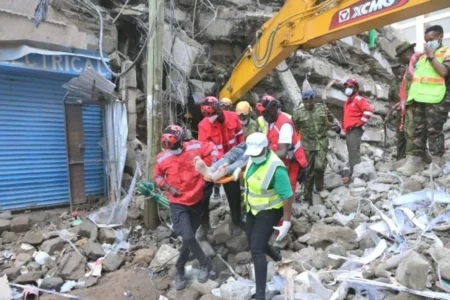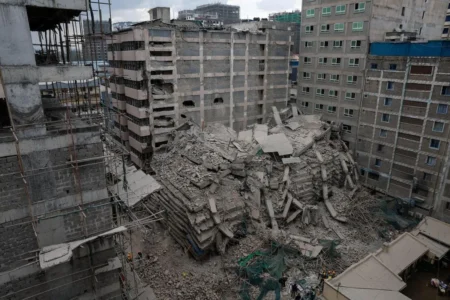
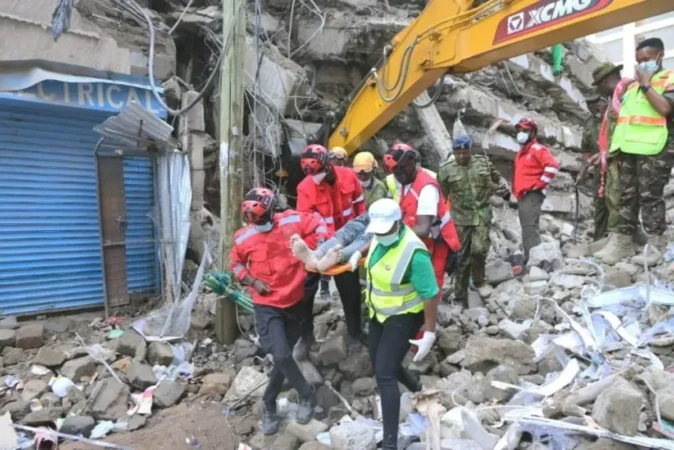
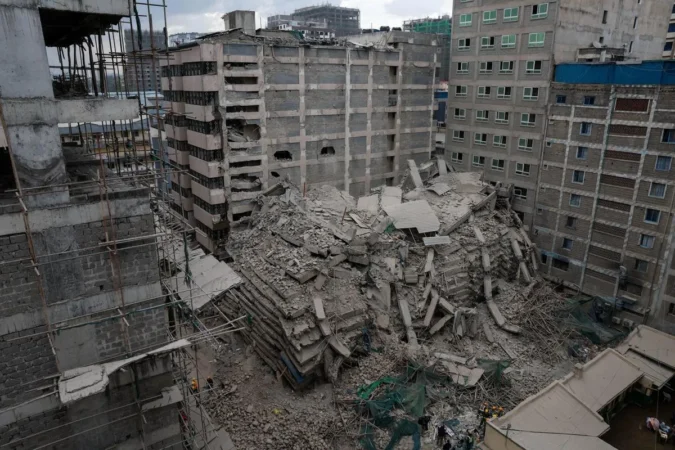



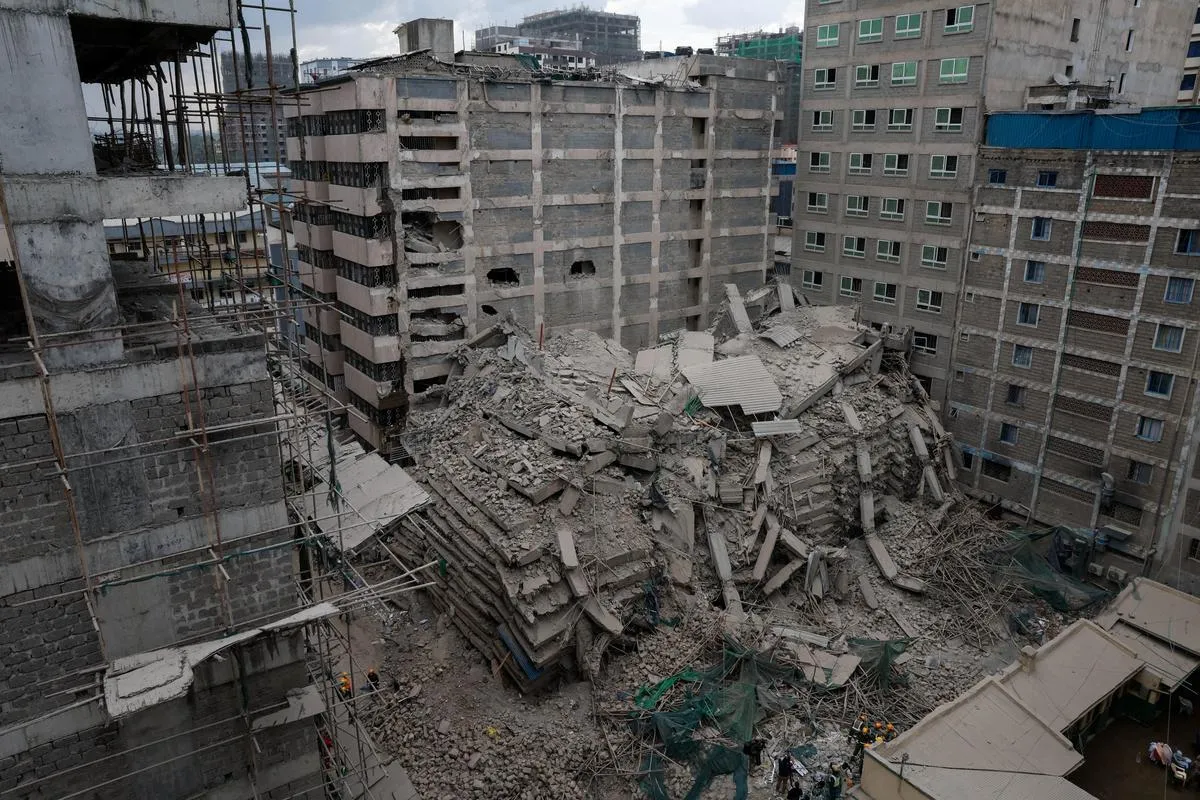
NAIROBI, Kenya — A structural engineer’s vivid Swahili description of the Eastleigh building collapse briefly lightened a tense media briefing, but the technical term behind the analogy points to the serious dangers facing people trapped beneath the rubble.
Eng. Robert Otieno Ogallo was explaining the structural failure of the multi-storey building that collapsed along 9th Street in Nairobi’s Eastleigh area on Friday, October 23, when Citizen TV anchor Lulu Hassan asked him to explain the engineering terminology in Swahili.
Ogallo had described the visible pattern of destruction as a “pancake collapse”..In response to Hassan’s prompt, he translated the phrase as “kuanguka kichapati” — a description likening the building’s collapsed floors to layers of chapati.
The analogy prompted smiles and laughter among people at the briefing, offering a brief moment of levity amid the ongoing rescue operation.
However, the structural failure he was describing has serious implications for the search for anyone who may remain trapped beneath the debris.
What is a pancake collapse?
In structural engineering, a pancake collapse occurs when floors of a multi-storey building fall onto the levels beneath them, stacking in relatively flat layers.
The failure may begin when a critical structural component, such as a column, load-bearing wall or floor connection, loses its capacity to support the loads above it.
The unsupported floor can then fall onto the level below, transferring substantial impact forces to the remaining structure.
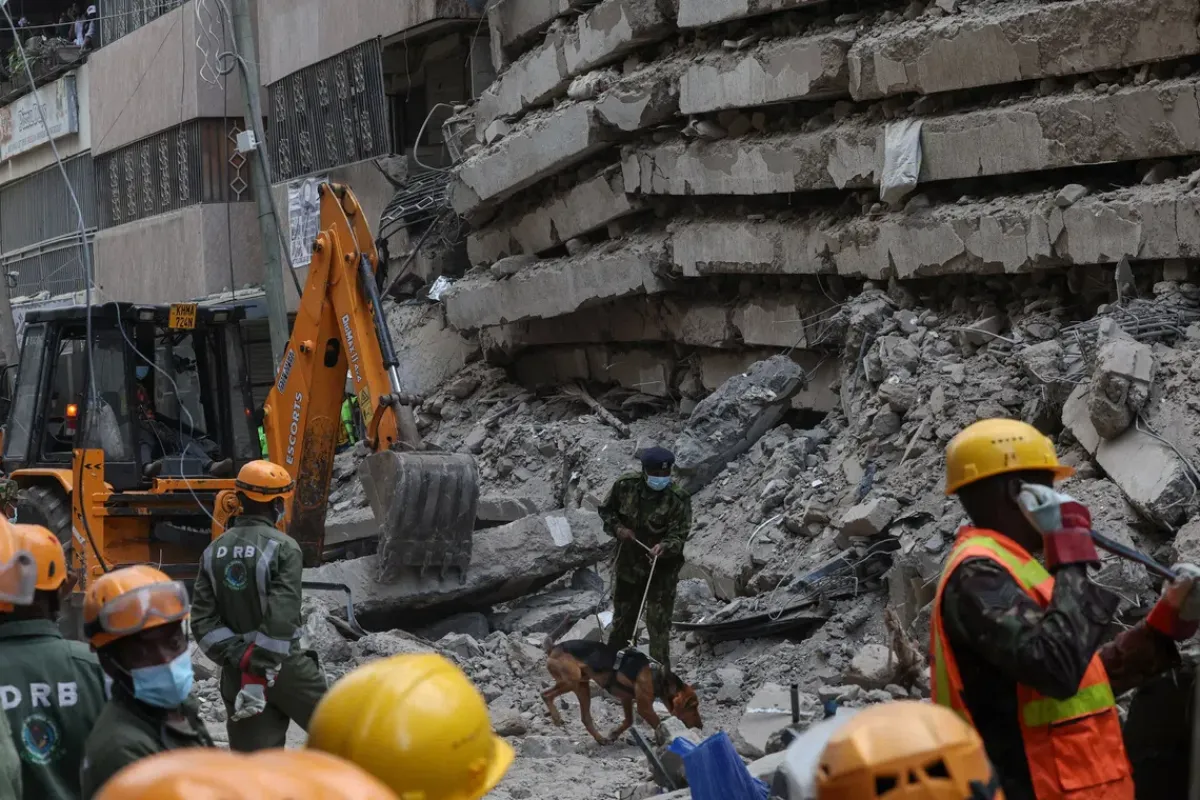
If the lower floors cannot withstand those forces, they may fail in succession, producing a progressive collapse in which several floors come down on top of one another.
The resulting rubble can resemble a stack of pancakes or chapatis, which explains the terminology used to describe the collapse pattern.
However, identifying a pancake-like pattern from the visible debris is not the same as establishing why the building failed. Investigators must examine the structure, construction materials, design, load-bearing components and relevant project records to determine the cause.
Why pancake collapses complicate rescue efforts
One of the main dangers is that collapsed floor slabs can become tightly compressed against one another, leaving limited spaces through which trapped people can breathe or rescuers can reach them.
Unlike some other collapse patterns, which may leave larger voids beneath tilted slabs, a pancake collapse can produce dense layers of concrete, steel and other debris. Survivable spaces may still exist, but they cannot be assumed to be present or absent without careful assessment.
The compressed rubble also makes rescue operations technically challenging. Responders must identify possible survivor locations and remove debris without triggering further movement or compromising unstable sections of the structure.
Depending on the conditions at the site, teams may need heavy machinery, specialised cutting equipment, lifting systems and temporary supports. Each intervention must be carefully coordinated because shifting one section of rubble could affect the stability of another.
The priority is to reach anyone who may still be alive while protecting rescuers from further collapse and other hazards.
What caused the Eastleigh building to collapse?
The cause of the Eastleigh disaster had not been established in the immediate aftermath of the collapse.
Possible factors in building failures can include weaknesses in structural design, substandard materials, construction defects, excessive loading or failures in critical connections. These are general engineering possibilities, not confirmed findings about the Eastleigh building.
Also Read: Eastleigh collapse exposes Nairobi building approval failures
Determining what happened requires a technical investigation rather than conclusions drawn from the appearance of the debris alone.
The National Construction Authority said the project was registered on July 30, 2025, and identified 9th Street Plaza Limited as the developer, Stromax Holdings E.A Limited as the contractor, Emmanuel Mwangi Maina as the architect and Joseph Muturi Mugu as the structural engineer listed in its records.
The authority’s announcement did not, by itself, establish whether the building had been inspected before the collapse or what caused its failure.
The disaster has renewed scrutiny of construction safety, building approvals and regulatory enforcement in Nairobi, particularly in densely populated areas where construction sites operate close to shops, traders and residents.
Lessons from previous building collapses
Pancake-style collapses have been documented in major disasters elsewhere. The 2023 earthquakes in southern Türkiye, for example, caused widespread destruction to multi-storey buildings, while the 1999 İzmit earthquake exposed serious vulnerabilities in parts of the country’s building stock.
Earthquakes can generate powerful forces that overwhelm buildings, but pancake collapses are not limited to seismic events. Similar patterns can arise when structural systems fail for other reasons.
The circumstances of each disaster differ, and examples from other countries cannot establish the cause of the Eastleigh collapse. They do, however, underline the importance of sound structural design, quality construction, effective inspection and enforcement of building regulations.
As rescue teams continue their work in Eastleigh, Ogallo’s phrase — “kuanguka kichapati” — offers a simple description of what the rubble appears to show.
Establishing why the building came down, whether safety requirements were breached and who bears responsibility will depend on the evidence gathered during the investigation.