



NAIROBI, Kenya — There is an uncomfortable question at the heart of Geoffrey Mosiria’s departure from Nairobi City Hall: what happens when a public officer becomes more visible, more outspoken and potentially more politically influential than the system in which he serves?
Mosiria’s removal from his position as Chief Officer for Public Participation, Citizen Engagement and Customer Service is more than an administrative change.
Coming after years of reported friction with Governor Johnson Sakaja and days after Mosiria declared his intention to challenge his boss for Nairobi’s governorship, it has become a defining moment in the politics of public service in the capital.
The timing invites scrutiny. It does not, by itself, prove that Mosiria was dismissed because he threatened Sakaja politically. But neither should the circumstances be dismissed as an ordinary reshuffle without examining the history of their strained relationship, Mosiria’s public record and the implications for accountability at City Hall.
The central question is whether Nairobi has lost a public servant who was attempting to make government more responsive to residents—or whether the county leadership had legitimate reasons for changing its administrative team. The public deserves answers grounded in evidence, not political loyalty.
A public officer who made himself visible
Mosiria built a recognisable public profile through highly visible interventions in neighbourhoods and public spaces.
During his time in the health and environment dockets, he became known for inspections, responding to residents’ complaints and confronting problems that frequently appeared to have been left unattended.
Reports have linked his environmental work to action against noise pollution, including interventions involving entertainment establishments and other sources of disturbance.
His approach made him a familiar figure to residents who wanted City Hall to respond to everyday problems rather than remain confined to offices and official statements.
In a city where complaints about waste management, environmental pollution, public health and enforcement can persist for years, visibility matters. Residents want officers who can be reached, who listen and who are prepared to act.
That does not mean every highly publicised intervention necessarily amounts to lasting institutional reform.
An effective public service must be judged by measurable outcomes, lawful enforcement, continuity and the quality of services delivered—not simply by social media attention. Nevertheless, an officer willing to confront problems in public can help expose failures that might otherwise remain hidden.
Mosiria’s public profile became part of his political identity. It also made him a subject of controversy within an administration in which he was expected to work under the authority of the governor.
As Vivid Voice News reported in its October 8 account of Mosiria’s gubernatorial ambitions, his frequent public interventions and changing assignments had fuelled speculation about friction within City Hall. That history is important because it suggests his departure did not emerge in isolation.
The alleged war inside City Hall
Mosiria has presented his removal as the culmination of a prolonged effort to sideline him.
In statements following his dismissal, he claimed that his responsibilities as an accounting officer were taken away in December 2023, that the budget for the health docket under his watch was reduced from KSh1.2 billion to KSh100 million, and that subsequent transfers weakened his ability to perform his duties.
He has also alleged that disagreements over procurement and the handling of county resources contributed to his fallout with Sakaja.
Those are serious claims, but they remain allegations unless independently substantiated through official records, correspondence, budget documents and responses from the people concerned.
The Daily Nation reported on October 22 that Mosiria traced the deterioration of the relationship to the changes he said were made to his responsibilities in 2023. The newspaper also reported that it had sought the Governor’s response to the specific allegations, but no response had been received by publication time.
The distinction matters. A public officer’s account should neither be accepted uncritically nor dismissed simply because it challenges the leadership of the government in which the officer served. The proper response is independent scrutiny.
If Mosiria’s account is accurate, the consequences extend beyond one individual.
A public officer who believes his authority has been curtailed, his resources reduced or his work obstructed should be able to seek clarification and redress through transparent administrative channels.
Equally, county leadership must be able to explain decisions about budgets, responsibilities and performance without turning legitimate questions into personal disputes.
Public institutions cannot function effectively if administrative disagreements become prolonged contests of influence.
Nor can they function if every reassignment is automatically portrayed as persecution. The answer lies in documentation, due process and accountability.
Did hard work become a threat?
Mosiria has argued that his work made him appear to be outshining his boss. That is his interpretation of the fallout, not an established finding about Sakaja’s motives. Yet the broader question he raises deserves attention.
In public administration, a governor should welcome capable officers who advance the administration’s programme and improve services. An officer’s effectiveness should strengthen the government’s record, not threaten its leadership.
When an official becomes popular because residents can see their concerns being addressed, the achievement should be measured by the benefits delivered to the public. It should not automatically be treated as an attempt to compete with the person who appointed them.
The governor remains the elected leader, responsible for setting policy and overseeing the county executive. Chief officers, in turn, operate within defined legal and administrative mandates. Neither role should be confused with personal ownership of government.
A healthy administration allows competent officers to perform their duties while respecting lawful supervision. It also provides clear explanations when responsibilities change.
If a public servant is failing, the administration should be able to identify the performance shortcomings and document the basis for its decisions. If an officer is being obstructed despite delivering results, that too should be capable of examination.
The real danger arises when loyalty to individuals becomes more important than loyalty to the public interest.
The Eastleigh collapse brings the questions into sharper focus
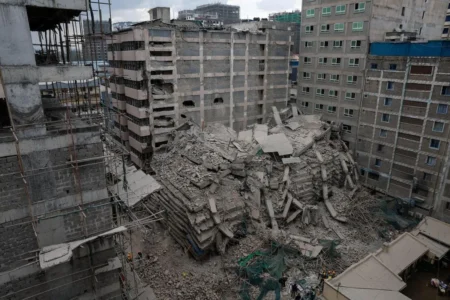
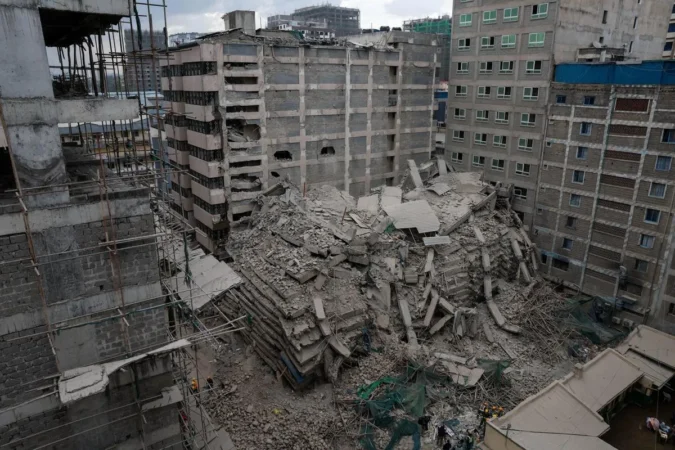
Mosiria’s departure has attracted renewed attention following the collapse of a multi-storey building under construction in Eastleigh on October 23.
The former county official claimed that he had previously tried to stop night-time construction at the site but was instructed by a former superior to stay away. He has also made claims about earlier interventions involving construction activity in South C.
These allegations require independent investigation; they should not be treated as proof that a particular official caused or knowingly permitted the Eastleigh disaster.
The collapse has nevertheless renewed questions about building approvals, inspections and enforcement in Nairobi.
On October 24, Sakaja said county records showed that an application for a 15-storey building with a basement had not been approved, although a change-of-user application had been granted in 2024. He called for investigations into those connected to the project and said construction-related files were pending before the Director of Public Prosecutions.
The governor’s account raises its own urgent questions: how did construction proceed if the building plan had not been approved, what enforcement actions were taken, and why did the system fail to prevent the project from reaching that stage?
Mosiria’s account raises another set of questions: were concerns reported by county officers, what instructions were issued, and are there records showing how those concerns were handled?
Both sets of questions should be investigated through official documents, inspection reports, enforcement notices, communications and testimony from the relevant officers.
The priority must be establishing the facts and preventing further loss of life—not using a tragedy to settle political scores.
If Mosiria possesses evidence that he tried to halt unsafe construction and was prevented from acting, he should submit it to the appropriate investigative authorities.
If county records contradict his claims, those records should be made available for scrutiny. Public safety demands evidence, not competing political narratives.
A dismissal that deserves an explanation
The county reshuffle announced on October 21 reassigned Mosiria’s responsibilities to another chief officer in an acting capacity. The notice communicated the administrative changes but did not publicly explain why Mosiria was removed.
An appointing authority may have legitimate administrative reasons for changing personnel. The problem is not that a governor can never remove or reassign an official.
The problem is that, when a dismissal follows a prolonged public dispute and a declaration of political ambition, the absence of a clear explanation can deepen suspicion.
Mosiria’s decision to enter the 2027 gubernatorial contest has also changed the nature of the relationship. He is no longer merely an outspoken officer within Sakaja’s administration; he is a prospective electoral rival.
That creates an obvious potential conflict between the political interests of the incumbent and the ambitions of a former subordinate.
But timing alone cannot establish motive. It is possible for an administration to make an ordinary personnel decision while an election approaches. It is also possible for political rivalry to influence administrative decisions.
The public cannot determine which explanation applies without credible evidence and a response from the county leadership.
Sakaja should therefore address the substance of Mosiria’s claims. A transparent account of the reasons for the reassignment, the history of Mosiria’s departmental responsibilities and the basis for the alleged budget changes would help separate fact from speculation.
Silence does not establish guilt. But when public institutions are at the centre of a controversy, a clear explanation is often the most effective way to restore confidence.
The downfall of Mosiria—or the beginning of a political comeback?
Calling Mosiria’s departure a downfall may be premature. He has lost his county executive position, but he has also gained a new platform from which to challenge the administration he once served.
His political future will depend on whether he can turn his public visibility into a credible, citywide programme. Nairobi’s problems require more than dramatic interventions and a reputation for being accessible.
They demand workable plans for revenue collection, healthcare, waste management, transport, housing, public participation, land-use enforcement and the financial sustainability of county services.
Mosiria will also need to demonstrate that he can build a team, work within the law, establish measurable targets and deliver results beyond individual operations. The ability to criticise an administration is not the same as the ability to govern one.
If he intends to make his experience at City Hall central to his campaign, he should publish a clear account of the obstacles he says he encountered, supported by documents wherever possible. That would give voters something more substantial than allegations exchanged between former colleagues.
Sakaja, meanwhile, should recognise that the handling of Mosiria’s departure may influence how residents judge his administration’s commitment to transparency and accountability.
The governor’s strongest response would be to explain his decisions, demonstrate that county operations remain focused on service delivery and show that officers are judged by clear standards rather than political convenience.
Nairobi deserves institutions stronger than personalities
The rise and removal of Geoffrey Mosiria exposes a broader challenge in county governance: the tension between individual initiative and institutional authority.
Nairobi cannot afford a public service in which capable officers are discouraged from raising concerns, nor one in which public officials use their positions to build personal political brands without accountability. Both problems can undermine public trust.
A well-functioning county government should encourage officers to act decisively within their mandates, protect professional independence where the law requires it, and hold them accountable when they fall short.
It should also ensure that changes in leadership do not interrupt essential services or weaken enforcement.
If Mosiria was frustrated because he challenged wrongdoing or insisted on proper procedures, the evidence should be investigated and those responsible held accountable.
If his performance fell short of expectations, the county should be able to explain that through documented and fair processes. Neither conclusion should be reached merely because one side has a louder public voice.
Ultimately, public office is not a reward for political loyalty, a personal possession or a stage for individual fame. It is a responsibility entrusted to people on behalf of residents.
Mosiria’s story should therefore be judged by more than whether he defeated Sakaja in a political contest—or whether Sakaja successfully removed a troublesome subordinate.
Also Read: Mosiria accuses Sakaja of sidelining him for years after City Hall sacking
The more important test is whether Nairobi’s institutions can withstand internal disagreements, protect the public interest and explain their decisions openly.
If hard-working officers are punished for exposing institutional weaknesses, Nairobi will lose more than individuals: it will lose the incentive for others to speak up and act.
If officials use claims of persecution to avoid scrutiny, the public will lose confidence for a different reason.
The people of Nairobi deserve a system in which neither possibility is allowed to flourish unchecked.
The final verdict on Geoffrey Mosiria’s rise and removal should not be delivered by political allies or opponents.
It should emerge from evidence, transparent administration and the standard that must govern every public office: service to the people.