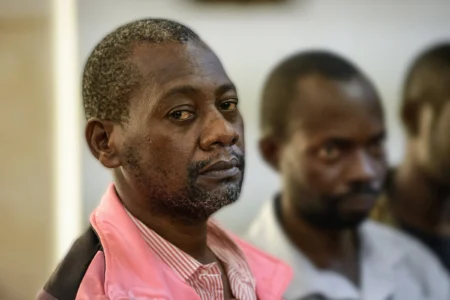



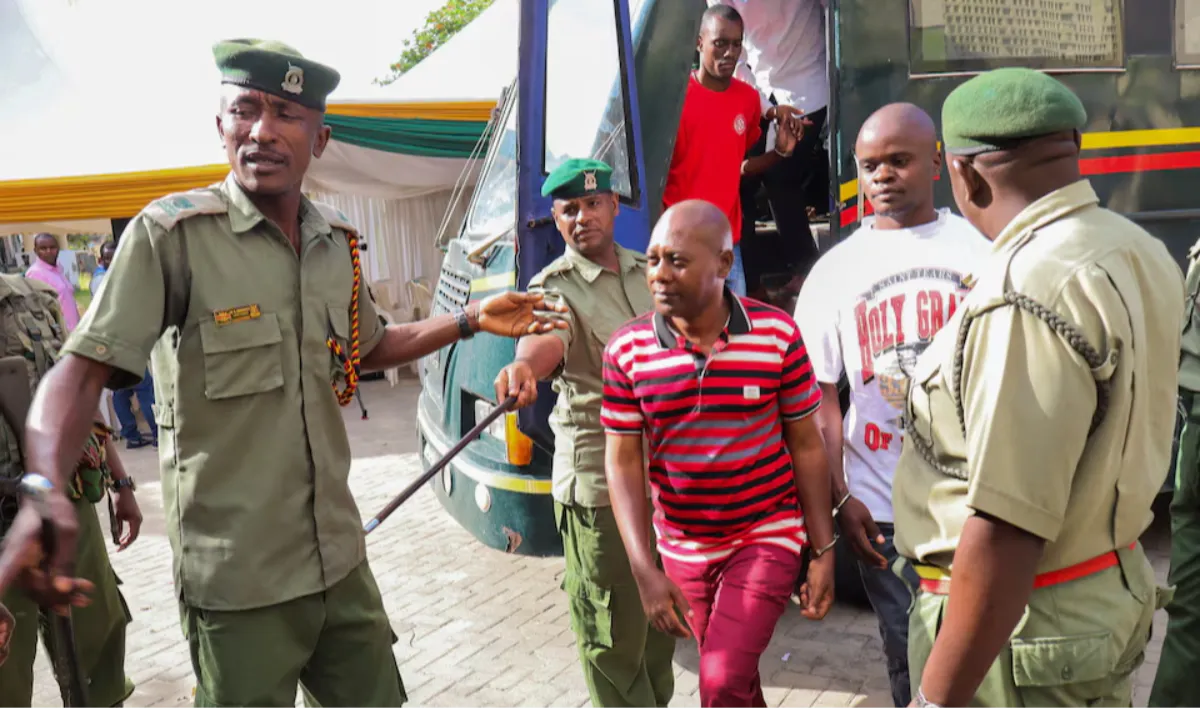
MOMBASA, Kenya — Kenyan preacher Paul Nthenge Mackenzie has been found guilty of murder over the deaths of 191 people in the Shakahola tragedy, including 190 children, in a landmark ruling that brings a major phase of one of the country’s deadliest religiously linked crimes to a turning point.
High Court Judge Diana Kavedza-Mochache found that Mackenzie directed followers to fast to death in the belief that they would meet Jesus, with children subjected to the same practice despite being unable to understand its fatal consequences.
The court also found that violence was used to enforce the fasting regime, rejecting the argument that participation was entirely voluntary.
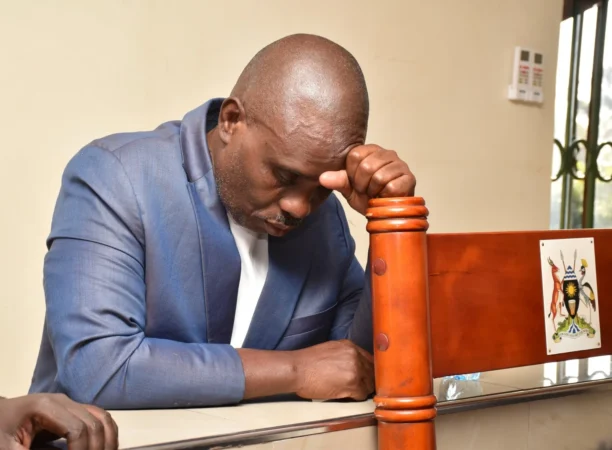
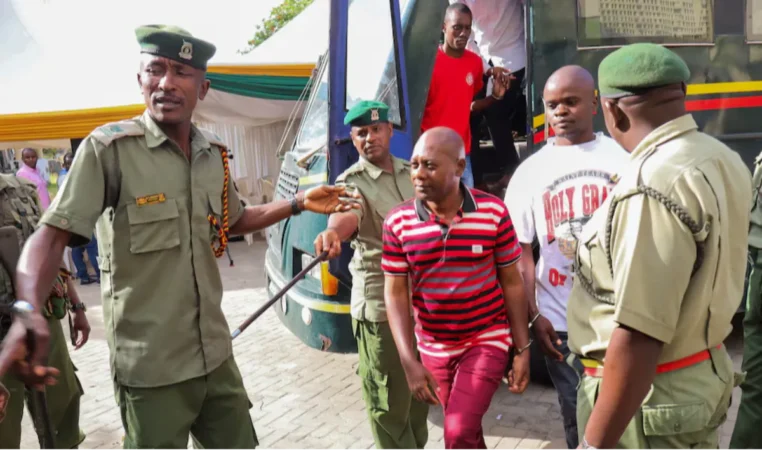
Mackenzie and 29 other accused were reported convicted in the case. The judgment followed an extensive trial examining the deaths of people who had followed the preacher’s Good News International Ministries to Shakahola Forest in Kilifi County.
The ruling is a major development in a case that has raised profound questions about religious authority, the protection of children, the enforcement of criminal law and the ability of public institutions to intervene before abuse becomes a mass-casualty tragedy.
Court finds fasting was enforced through violence
In delivering the judgment, Justice Mochache found that Mackenzie’s teachings went beyond encouraging voluntary religious fasting.
According to the court’s findings, he directed followers to fast to death and established a sequence in which children would die first, followed by women and men, before members of his own family and Mackenzie himself.
The judge said children were not capable of giving meaningful consent to a practice whose consequences they could not fully understand.
Evidence presented to the court described children being beaten for attempting to eat or drink, while some were restrained after trying to resist the fasting instructions.
The court also considered the deaths for which post-mortem examinations could not establish a conclusive cause.
Decomposition had complicated forensic analysis, but the judge said witness testimony and circumstantial evidence supported the conclusion that the fasting directive and its enforcement contributed to the deaths.
The findings were significant because the prosecution had to establish criminal responsibility despite the condition of many remains and the difficulty of reconstructing events in a remote settlement.
The court’s decision followed evidence from 121 prosecution witnesses, including survivors, investigators and experts.
The prosecution also presented post-mortem reports and findings from government analysts.
Children were among the first victims
The most disturbing evidence concerned the children whose deaths form the overwhelming majority of the murder counts.
Witness accounts recounted in court described parents watching children weaken and die, siblings seeing one another waste away, and families interpreting death as a passage to heaven.
Some children reportedly wore new clothes in anticipation of meeting Jesus, while others identified where they wanted their bodies buried.
The judge also heard evidence concerning children who were beaten for seeking food or attempting to escape the fasting regime.
One account involved a woman who was allegedly prevented from breastfeeding her newborn. The baby died at 12 days old, according to testimony recounted in court.
The evidence exposed how children who depended entirely on adults for food, shelter and protection were placed in circumstances where their most basic needs were subordinated to religious instructions.
The murder case covers 191 victims: 190 children and one adult. The wider Shakahola investigation, however, involved a much larger number of deaths, and the two figures should not be confused.
How Mackenzie built his following
Mackenzie established Good News International Ministries in 2003 and built a following through church services and televised sermons.
His teachings included warnings about the end of the world and opposition to conventional institutions.
Followers were reportedly told that education was evil, modern medicine conflicted with religious doctrine and certain government systems represented the mark of the devil.
The church operated a television station, Times TV, which broadcast Mackenzie’s sermons from Malindi. His message reached families beyond the immediate congregation, drawing followers who regarded him as a spiritual authority.
The church’s main operation closed in 2019, after which Mackenzie moved his activities to Shakahola Forest and encouraged followers to join him there.
Former followers have described a settlement of scattered mud houses where people lived apart from mainstream society. Some said fasting initially involved periods without food followed by small meals, before the practices became more extreme.
The court’s findings point to the importance of the authority Mackenzie exercised over the community and the role of his teachings in shaping decisions about food, healthcare, education and family life.
The case is not a judgment on religious belief generally. It concerns whether the evidence established that the accused used their authority and actions to bring about unlawful deaths.
Survivors describe the cost of rejecting medicine
The consequences of the teachings extended beyond those who died.
Peter Shukrani, who joined Mackenzie’s church as a child, has described how his mother rejected medication when he became ill in the forest because she believed prayer and religious faith were sufficient.
He survived after being rescued in March 2023, when authorities began uncovering the scale of the deaths.
Shukrani has continued to describe Mackenzie as a person who cared for him, illustrating the complicated relationships that can persist between followers and leaders even after catastrophic harm.
Other families have suffered devastating losses. Stephen Mwiti has said that all six of his children died in Shakahola. He was able to recover and bury the remains of only one son, Samuel, according to his account.
The testimony and experiences of survivors reveal that the movement’s influence was not experienced in the same way by everyone.
Some former followers continue to defend Mackenzie, while others have described profound loss and the consequences of the group’s teachings.
The court’s task, however, was to determine criminal responsibility from the evidence rather than from the varying personal views of followers and relatives.
More than 400 bodies recovered from Shakahola
The discovery of the mass graves in 2023 transformed the case into a national emergency.
Authorities ultimately reported recovering 429 bodies from Shakahola Forest. Many of the remains were severely decomposed, complicating identification and the determination of individual causes of death.
The 191 murder counts addressed in this judgment concern a specific group of victims, not every person whose remains were recovered or who was reported missing in connection with the wider tragedy.
The scale of the recovery operation required investigators to examine graves, conduct post-mortem examinations and use other evidence to identify victims and reconstruct the circumstances of their deaths.
The difficulties surrounding the forensic evidence became a central issue in the trial. The judge’s reliance on witness testimony and circumstantial evidence in cases where post-mortem findings were inconclusive demonstrates how courts may assess evidence collectively, while still applying the criminal standard of proof.
The role of Mackenzie’s former security chief
The prosecution’s case also benefited from the involvement of Enos Amanya Ngala, Mackenzie’s former head of security, who entered a plea agreement and became a prosecution witness.
His evidence formed part of a wider body of testimony used to explain the organisation of the settlement, the enforcement of fasting and the circumstances in which followers died.
The prosecution’s case was that the deaths were not simply the result of isolated individual decisions but were linked to a coordinated system in which different people allegedly played different roles.
The court had to assess that claim against the evidence concerning each accused person and the charges brought against them.
Mackenzie and his co-accused had denied the murder allegations and maintained that nobody was forced to die. The court’s findings mark a decisive rejection of that defence in the murder case.
A verdict with consequences beyond Shakahola
The judgment is likely to intensify debate about how Kenya regulates religious organisations while protecting constitutional freedoms.
Freedom of religion is a fundamental right, but it does not provide immunity for criminal acts or remove the state’s duty to protect children and other vulnerable people from abuse.
The Shakahola tragedy has also prompted questions about whether authorities acted quickly enough when concerns arose about the group’s activities and whether agencies responsible for law enforcement and child protection shared information effectively.
Those questions extend beyond the criminal responsibility established in this case. They concern how warning signs are identified, how reports of abuse are investigated and how the state can intervene where conduct threatens life without treating unconventional religious belief itself as a crime.
Also Read: Kenyan court gives judgement in case of Paul Mackenzie
Mackenzie also faces other legal proceedings relating to allegations of terrorism, radicalisation, child cruelty and additional deaths.
Those cases are separate from the 191-count murder judgment and must be dealt with through their own legal processes.
For the families who lost children and other relatives, the verdict represents a major step towards legal accountability, though it cannot undo the losses or resolve every question raised by the wider death toll.
The enduring significance of the Shakahola case lies in what it reveals about the danger of unchecked authority, the vulnerability of children under coercive control and the consequences when fundamental needs are sacrificed to a leader’s demands.
The court has now made its findings in the murder case. The wider challenge for Kenya is to ensure that the lessons of Shakahola translate into stronger safeguards, earlier intervention and effective protection for people at risk.