



MOMBASA, Kenya — The children were preparing for heaven. Some reportedly put on new clothes; others identified where their bodies should be buried. Their parents, according to testimony recounted in court, believed death through fasting would bring them closer to God.
These accounts, read out by High Court Judge Diana Kavedza-Mochache on Monday, October 19, have brought renewed attention to one of Kenya’s most disturbing tragedies: the deaths of hundreds of people associated with preacher Paul Nthenge Mackenzie’s Good News International Ministries in Shakahola Forest, Kilifi County.
As the judge read through a judgment running to about 1,000 pages at the Mombasa Law Courts, the courtroom heard how religious teachings allegedly reshaped family relationships, displaced conventional education and healthcare, and persuaded followers to abandon ordinary life in anticipation of an approaching end of the world.
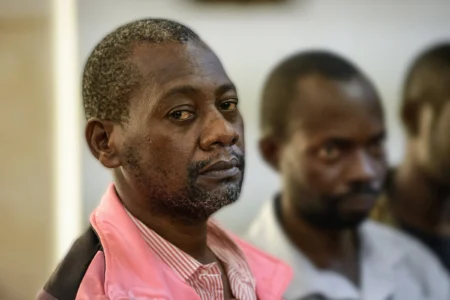
Mackenzie, who sat in court as the judgment was read, and 30 co-accused face 191 murder counts relating to 190 children and one adult. The case is a crucial test of whether prosecutors can establish individual criminal responsibility for deaths allegedly connected to the movement’s teachings and practices.
The significance of Monday’s proceedings extends beyond the fate of the accused. The judgment is also examining how a religious movement could develop such influence over its followers, why vulnerable families became increasingly isolated, and what the tragedy reveals about the state’s responsibility to protect life without unnecessarily restricting freedom of religion.
From religious conviction to a system of control
The accounts presented in court suggest that the Shakahola tragedy cannot be understood simply as a story about people choosing to fast for religious reasons.
According to the evidence recounted by the judge, Mackenzie’s teachings extended into almost every aspect of his followers’ lives. Members were reportedly encouraged to reject formal education, avoid hospitals and modern medicine, distrust government institutions and withdraw from conventional society.
The movement’s end-times message gave these demands a unifying purpose. Followers were allegedly taught that the world was condemned and that separating themselves from it was necessary to prepare for salvation.
In court, the judge described how followers sold property, abandoned employment and relocated to the remote forest, where they gathered under trees to listen to Mackenzie’s preaching.
This isolation was significant. When people distance themselves from family members, public institutions and alternative sources of information, the authority of a single leader can become harder to challenge. Decisions that might otherwise invite scrutiny can be reframed as tests of faith, while doubts or attempts to leave may be portrayed as spiritual failure.
The court’s emerging findings point to a movement in which religious authority allegedly extended beyond worship into decisions about work, education, healthcare, family life and, ultimately, survival.
Reporting on the judgment on Monday, Radio Generation Kenya said the judge identified characteristics including absolute leadership, isolation, manipulation, domination and what is commonly described as “love bombing” — intense expressions of affection or acceptance that can help draw people into a group.
The judge said the court had considered witness testimony, theological literature and scholarly writings in examining the church’s structure and influence. She also stressed that the court was not determining the legitimacy of religious belief in general, but examining the evidence relevant to the criminal case.
That distinction matters. Religious commitment in itself is not evidence of criminality. The legal question is whether particular teachings, actions and relationships formed part of conduct that caused unlawful deaths and whether the prosecution has proved the responsibility of each accused person.
The children at the centre of the tragedy
Perhaps the most disturbing aspect of the evidence is the position of children within the alleged system.
The court heard accounts of parents watching their children weaken and die, siblings witnessing one another’s decline, and adults treating requests for food as obstacles to a religious objective. The judge described how some children were reportedly beaten for seeking food while fasting.
Other accounts concerned children who appeared excited about going to heaven, with some wearing new clothes or identifying where their bodies should be buried.
These details raise a difficult question: when children appear to accept an extreme religious practice, how freely are they choosing it if the beliefs shaping that decision have been imposed by the adults responsible for their care?
A child’s apparent willingness to participate cannot, by itself, settle questions of coercion, safeguarding or parental responsibility. Children depend on adults for food, shelter, healthcare and protection. Their understanding of death and the consequences of prolonged starvation may also be fundamentally different from that of an adult.
The case therefore reaches beyond the question of whether individual followers believed Mackenzie’s teachings. It examines the responsibilities of adults who allegedly placed those beliefs above the basic needs of children.
The fact that 190 of the 191 alleged victims in this murder case were children makes that issue especially consequential.
The judge’s account of parents allegedly beating children for seeking food illustrates how a belief system can become destructive when ordinary instincts of protection are reinterpreted as barriers to salvation. In that environment, the child’s need to survive is no longer treated as a reason to stop the practice, but as something to overcome.
That is among the most chilling implications of the evidence: the alleged reversal of the relationship between parent and child, in which obedience to a preacher’s doctrine took precedence over a child’s immediate welfare.
Why the 191 murder counts matter
The scale of the wider Shakahola tragedy is essential to understanding the public interest in the trial, but the figures must be distinguished carefully.
Authorities recovered 429 bodies from graves during the initial Shakahola investigation. The Kenya National Commission on Human Rights subsequently documented 448 deaths and more than 600 people reported missing in its monitoring findings published in March 2024. These figures reflect the broader tragedy and different stages of documentation, not the number of victims covered by the current murder charge sheet.
The present High Court case concerns 191 alleged murders. The charges relate to 11 identified children and 180 unidentified children, according to reporting on the case before the judgment. The victims covered by these counts are not the same as the entire number of people who died or were reported missing in connection with Shakahola.
This distinction is legally important. The court must assess the charges before it and the evidence against each defendant; it cannot simply treat the wider death toll as proof of every count.
The prosecution presented testimony from more than 120 witnesses, including survivors, relatives, investigators and experts. Evidence included post-mortem reports and findings from government analysts.
In April 2026, the court ruled that the accused had a case to answer and placed them on their defence. That decision meant the evidence was sufficient to require a response; it was not itself a finding of guilt.
The legal challenge is substantial because the deaths occurred over an extended period and involved numerous people living within a complex settlement.
Establishing who gave instructions, who enforced them, what each defendant knew and how individual actions contributed to particular deaths requires more than demonstrating that the tragedy occurred.
The court must examine the evidence against the individual accused, not simply determine whether the movement’s practices were dangerous.
The wider death toll raises questions beyond the courtroom
The discovery of mass graves in 2023 shocked Kenya and prompted scrutiny of religious organisations, government oversight and the handling of early warnings.
The Kenya National Commission on Human Rights concluded in its Mashaka ya Shakahola findings that the state had failed to protect citizens from harm and abuse. The commission documented the scale of the deaths and missing persons, while highlighting the rights violations associated with the tragedy.
The question of institutional failure remains important because Shakahola did not emerge in a vacuum. The movement had operated before the mass graves became a national emergency, and concerns about its activities had reportedly reached local authorities.
A government investigation published in the Office of the Ombudsman’s 2024 newsletter examined alleged lapses by national government administration officers, including failures to respond adequately to reports involving children escaping from the forest. The report raised questions about whether information that could have triggered earlier intervention was handled appropriately.
Those findings do not replace the criminal trial or establish the guilt of any individual official. They do, however, reinforce the need to investigate how warnings were handled, whether agencies shared information effectively and whether timely action could have prevented further deaths.
The tragedy illustrates a fundamental challenge for public authorities: identifying when conduct presented as religious practice has crossed into abuse, coercion or a threat to life.
The right to freedom of religion does not remove the state’s obligation to protect children and other vulnerable people. At the same time, any restrictions on religious activity must be grounded in law and evidence rather than broad suspicion of unconventional beliefs.
The central lesson is not that religious groups should automatically be treated as dangerous. It is that allegations of abuse, deprivation of basic needs, confinement or threats to life require a prompt and effective response, regardless of the beliefs used to justify them.
Where religious freedom meets the duty to protect life
Kenya’s Constitution protects freedom of conscience, religion, belief and opinion. Those protections are fundamental in a pluralistic society where people must be free to worship, organise and hold beliefs that differ from those of the majority.
But constitutional protection does not grant immunity for criminal conduct committed in the name of faith.
The Shakahola case tests how authorities distinguish protected religious practice from actions that allegedly deprive people of food, healthcare, education or freedom of movement, particularly when children are involved.
The judge’s reported assessment of the Good News International Ministries as an apocalyptic or doomsday cult is relevant to the court’s examination of the group’s structure and influence. Yet the broader legal questions remain specific: what conduct occurred, who was responsible, and whether the elements of the murder charges have been established beyond reasonable doubt.
That standard is essential in a case of this magnitude. The horror of the deaths cannot substitute for proof against an individual defendant, just as respect for religious freedom cannot be used to excuse conduct that the evidence establishes as criminal.
The outcome may influence future debates over the registration and oversight of religious organisations, the monitoring of extremist teachings and the protection of people vulnerable to coercive leadership.
Any reforms, however, must avoid turning the state into an arbiter of acceptable theology. The focus should be on demonstrable harm, unlawful conduct and effective safeguards.
What the judgment means for victims’ families
For families whose relatives died in Shakahola, the court proceedings represent one part of a much longer search for answers.
The identification of victims, the recovery and burial of remains, and the establishment of responsibility have all been complicated by the scale of the tragedy. The human rights commission reported in 2024 that fewer than 10 per cent of the bodies had been identified and returned to families at that stage.
A criminal judgment can establish legal responsibility for the charges before the court, but it cannot by itself resolve every question surrounding the wider death toll or account for every missing person.
Also Read: Witness tells court Paul Mackenzie ‘turned into a snake’ before biting husband
Nor can a conviction, if secured, undo the loss experienced by families who watched loved ones disappear into the forest or learned that children had died while following teachings presented as a route to salvation.
The testimonies read in court bring those losses into the legal record. Their significance lies not in their shocking detail alone, but in what they may help establish about the conditions in which the deaths occurred and the responsibility of those accused.
A judgment on individual responsibility — and a wider warning
As Justice Diana Kavedza-Mochache continues reading the lengthy judgment, the immediate legal question remains whether the prosecution has proved the 191 murder charges against Mackenzie and his co-accused.
The judge’s examination of the church’s teachings, internal hierarchy and influence over followers offers a framework for understanding how the alleged practices developed. But the findings on the movement’s character must be distinguished from the final determination of criminal liability for each defendant.
The Shakahola tragedy has already exposed the devastating consequences that can arise when an isolated community places absolute trust in a leader whose teachings allegedly demand the rejection of ordinary safeguards.
The deeper warning concerns the point at which belief becomes a mechanism of control — and the moment when institutions responsible for protecting life fail to intervene effectively.
For Kenya, the case is therefore both a test of criminal accountability and a challenge to public oversight. The justice system must establish individual responsibility through evidence and due process.
Public authorities must also learn whether warning signs were missed and how vulnerable people can be protected before a crisis reaches such catastrophic proportions.
The most consequential legacy of the judgment may depend not only on its verdict, but on whether the country translates the lessons of Shakahola into earlier intervention, stronger child protection and accountability for failures that put lives at risk.