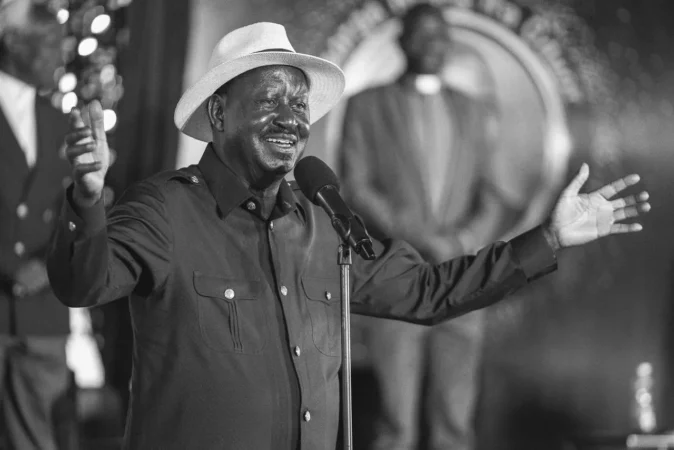


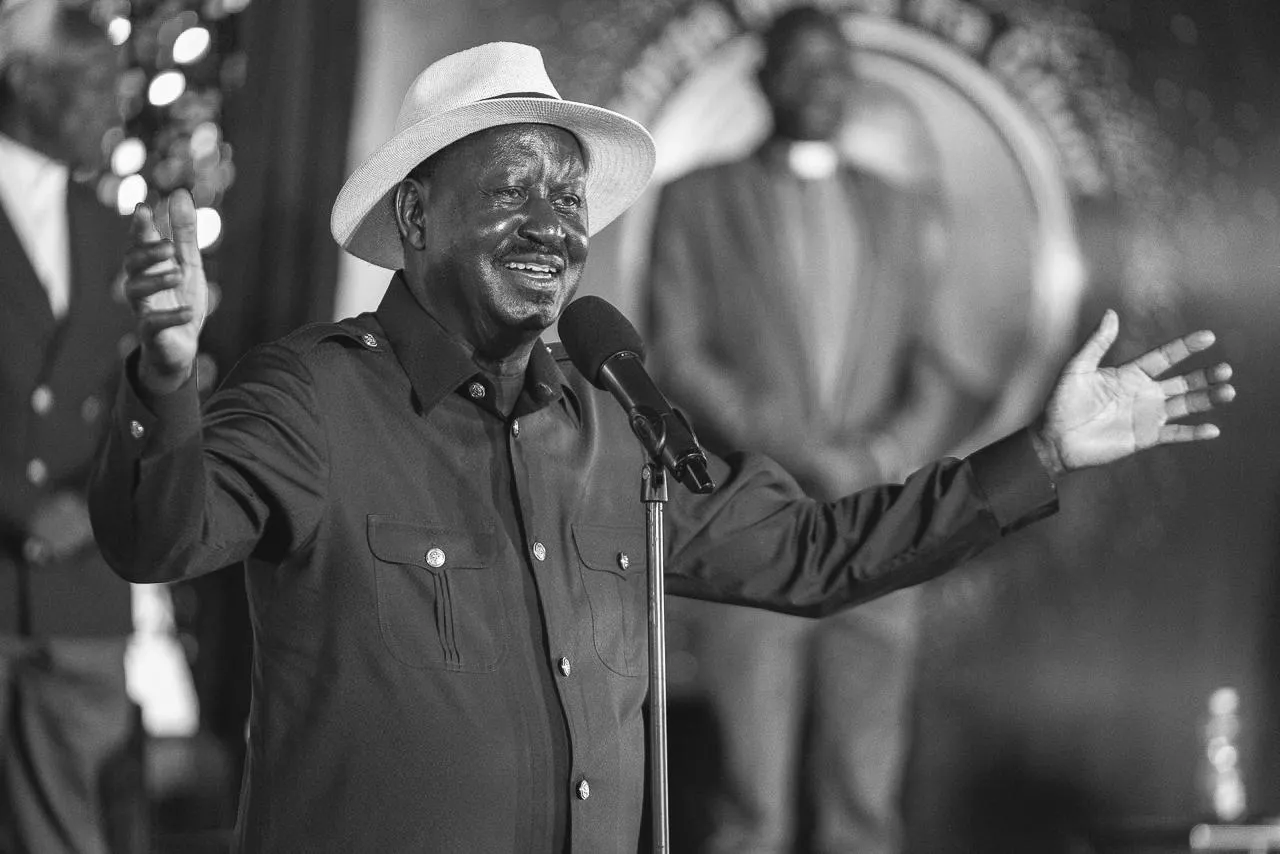
SIAYA, Kenya — Kenya marked one year since the death of former Prime Minister Raila Amolo Odinga on Thursday, October 15, with a major memorial gathering in Bondo, Siaya County, that combined emotional tributes with renewed questions about the future of the Orange Democratic Movement (ODM) and the country’s opposition politics.
Thousands of mourners converged on Migwena Cultural and Sports Grounds to remember the veteran politician, whose decades in public life helped shape Kenya’s multiparty democracy, constitutional reform debates and presidential contests.
The gathering brought together Raila’s widow, Ida Odinga, his children, political allies, religious leaders and supporters from across the country.
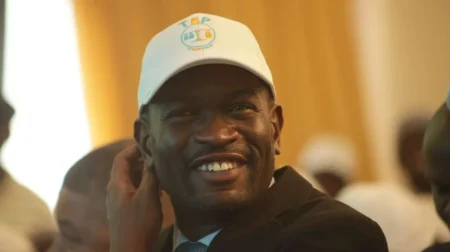
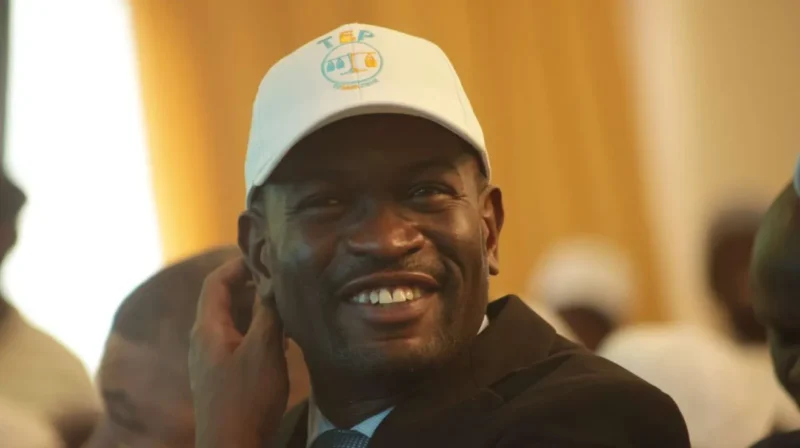
Nairobi Senator Edwin Sifuna, Embakasi East MP Babu Owino, Siaya Governor James Orengo, Wiper leader Kalonzo Musyoka, People’s Liberation Party leader Martha Karua and DAP-K leader Eugene Wamalwa were among the political figures present.
But the commemoration was not without controversy. Disruptions by sections of the crowd, competing political loyalties, the absence of ODM leader Oburu Oginga and the non-attendance of President William Ruto and retired President Uhuru Kenyatta added to the significance of an event whose organisers had called for unity and a focus on Raila’s life.
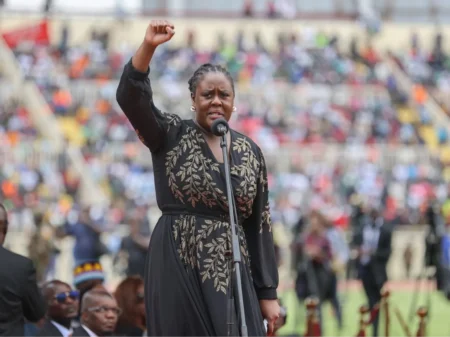
The day also produced a major political announcement: Winnie Odinga declared her intention to contest the Nairobi Senate seat in the 2027 General Election, linking her decision to Sifuna’s reported interest in higher office.
Together, the events revealed the challenge facing Raila’s family and political allies; preserving his memory while navigating the political competition that has intensified since his death.
Thousands gather as Bondo remembers Raila
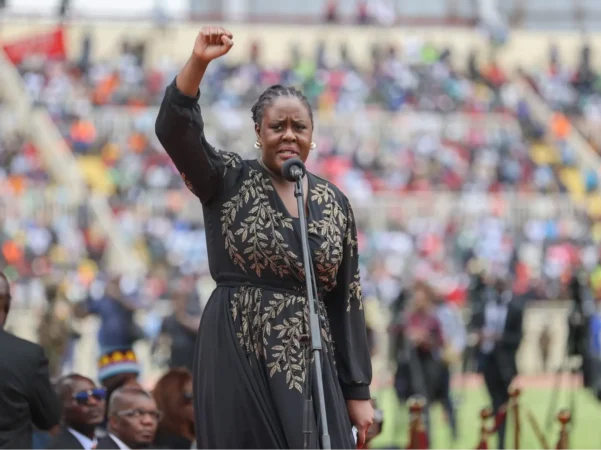
The main commemoration took place at Migwena Cultural and Sports Grounds, with mourners beginning to arrive early in the morning. Many wore orange, the colour associated with Raila and ODM, while music, gospel performances, cultural displays and speeches formed part of the programme.
The Anglican Church of Kenya presided over the service, which began at around 11am, before family members and political leaders addressed mourners.
The memorial was the culmination of a wider programme organised to mark the anniversary. Earlier activities included an intergenerational gathering in Kisumu, bringing together community representatives, young people and religious leaders, followed by a candle-lighting ceremony at Raila’s mausoleum at Kang’o ka Jaramogi on October 14.
The candle-lighting ceremony, led by Ida, featured prayers, Scripture readings and gospel music. It provided a quieter setting for reflection before the larger public gathering in Bondo.
Raila died in India on October 15, 2025, aged 80, while receiving medical attention. His first anniversary therefore marked both a personal milestone for his family and a moment of reflection for supporters who had followed his political journey over several decades.
Ida Odinga’s emotional tribute and warning to politicians
One of the most powerful moments came from Ida, who spoke about the pain of losing her husband and the difficulty of adjusting to life without him.
Revisiting the December 2021 Azimio la Umoja convention at Kasarani Stadium, where she had publicly released Raila to continue his political work, Ida recalled asking Kenyans to take care of him as he pursued what he regarded as his public duty.
“I gave him to you alive, but you gave him back to me in a coffin,” she said, expressing the grief that the family continues to carry a year after his death.
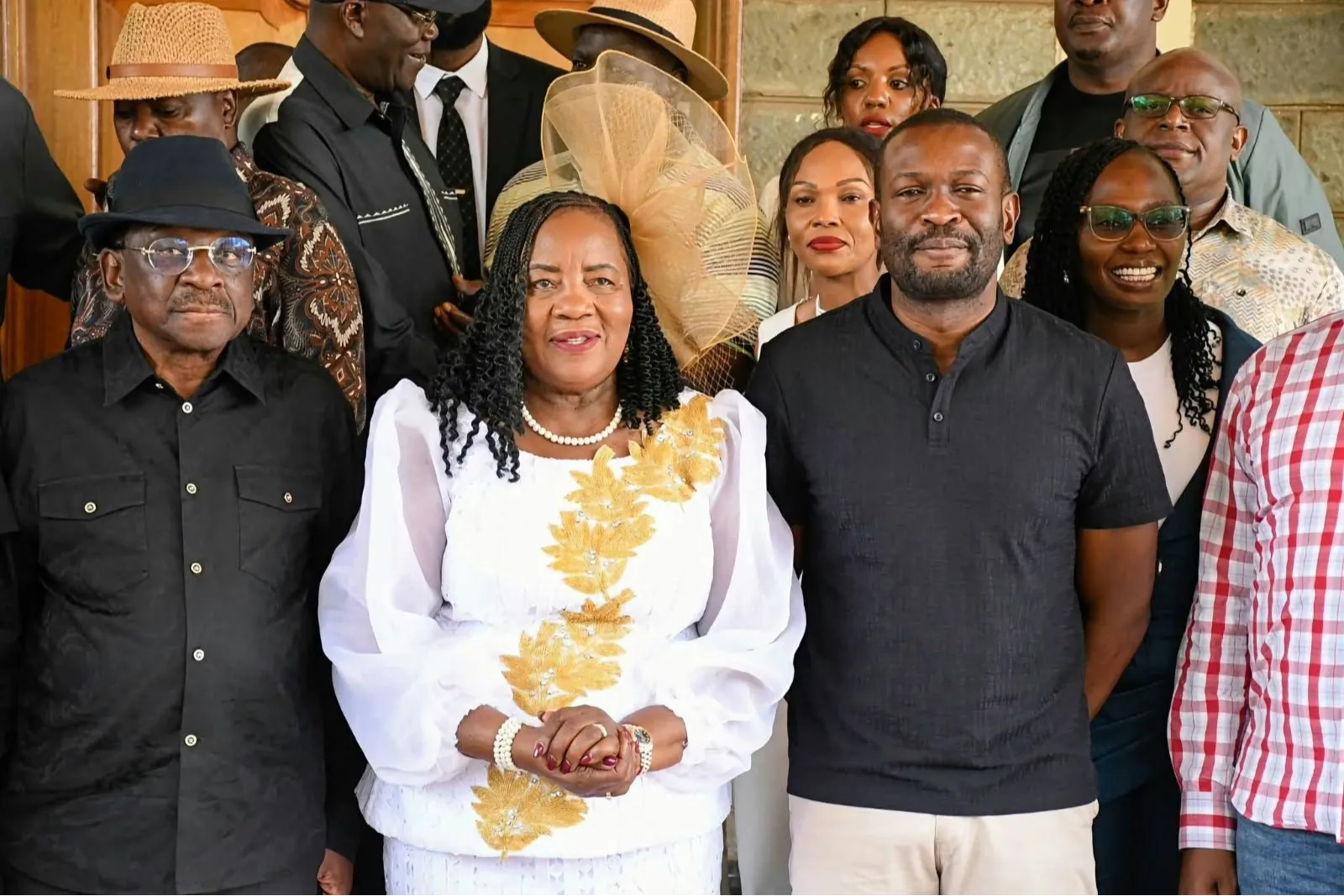
Her remarks placed the political figure behind the public tributes back within the context of a family’s loss. She also recalled that the family had suffered another bereavement, the death of Beryl Achieng, around 40 days after Raila’s death, compounding an already difficult period.
But Ida’s message extended beyond grief. She warned political leaders against using Raila’s name to advance personal ambitions, urging Kenyans to protect the values associated with his public life.
“Legacy is not inherited. It is not to be spent,” she said, stressing that Raila’s memory should not become an instrument for political rivalry.
The warning was especially significant given the disagreements within ODM over its future direction and the competing political positions emerging ahead of the 2027 election.
Ida also called for peace, tolerance and respect for differing political views, arguing that political disagreement should not become a justification for violence. Her message reflected the family’s stated desire to keep the anniversary focused on remembrance rather than a contest over who commands the greatest political following.
Disruptions expose tensions at the memorial
Despite appeals for restraint, the event was disrupted by sections of the crowd, with tensions reported around the VIP area.
According to our reporter who was at the venue, some youths pushed into a restricted section of the grounds, making it difficult for proceedings to continue as planned. The situation later escalated when stones were thrown towards the VIP tent, forcing security personnel to shield leaders with plastic chairs. Some attendees sustained injuries.
The disruption exposed the difficulty of maintaining a solemn atmosphere at a gathering attended by political supporters with differing loyalties.
The memorial had been preceded by warnings from ODM officials, including party vice-chair Otiende Amollo, against turning the occasion into a demonstration of political strength. The family and organisers had urged attendees to honour Raila without using the gathering to promote competing political ambitions.
The disturbances therefore raised questions about the responsibility of political leaders and organisers to discourage confrontation, particularly when gatherings bring together supporters aligned with rival factions.
The available reporting does not establish who organised the disruptive actions or whether the incidents were directed by any particular political leader. Allegations of political orchestration should not be treated as fact without supporting evidence.
Winnie Odinga announces Nairobi Senate bid
Winnie Odinga’s declaration that she intends to contest the Nairobi Senate seat was among the day’s most consequential political developments.
Speaking during the memorial, the East African Legislative Assembly lawmaker directly referenced Sifuna’s reported pursuit of higher office.
“As Edwin Sifuna searches for a higher office, let it not be a rumour, there is space for me. I am running for Nairobi Senator,” she said.
She also called on young people to contest elective positions rather than remain outside formal politics.
“Na siende peke yangu. I want young people to come out and vie for these seats,” she added.
Her announcement puts her political plans into the public domain ahead of the 2027 General Election. However, she did not identify a party ticket in the remarks reported, and declaring an intention to run is not the same as securing a nomination or completing the formal requirements for candidacy.
The reference to Sifuna also raises questions about the future of Nairobi’s Senate seat. If he seeks a different office, the field of potential candidates could change; if he pursues re-election, the party nomination process could become a central issue.
The announcement should not automatically be read as a personal confrontation between the two politicians. It does, however, bring their respective political plans into the same conversation at a time when ODM and the Linda Mwananchi movement are part of wider debates over the opposition’s future.
Sifuna draws chants as opposition leaders speak
Sifuna attracted loud chants from sections of the crowd when he addressed mourners, with supporters repeatedly calling his name. He paid tribute to Raila as a political mentor and spoke about the lessons he had drawn from the former prime minister’s approach to politics and public service.
His appearance was notable against the backdrop of continuing disagreements within ODM over its leadership and political direction after Raila’s death.
The Nairobi Senator has been associated with the Linda Mwananchi faction, which presents itself as committed to the interests of ordinary citizens and the political ideals associated with Raila. His reception at the memorial demonstrated that he retained a visible following among some attendees, although crowd reactions cannot be treated as a representative measure of public opinion.
Orengo, meanwhile, spoke about the need for opposition unity ahead of 2027, citing unemployment and other challenges facing Kenyans. He said opposition leaders would unite behind a single candidate to challenge Ruto. Kalonzo also invoked Raila’s political journey, calling for the effort to continue.
Their remarks brought the coming election into the memorial’s political conversation, even as organisers had urged leaders to avoid turning the event into a partisan contest.
The tension is central to understanding the day: Raila’s memory continues to bring political actors together, but it also provides a point around which competing interpretations of his legacy and the opposition’s future are being expressed.
Oburu Oginga’s absence explained
ODM leader Oburu Oginga, Raila’s elder brother, was absent from the memorial, prompting some supporters at the venue to demand an explanation.
The family addressed the absence through a message delivered by Kisii Governor Simba Arati. Oburu said his doctors had instructed him to observe strict bed rest and avoid public appearances while recovering. He apologised for missing the commemoration and said he remained connected to ODM and its agenda.
The explanation was important because Oburu’s health and absence had become a subject of public discussion. The family’s statement provided a reason without suggesting that his non-attendance reflected a political disagreement.
As the current ODM leader, Oburu occupies a significant position in the party’s post-Raila period. His recovery and ability to resume public duties will remain matters of interest, but his medical circumstances should be reported on the basis of information released by him or his authorised representatives.
Ruto and Uhuru miss the memorial
President William Ruto and retired President Uhuru Kenyatta did not attend the main anniversary memorial, despite expectations and reports ahead of the event that they might be present.
Their absence attracted attention because both leaders had played significant roles in Raila’s political journey.
Uhuru and Raila moved from fierce rivalry to the 2018 political handshake and later cooperation, while Ruto was Raila’s principal opponent in the 2022 presidential election before their political rapprochement following the 2024 protests and the formation of the broad-based government.
The absence of the two leaders became a point of discussion given their recent public exchanges and the political realignments under way before 2027. However, their non-attendance alone does not establish their motives or indicate how they regard Raila’s legacy.
Ruto had visited Bondo on October 7 to hand over and dedicate Raila’s mausoleum to the family. The formal handover was a separate event from the anniversary gathering.
The main memorial consequently unfolded without two of the country’s most prominent political figures, while opposition leaders and Raila’s family dominated the proceedings.
What the anniversary reveals about ODM and Raila’s legacy
The events in Bondo highlighted a central challenge facing ODM: how to preserve the political identity associated with Raila while managing differences over leadership, alliances and the party’s strategy.
Raila’s influence rested not only on his leadership of ODM but also on his role in Kenya’s broader political history. He was associated with multiparty democracy, constitutional reform campaigns and successive efforts to challenge the country’s political establishment.
His supporters continue to see him as a symbol of political resistance and representation, while his career also remains subject to debate over alliances, strategy and the outcomes of his political decisions.
His death has left his political allies to decide how those ideas should shape their future choices. The disagreement is not simply about who speaks for Raila’s legacy; it also concerns what the legacy means in practice.
Ida’s warning against exploiting his memory speaks directly to this dilemma. Winnie’s Senate declaration, Sifuna’s reception, Orengo’s call for opposition unity and the competing reactions among supporters all show how the anniversary became a platform on which political priorities were being articulated.
None of these developments alone determines ODM’s future or the shape of the 2027 contest. That will depend on formal party decisions, candidate selection, alliances, policy commitments and the ability of political leaders to maintain public confidence.
The disruptions also underline a broader democratic concern. A memorial intended to honour a national figure should allow people to express political differences without intimidation or violence. If competing camps cannot share a public space peacefully, the dispute over a leader’s legacy risks overshadowing the values the event is intended to commemorate.
Beyond remembrance: The questions facing Kenya
Raila’s first anniversary brought together grief, public celebration and political contestation. The family’s tributes showed the enduring personal cost of his death, while the speeches and announcements demonstrated that his political legacy remains an active part of Kenya’s public debate.
The next test is whether that legacy can be carried forward through institutions, policy and political conduct rather than competing claims of loyalty. For ODM, this means clarifying its leadership and direction. For opposition leaders, it means turning calls for unity into an identifiable strategy. For political aspirants, it means presenting programmes that address voters’ concerns rather than relying solely on personal associations.
The memorial was not a referendum on who has inherited Raila’s political support. Nor did the crowd’s reactions settle the party’s internal disputes. It was, however, a revealing snapshot of the questions facing Kenyan politics a year after one of its most influential figures died.
In Bondo, thousands gathered to remember Raila Odinga. They also witnessed the unresolved struggle over what his legacy should mean for the country’s political future.