

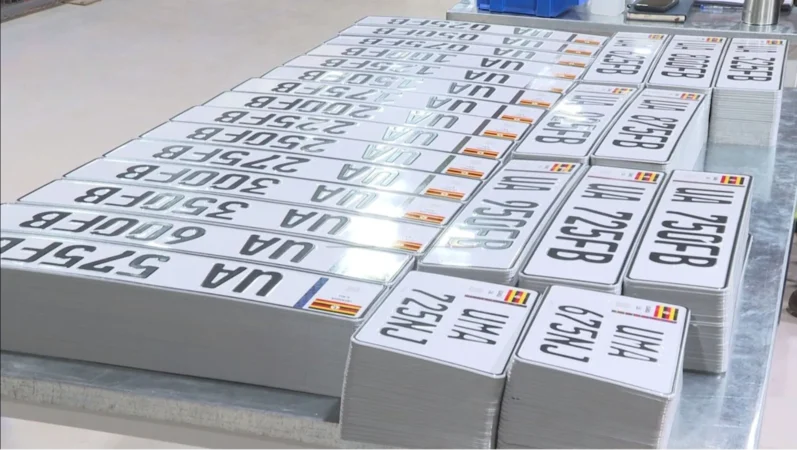



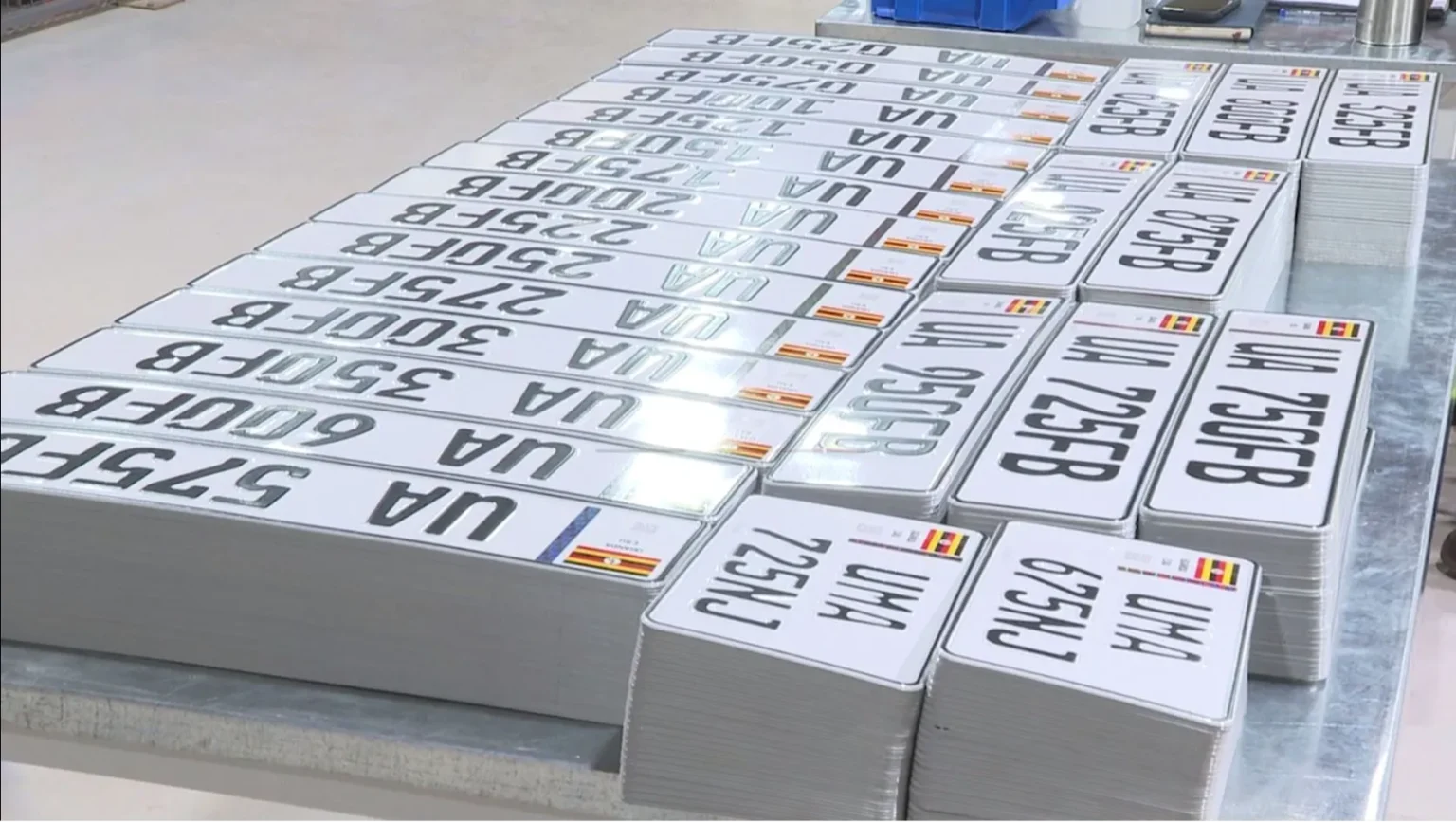
KAMPALA, Uganda — Uganda’s parliamentary investigation into the country’s controversial digital number plate project has taken a dramatic turn, with two government officials arrested after lawmakers questioned conflicting accounts over the cost and procurement of the system.
Nathan Negesa, an official attached to the Office of the President, and Moses Bekabye from the Ministry of Finance were taken into custody on Monday by Criminal Investigations Directorate officers attached to Parliament.
The arrests followed hearings by Parliament’s Committee on Physical Infrastructure, chaired by Mwine Mpaka, which is examining how the digital number plate system was procured, how much motorists are paying for it and whether the technology is delivering the security benefits promised by government.
The inquiry has now moved beyond complaints about delayed plates and high costs to questions about the evidence used to justify the project and the government’s handling of information surrounding it.
Shs714,300 price comes under scrutiny
At the centre of Monday’s hearing was the official charge of Shs714,300 for a new digital number plate.
Negesa was questioned over the financial breakdown supporting the fee. A subsequent breakdown presented to the committee totalled Shs624,000, leaving lawmakers questioning the unexplained difference between that figure and the amount motorists are required to pay.
The Shs714,300 charge is not disputed as the official fee. Uganda’s Ministry of Works and Transport has published the same amount for first-time registration of both motor vehicles and motorcycles.
What Parliament is now examining is how that figure was calculated and whether the cost is justified by the technology and services motorists receive in return.
That question has been building for weeks.
Representatives of manufacturers, car dealers, customs agents and boda boda operators have told the committee about delays, shortages and additional costs associated with obtaining the plates.
The Uganda Manufacturers Association has also raised concerns about the project’s reliance on a single foreign manufacturer, saying the arrangement has contributed to delays and disruption to businesses.
Official says benchmarking trips never happened
The inquiry took another turn when Bekabye acknowledged that an earlier account he had given lawmakers was inaccurate.
He had previously told the committee that Ugandan officials had travelled to China, Russia and India to benchmark the pricing of digital number plates.
On Monday, he reportedly admitted that those foreign benchmarking trips had not taken place.
That admission led to his arrest over what the committee regarded as false testimony under oath.
The development has put greater scrutiny on the process through which the government settled on the price of the digital registration system.
It also raises questions about what evidence officials relied upon when presenting the project and its costs to Parliament.
Parliament tests the technology
The debate over whether the system actually works has produced a more complicated picture.
Lawmakers initially heard conflicting testimony from motorists and industry representatives who questioned whether vehicles could reliably be located through the digital plates.
On September 30, Security Minister Jim Muhwezi told the committee that the tracking system was operational across Uganda and had helped recover stolen vehicles.
Police Director of ICT AIGP Felix Baryamwisaki told MPs that 337 of 375 stolen motor vehicles had been recovered after being tracked through the system — a reported recovery rate of about 90 per cent.
The performance for motorcycles was considerably lower: police reported recovering 174 of 782 stolen motorcycles, or about 22 per cent.
Rather than relying solely on those figures, the committee subsequently visited the Police Command Centre in Naguru and tested the system using lawmakers’ own vehicles.
The test showed that the vehicles could be identified and located through the wider digital tracking system. Committee chairman Mpaka acknowledged that the technology could track vehicles.
That finding is important because it changes the nature of the parliamentary dispute.
The evidence reviewed so far does not establish that Uganda’s vehicle-tracking system is incapable of tracking vehicles. Instead, the unresolved questions increasingly concern how the different components work together, what exactly motorists are paying for, how effectively police respond to alerts and whether the system delivers sufficient value for its cost.
The plate is only part of the system
The digital registration plate is the most visible part of the project, but the Intelligent Transport Monitoring System is considerably broader.
Government documents and parliamentary testimony describe an infrastructure involving tracking technology, communications equipment, data processing and integration with police operations.
Police officials have said the tracker is GPS-based rather than dependent on cameras.
That distinction has become central to the current debate.
Some stakeholders who appeared before Parliament questioned the effectiveness of the system after vehicles and motorcycles fitted with digital plates were reportedly difficult to trace.
The committee’s practical test, however, demonstrated that the wider tracking system can locate fitted vehicles.
The remaining question is therefore less about whether any tracking is possible and more about how consistently the system works across the country, particularly for motorcycles, and whether the infrastructure and police response are sufficient to turn an automated alert into an effective recovery.
A project born from Uganda’s security crisis
The origins of the project stretch back to Uganda’s response to a series of high-profile killings.
President Yoweri Museveni began pushing for electronic number plates and vehicle-tracking technology after the 2018 assassination of former Arua Municipality MP Ibrahim Abiriga and other high-profile attacks.
The government subsequently developed the Intelligent Transport Monitoring System as part of a wider strategy to improve vehicle identification, crime detection and recovery of stolen vehicles.
In 2021, the government entered into a 10-year agreement with Russia-based Joint Stock Company Global Security for the digital number plate project.
The project was eventually rolled out nationally, with new registration plates priced at Shs714,300.
But the security rationale has increasingly been accompanied by concerns over affordability, implementation and accountability.
Questions over value for money
A Daily Monitor investigation published last month reported that documents reviewed by the newspaper raised questions about the project’s financial modelling and feasibility assessment.
According to the report, a 2022 Ministry of Finance review of the project’s feasibility study identified gaps including the absence of a value-for-money assessment, inadequate financial modelling and insufficient analysis of risks and future liabilities.
The documents reportedly showed that the Russian contractor had presented a project cost of about $127 million, without a detailed breakdown of project and operating costs.
The Finance Ministry also raised questions about affordability, risk allocation and the protection of personal data collected through the system, according to the report.
Those historical concerns are now particularly significant as Parliament examines the same project years after the contract was signed.
Privacy remains an unresolved issue
The technology also creates a question that goes beyond the price of a number plate: how much information about motorists and vehicles is being collected, who can access it and how long it is retained.
An earlier parliamentary review of the ITMS explicitly included protection of the public’s right to privacy among its terms of reference.
Government has previously argued that vehicle-tracking information would be used for national security and crime prevention and would be subject to Uganda’s data-protection framework.
But the latest parliamentary inquiry has revived questions over whether motorists are adequately informed about the tracking technology attached to their vehicles and the safeguards governing the resulting data.
Those questions are especially relevant as the system becomes more widespread.
Delays have added to public frustration
The controversy has also been fuelled by long delays in obtaining and fitting the plates.
The Ministry of Works and Transport told Parliament that average waiting times in Kampala had fallen from 19 days in December 2025 to two days in September 2026.
The government has also reported improvements in production capacity and said previous backlogs have been cleared.
But industry groups and motorists have continued to complain about shortages, additional payments and difficulties navigating the registration process.
In September, Parliament heard complaints from stakeholders who said motorists had waited months for plates after making payments.
The Ministry has separately warned against illegal additional charges, saying the official fees are fixed and that demands for unauthorised payments should be reported.
What Parliament must now establish
The arrests of Negesa and Bekabye add a new dimension to an investigation that began with complaints about delays and shortages.
Parliament is now confronting several questions at once:
How was the Shs714,300 fee calculated?
Why did officials give conflicting accounts about the evidence used to determine the price?
Also Read: NTSA tightens KD plate rules, disrupting car imports and deliveries in Kenya
What exactly does the 10-year agreement with the Russian contractor require?
Does the system deliver sufficient security benefits to justify its cost?
Why is the recovery rate for motorcycles substantially lower than that for cars?
And what safeguards protect the large volume of vehicle and owner information generated by the system?
The Naguru demonstration has provided lawmakers with evidence that the wider tracking infrastructure can locate vehicles.
It has not, however, answered the broader questions surrounding cost, procurement, implementation, accountability and data protection.
For motorists, the dispute is ultimately about more than a piece of metal attached to a vehicle.
It is about whether a mandatory payment of Shs714,300 buys a registration plate, a security system, or both — and whether the government can demonstrate clearly what that investment delivers.
Parliament’s inquiry is continuing.
