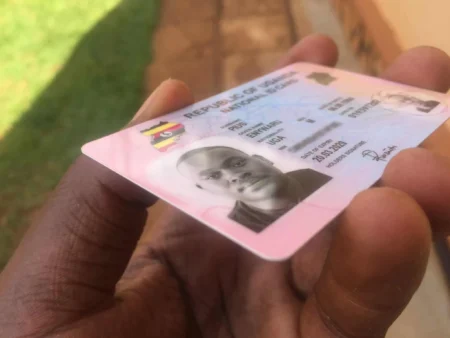



BUNGOMA, Kenya — Efforts to ensure residents of Bungoma County obtain national identity cards and other civil registration documents are being hampered by shortages of staff, vehicles, equipment and suitable office space, officials have told Parliament.
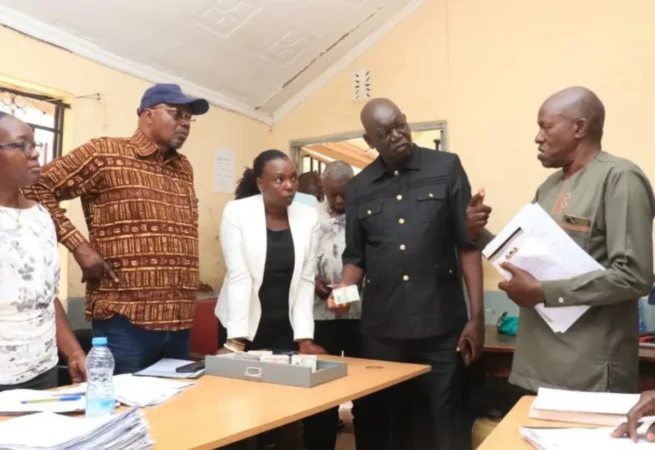
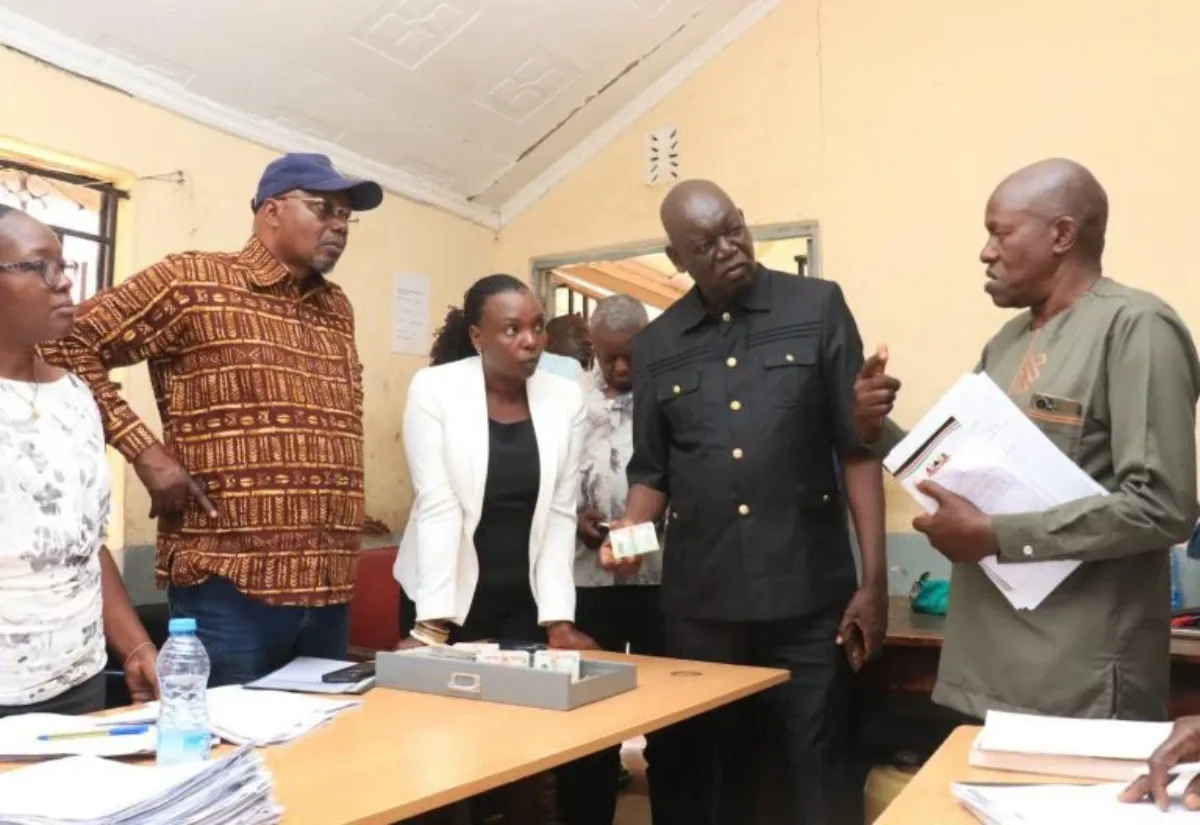
The challenges emerged on Friday, October 2, when the National Assembly Departmental Committee on Administration and Internal Security inspected registration operations in the county.
Officials from the National Registration Bureau (NRB) and Civil Registration Services (CRS) said limited resources were making it difficult to reach residents in remote areas and process applications efficiently.
Among those facing particular difficulties are elderly people, persons with disabilities and residents who have never attended school.
Bungoma County Registration Officer Kennedy Nyaega said some residents were unable to travel easily to registration centres, making mobile and outreach registration particularly important.
“We have the disabled people who cannot move. We have the old people. Some of them never went to school. They don’t know anything about the ID. They are just there. So we are trying to assist them,” Nyaega told the committee.
Bungoma operating with ageing vehicles
Nyaega said the county registration office has only two ageing vehicles to support operations across Bungoma.
One of the vehicles was borrowed from Kimilili, while another was bought in 2007.
He said limited funding was being absorbed by vehicle repairs and maintenance, leaving officers with fewer resources to conduct registration exercises in remote communities.
The effect of additional logistical support was demonstrated during an 11-day Rapid Results Initiative, when vehicles and personnel were deployed from Nairobi.
The additional resources enabled registration teams to reach an extra 43,000 people, bringing the total number reached during the exercise to about 101,000.
Nyaega said the experience showed the importance of taking registration services closer to residents who face difficulties travelling to government offices.
Officials seek another registration drive
Elgeyo Marakwet Woman Representative Caroline Jeptoo Ng’elechei asked whether another Rapid Results Initiative could help address the remaining registration needs in the county.
Nyaega said another exercise would be useful if it was supported with sufficient personnel, vehicles and other logistical resources.
Between July and September, Bungoma recorded 19,361 registrations under the new registration programme, while a further 10,436 applications were processed under other registration categories.
Officials said, however, that significant access gaps remain, particularly among residents who cannot easily reach registration centres.
Identity card production delays
The committee was also told that some delays occur after applications leave Bungoma.
According to Nyaega, identity card production at NRB headquarters in Nairobi can take between three weeks and one month before completed cards are returned to the county.
Some registration officers from Bungoma have consequently been temporarily deployed to Nairobi to help process applications.
The county is also awaiting additional live-capture kits, which officials said would enable more registration centres to provide services and reduce the need for residents to travel long distances.
Registration offices face poor working conditions
The resource constraints extend beyond vehicles and staffing.
Officials told the committee that some registration offices are operating in unsuitable premises.
The Tongaren registration office is housed in rented premises, while the Kimaich office operates from a single room at the Deputy County Commissioner’s premises.
In Webuye, the divisional registration office was demolished after being condemned by public health authorities.
The office has since been operating from a car park, raising concerns over the security and storage of sensitive registration records.
“They are operating from a car park, parking space,” Nyaega told the committee.
The situation raises wider concerns about whether registration infrastructure is keeping pace with demand as the government expands access to identification and civil registration services.
Birth and death registration also affected
The challenges extend to the registration of births and deaths.
Civil Registration Services officials told the committee that birth registration coverage in Bungoma stood at 76 per cent, while death registration coverage was 64.8 per cent.
The registration network has expanded from four sub-counties to all 13 sub-counties, but staffing has not increased at the same pace.
Officials said there is currently only one registrar in each sub-county.
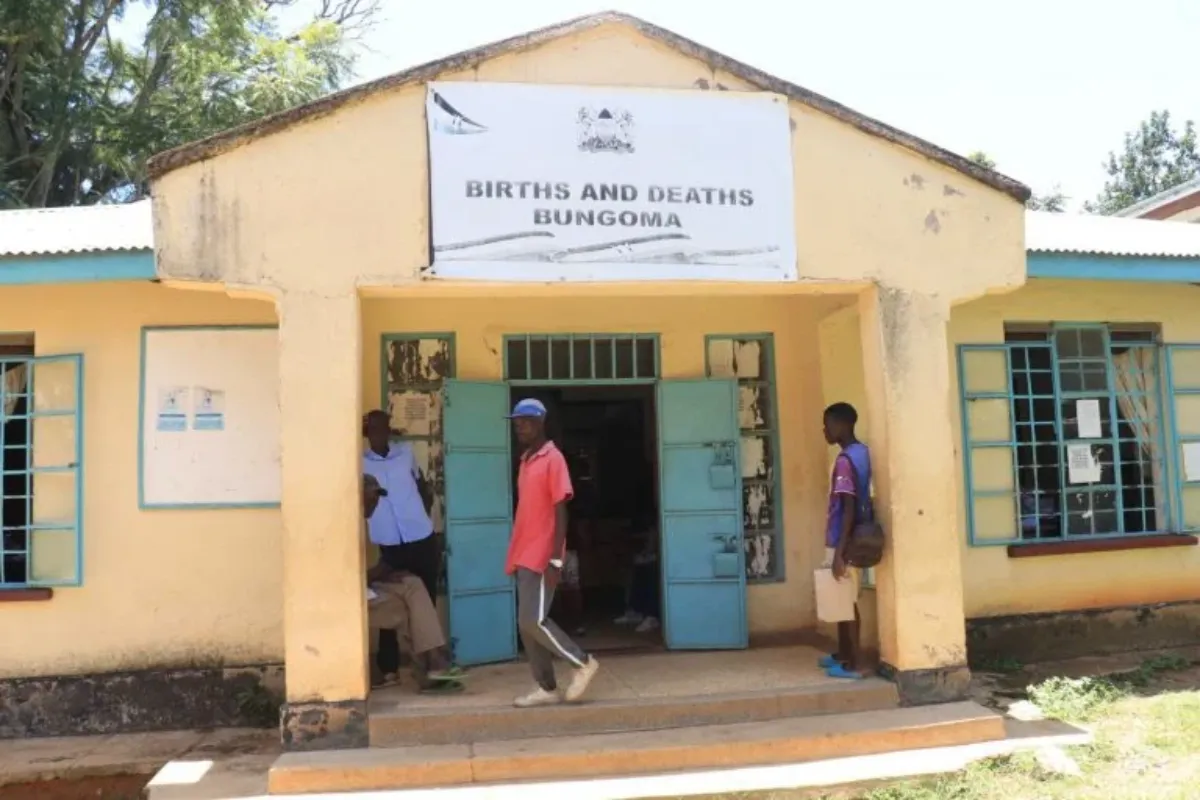
In some cases, the same officer is required to receive applications, verify information, enter records and approve documents, creating pressure on the registration system.
Ng’elechei questioned whether the different stages should be separated to improve efficiency.
Despite the staffing constraints, officials said birth certificates can be issued on the same day when the required notification is available and the e-Citizen payment has been completed.
National registration expansion faces capacity test
Bungoma’s experience highlights the logistical challenge facing efforts to expand access to identity and civil registration documents.
The county has registration services across all 13 sub-counties, while mobile registration exercises have demonstrated that additional personnel and transport can significantly increase the number of people reached.
But the committee was told that permanent shortages of vehicles, staff, live-capture equipment and suitable premises continue to constrain those services.
Also Read: Kenya extends national ID replacement fee waiver to October 2026
For residents in remote areas, the problem is not simply whether a registration centre exists. Distance, mobility, awareness and the ability of understaffed offices to process applications can determine whether they actually receive the documents they need.
The committee’s inspection comes as the government continues efforts to expand national registration coverage and clear outstanding applications.
The National Registration Bureau already provides an online service for verifying national ID application information, but physical registration and collection services remain essential for residents who need to complete the process.
Bungoma County Commissioner Thomas Sankei said National Government Administration Officers continue to support registration activities, particularly during Rapid Results Initiatives.
Officials, however, told MPs that sustained investment in personnel, transport, equipment and office infrastructure would be needed if registration services are to reach more residents consistently.
For thousands of people who still face difficulties accessing identification and civil registration documents, the challenge is therefore not simply registration itself, but ensuring that the government has the capacity to take those services within practical reach of every eligible resident.