


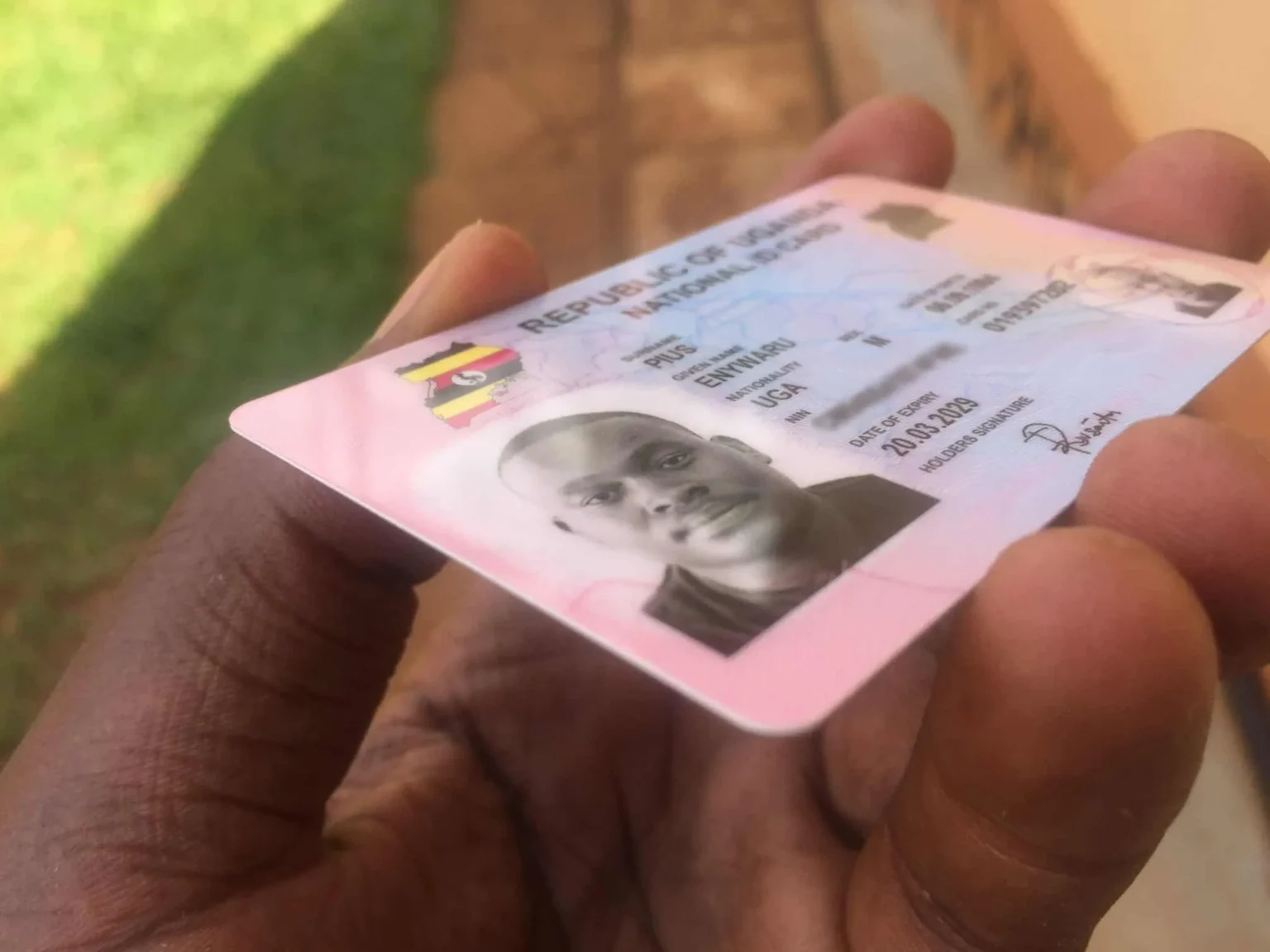
KAMPALA, Uganda — Uganda’s rollout of new national identity cards has come under scrutiny in Parliament after MPs raised concerns that failures in the cards’ Quick Response (QR) code verification system are preventing some citizens from accessing essential services.
Patrick Okello Onguti, the Democratic Party MP for Aswa County, told Parliament on Thursday, August 20, 2026, that holders of the newly issued national IDs were being turned away from some banks and telecommunications service points because their cards could not be electronically verified.
Onguti said the problem was affecting transactions including accessing banking services, registering new SIM cards and replacing existing ones.
“Ugandans are crying out because when seeking banking services, buying new SIM cards from the telecom service providers and SIM card replacements, some of these services that require the QR code, the new IDs’ QR codes are not responding,” Onguti told the House.
He raised the matter during a plenary sitting chaired by Speaker Jacob Markson Oboth-Oboth, calling on the Government and the National Identification and Registration Authority (NIRA) to explain why the QR-code system remained unreliable.
Onguti said NIRA had acknowledged on February 9, 2026, that the QR-code functionality had not yet been integrated into its digital operational system.
According to the legislator, the Authority had indicated that the problem would be resolved by March 31.
He questioned why citizens were still experiencing verification failures months after the stated deadline.
“I therefore pray and request that the Minister for Internal Affairs and NIRA explain to the country and give a deadline when the national IDs will be operationalised,” he said.
The MP also raised concerns over an alleged Shs5,000 charge for a NIRA letter intended to help citizens whose cards cannot be electronically verified have their details integrated into the system.
The claim is likely to increase scrutiny of the transition to the new identification system, particularly because national identification has become a requirement for accessing a wide range of services.
Uganda’s national identification system serves purposes beyond establishing a person’s identity.
Under the Registration of Persons Act, 2015, NIRA is mandated to establish, manage, maintain and operate the National Identification Register, issue national identification cards and verify and authenticate information relating to the registration and identification of persons.
The law provides for the use of a national identification number or national identification card in a range of transactions and services, including banking, insurance, land transactions, pensions, social security, taxation and financial services.
The regulations governing registration of persons also provide for the use of national identification credentials in SIM-card registration and related telecommunications transactions where identification is required.
The reported QR-code failures therefore have implications beyond a technical malfunction. If an identity card cannot be electronically authenticated, citizens could face difficulties accessing banking, telecommunications and other services that rely on identity verification.
The Registration of Persons Act gives NIRA responsibility for maintaining the integrity of Uganda’s national identification system.
The Authority is required to verify and authenticate identification information and safeguard the information and data contained in the National Identification Register.
The law also provides that a national identification card is prima facie evidence of the particulars contained on it.
Also Read: Uganda moves to ease fears over inactive QR codes on new national IDs
NIRA is further mandated to maintain the National Identification Register as an electronic database and continuously update the information held in the system.
Government Chief Whip Dr Jane Ruth Aceng acknowledged the concerns raised in Parliament and said the Government would seek a response from the Minister of Internal Affairs.
The latest concerns come as Uganda continues to transition to the new national identity cards, placing renewed focus on whether the systems supporting electronic authentication are fully operational.
For citizens whose cards cannot be verified, the immediate concern is whether the new identification system will provide a reliable alternative while the technical challenges are addressed.