



NAIROBI, Kenya — President William Ruto has refused to directly address allegations by former Deputy President Rigathi Gachagua that his recent trip to the United States was used to advance a deal to exploit niobium and rare-earth deposits at Mrima Hills in Kwale County, dismissing the claims in personal terms rather than responding to their substance.
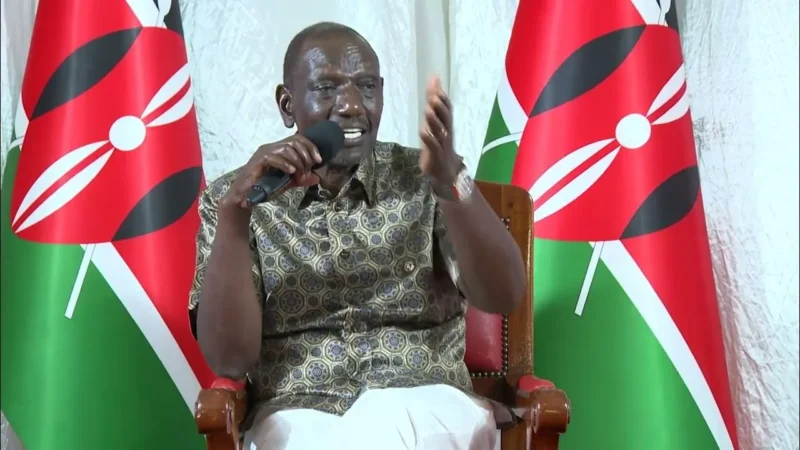
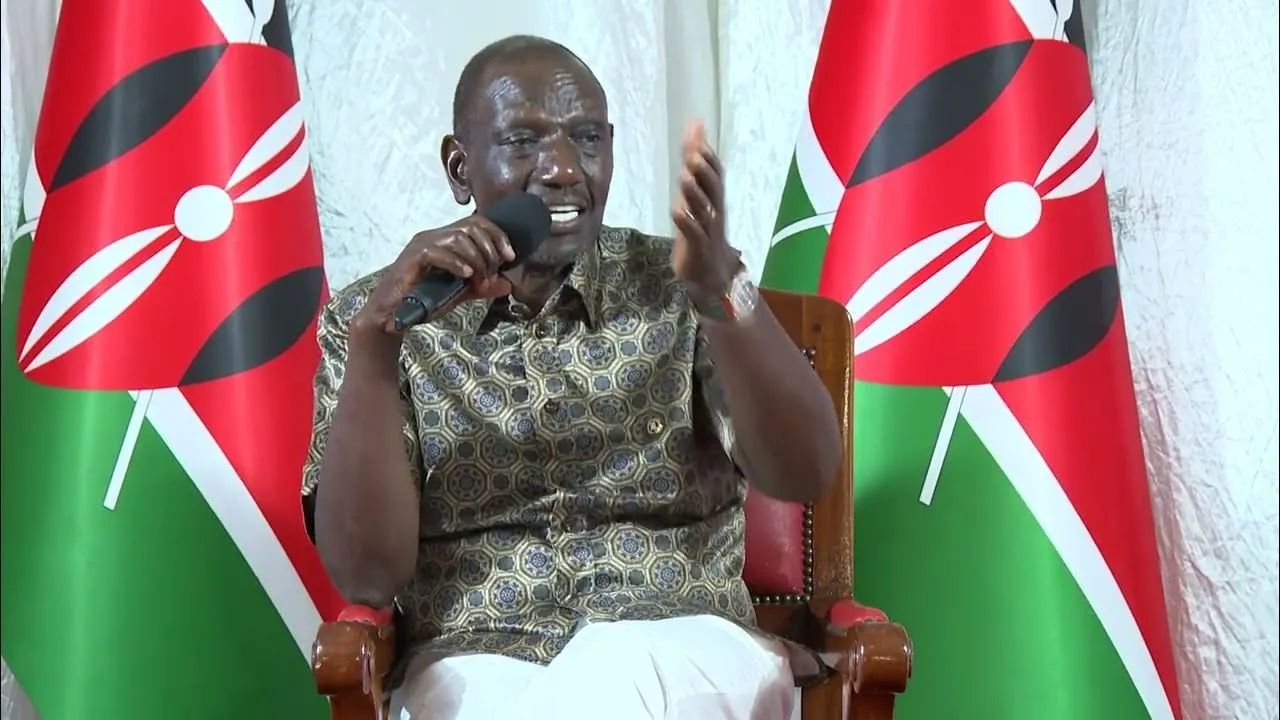
Asked about the allegations during a roundtable media engagement at State House, Mombasa, on Thursday, 1 October, Ruto declined to answer and turned on the journalist instead.
“Please don’t ask me about claims of such a foolish person. Let’s talk about something else. He is a complete fool,” he said, adding: “I am sitting here as the President and you are raising the matters of a madman?”
What Gachagua alleged
Gachagua first raised the claims on 19 September while addressing Kenyans in Kansas City, part of an ongoing tour of the United States. He alleged that Ruto’s attendance at the 81st session of the UN General Assembly in New York doubled as cover for finalising a deal with an American firm to exploit the Mrima Hills deposits.
“His real mission in the United States is to come and seal a deal with Americans on how niobium will be exploited from Kenya,” Gachagua said, claiming that representatives of the American company had visited Kenya roughly four weeks earlier to lay the groundwork.
Gachagua put the value of the deposits at around Sh8.2 trillion and argued that ordinary Kenyans stood to gain nothing from their exploitation.
“The people of Kenya will get zero. All this Ksh8.2 trillion will be split between William Ruto and the American company,” he alleged, without presenting documentary evidence to support the claim.
He said he intended to consult lawyers and prepare legal paperwork to challenge any agreement reached over the site, and separately linked the claim to earlier allegations he had made concerning foreign investor activity at Lake Magadi.
A more complicated picture than either side suggests
The dispute sits atop a genuinely live and only partially resolved question over how Mrima Hills’ mineral wealth will be developed.
Geological surveys have identified substantial deposits at the site, including niobium, rare-earth elements, yttrium, thorium, strontium and lanthanum, with a 2022 survey estimating around 5.8 million tonnes of niobium and 48.7 million tonnes of rare-earth elements across the roughly 32-square-kilometre site, and some valuations placing the deposits’ worth in the tens of billions of dollars.
Mining Cabinet Secretary Hassan Joho told Citizen TV roughly two weeks before Gachagua’s Kansas City remarks that no mining licence had been issued for Mrima Hills, and that the project remained at an expression-of-interest stage rather than a concluded transaction.
The Ministry of Mining gazetted an open public tender for large-scale mining operations at the site in March 2026, and the project is additionally the subject of a pending High Court petition.
At the same time, Ruto’s own public remarks complicate a flat dismissal of any American involvement.
Speaking separately at a G7-linked summit in Geneva, the President confirmed that discussions with US officials over the site were advancing, saying: “We have agreed that the minerals will be processed in Kenya.”
Also Read: Africa’s critical minerals: Who benefits from lithium and cobalt boom?
That statement indicates talks with American counterparts are indeed under way, even as the government maintains no licence has yet been awarded and the matter remains subject to Kenya’s formal tender process — a more nuanced position than either Gachagua’s claim of a concluded, personally enriching secret deal, or Ruto’s characterisation of the entire allegation as the fantasy of a “madman.”
No direct rebuttal offered
Ruto’s response on Thursday did not address any of Gachagua’s specific claims — the alleged American visit, the Sh8.2 trillion valuation, or the assertion that he personally stood to benefit — focusing instead on attacking Gachagua’s credibility.
Gachagua, for his part, has not provided public evidence substantiating the existence of a concluded deal or his claim of personal enrichment, and his allegations remain unverified.
The exchange is the latest in a recurring pattern of sharp personal exchanges between the two former allies, who have repeatedly traded serious, largely unsubstantiated allegations against one another since Gachagua’s removal from the deputy presidency in October 2024.