

ADDIS ABABA, Ethiopia — Ethiopia and Eritrea have severed diplomatic relations in the latest escalation of a rapidly worsening crisis in the Horn of Africa, as renewed fighting in northern Ethiopia raises fears that the conflict could spread beyond the country’s borders.
Ethiopia announced on Thursday that it would close its embassy in Eritrea’s capital, Asmara, and ordered 10 Eritrean diplomats to leave the country within 48 hours.
Addis Ababa accused the diplomats of involvement in activities that posed a threat to Ethiopia’s national security.
Eritrea responded by severing all diplomatic ties with Ethiopia, saying it had no choice but to reciprocate.
The diplomatic rupture marks a dramatic reversal of the rapprochement achieved in 2018, when Ethiopian Prime Minister Abiy Ahmed and Eritrean President Isaias Afwerki restored diplomatic relations after two decades of hostility. The breakthrough earned Abiy the 2019 Nobel Peace Prize.
Tigray conflict drives new crisis
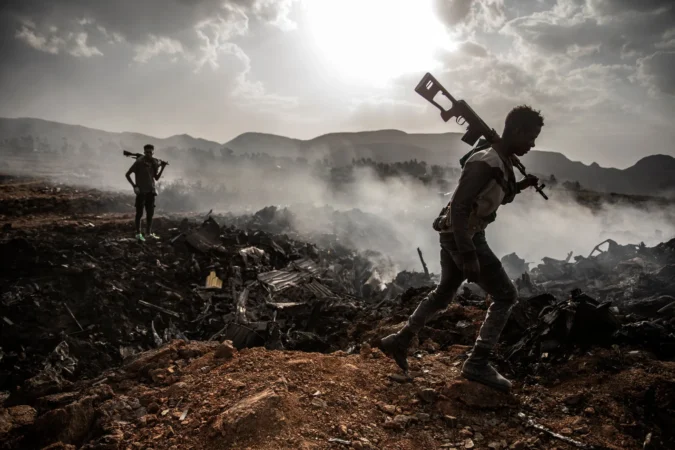
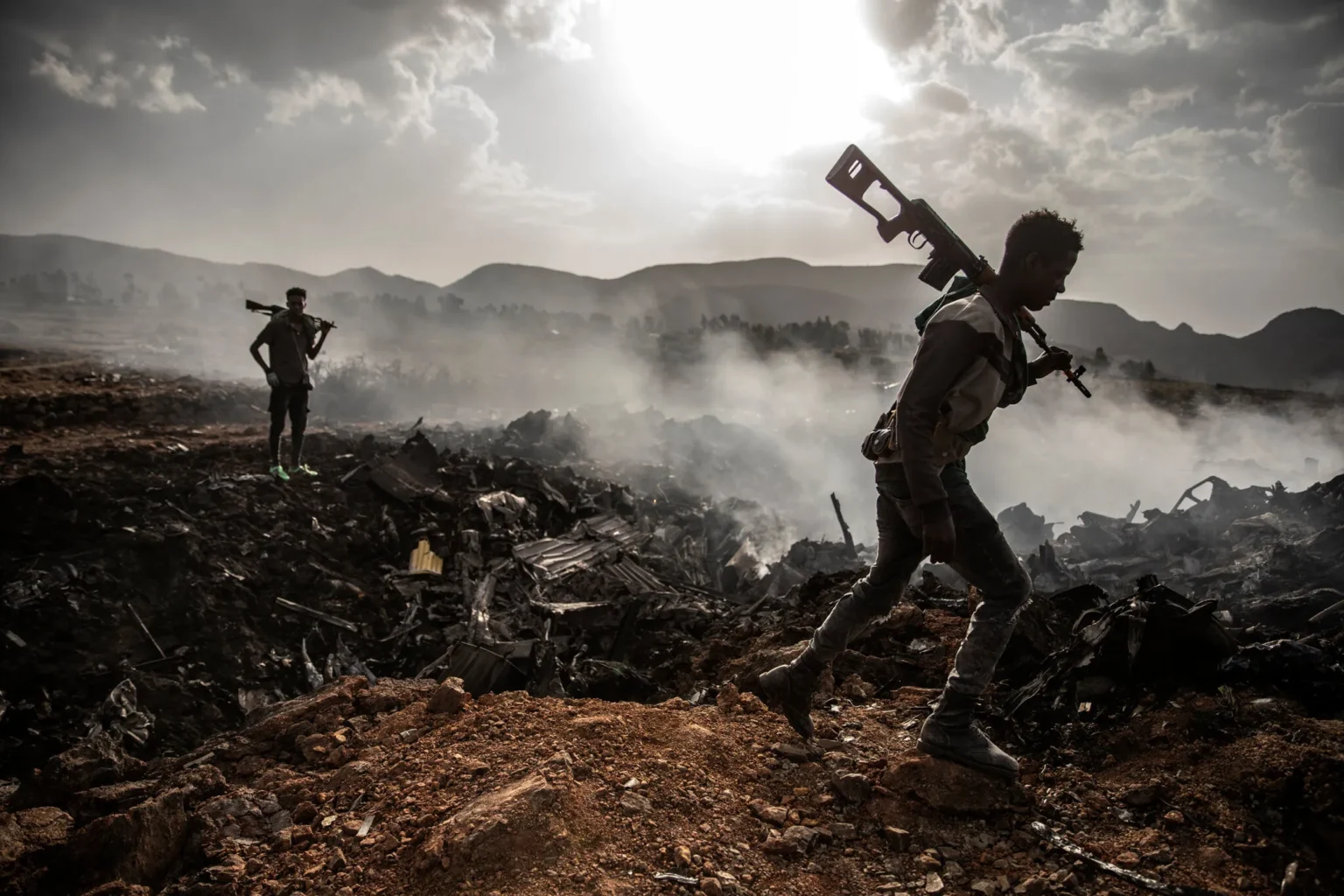
The latest confrontation comes as Ethiopian federal forces and allied militias battle fighters linked to the Tigray People’s Liberation Front (TPLF) and other armed groups across parts of Tigray, Afar and Amhara.
The TPLF joined six other armed movements last month to form an alliance seeking to remove Abiy’s government from power.
Ethiopia has accused Eritrea, as well as Sudan and Egypt, of supporting the opposition alliance. Eritrea has repeatedly denied involvement.
A pro-government militia commander told the BBC that Eritrean soldiers had been involved in fighting in Tigray, but the allegation has not been independently verified.
Eritrea’s Information Minister Yemane Gebremeskel denied that his country was participating in the renewed fighting, accusing Ethiopia’s government of blaming neighbouring states for problems inside the country.
The renewed violence is the most serious escalation since the 2020-2022 Tigray war, which ended with a peace agreement but left relations between Addis Ababa and Asmara deeply strained.
Explosions reported in Addis Ababa
The diplomatic fallout followed reports of powerful explosions in Addis Ababa, including near Ethiopia’s military headquarters.
The blasts came amid reports of drone attacks in the capital, which would represent a significant escalation if confirmed. Ethiopian authorities have not publicly established responsibility for the reported attacks.
Reuters reported that opposition forces were suspected of carrying out drone strikes, while the conflict has increasingly involved new military capabilities and shifting alliances.
Communications with Tigray have also been disrupted, making it difficult to independently verify battlefield developments and reports of civilian casualties.
Federal forces and their allies have reportedly advanced towards Mekelle, the regional capital, while Tigrayan forces have also claimed battlefield gains.
Ethiopia and Eritrea’s troubled relationship
Ethiopia and Eritrea were once bitter enemies before the 2018 peace agreement brought a dramatic thaw in relations.
The two countries had fought a border war between 1998 and 2000, followed by years of hostility and a period described as “no peace, no war”.
When Abiy became prime minister in 2018, he accepted the international boundary ruling that had underpinned the dispute and moved to restore diplomatic relations with Eritrea.
The two governments signed a Joint Declaration of Peace and Friendship in July that year, reopening borders and restoring air and telecommunications links.
The rapprochement later deteriorated.
Ethiopia’s relationship with Eritrea was complicated by the Tigray war, during which Eritrean forces fought alongside Ethiopian federal troops against the TPLF.
After the 2022 peace agreement ended the war, Eritrea was not a party to the deal and tensions continued to rise.
One major source of friction has been Ethiopia’s push for access to the Red Sea.
Ethiopia has been landlocked since Eritrea became independent in 1993 and has repeatedly described reliable access to the sea as an important economic and strategic interest.
Eritrea, meanwhile, has viewed Ethiopia’s ambitions with suspicion, particularly concerns over its ports and sovereignty.
Egypt also drawn into diplomatic confrontation
The diplomatic crisis has also extended to Egypt.
Ethiopia expelled an Egyptian diplomatic staff member on Thursday and gave him 48 hours to leave the country.
Egypt subsequently ordered an Ethiopian embassy official to leave within the same period, according to Egyptian state-affiliated media.
The move adds another layer to already strained relations between Cairo and Addis Ababa.
At the centre of that dispute is the Grand Ethiopian Renaissance Dam (GERD) on the Blue Nile.
Egypt, which depends heavily on the Nile, has long raised concerns about how the dam could affect downstream water supplies, while Ethiopia views the project as central to its economic development and electricity generation.
Ethiopia has also accused Egypt of supporting the opposition alliance, an allegation Cairo has denied.
Fears of a wider Horn of Africa crisis
The collapse in Ethiopia-Eritrea relations has heightened concerns that the fighting could develop into a broader regional crisis.
The Horn of Africa is already dealing with overlapping conflicts and rivalries, including the war in neighbouring Sudan and longstanding disputes over access to the Red Sea.
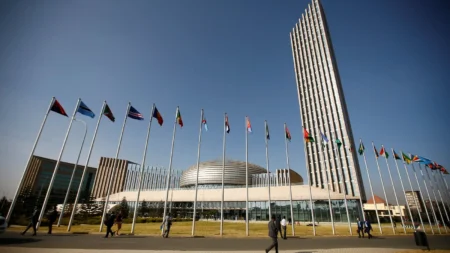
The African Union Commission has urged Ethiopia, Eritrea and Egypt to exercise maximum restraint and avoid actions or statements that could further escalate tensions.
It has also called on the countries to preserve communication channels and resolve their differences through established diplomatic mechanisms and peaceful dialogue.
The United Nations has similarly warned about the deteriorating humanitarian situation in northern Ethiopia, where insecurity, fighting, road closures and reported air and drone activity are disrupting humanitarian operations.
Aid agencies have called for safe and unhindered access to civilians in need.
Humanitarian concerns grow
The renewed fighting has already displaced civilians and disrupted daily life in parts of northern Ethiopia.
Reports from Tigray indicate shortages of cash and fuel and disruptions to essential services, while people in affected areas have fled their homes as fighting intensifies.
The scale of the humanitarian consequences remains difficult to establish because access to some parts of Tigray is severely restricted.
Also Read: US imposes targeted visa restrictions for some Ethiopians
Both sides accuse the other of starting the latest hostilities.
Tigrayan authorities say their forces were responding to a federal offensive and drone strikes, while Addis Ababa says Tigrayan fighters initiated attacks after taking control of federally administered facilities.
Those competing accounts have not been independently verified.
For Ethiopia and Eritrea, the diplomatic rupture represents one of the sharpest reversals since the historic 2018 peace agreement.
For the wider Horn of Africa, the combination of renewed fighting, external alliances and collapsing diplomatic channels has created a fresh test for regional efforts to prevent another major conflict.