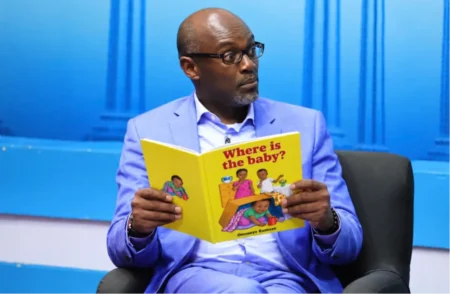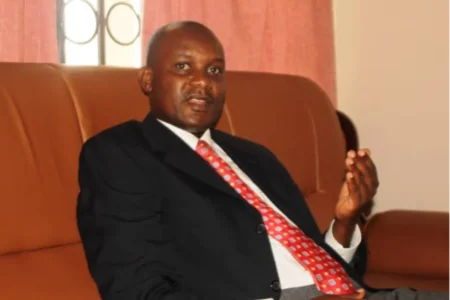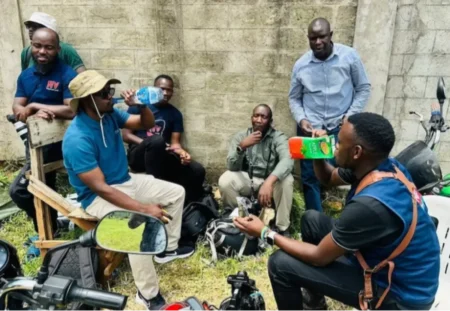


FORT PORTAL, Uganda — For decades, Ugandans knew Edward Rukidi Kijanangoma as a familiar voice on state television, a veteran news anchor and editor who spent more than 20 years covering the country’s public affairs. On Monday, the 56-year-old journalist instead became the story himself, crowned the new king of the Tooro Kingdom at a ceremony overshadowed by a bitter and unresolved royal succession dispute.
Kijanangoma, who takes the royal name Nyabongo I, was enthroned at the Karuziika Palace in Fort Portal, succeeding King Oyo Nyimba Kabamba Iguru Rukidi IV, who died of cancer on 27 August at the age of 34 after 31 years on the throne — a reign that began when he became king as a three-year-old following his father’s death, at the time making him the world’s youngest monarch.
Tooro’s coronation rituals begin around midnight, according to the kingdom’s Information Minister, Charles Mwanguhya, who described the ceremony to the BBC’s Focus on Africa podcast.
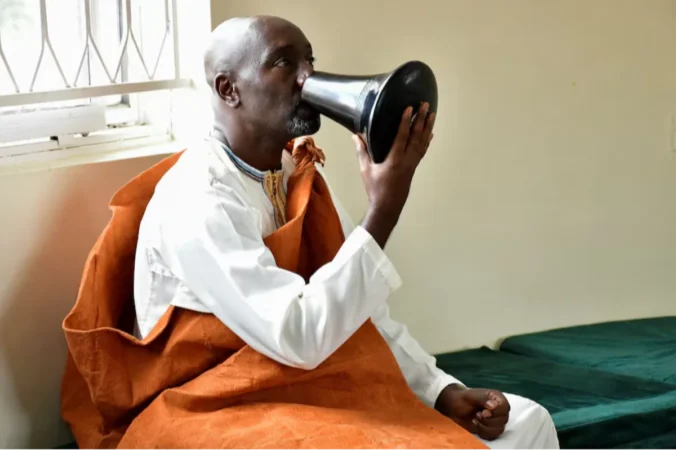
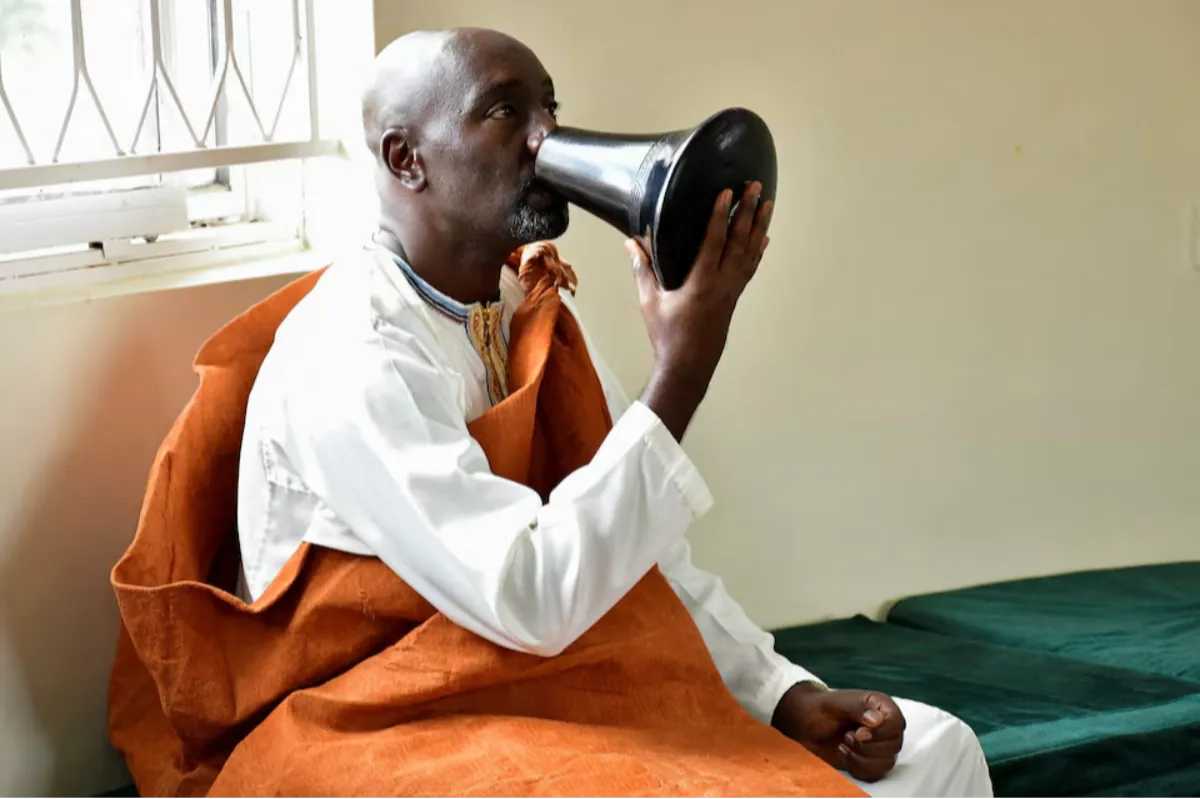
The new king walks roughly four kilometres to the Karuziika royal palace, where he undergoes a mock fight symbolising that kingship is not easily won, before being blessed by members of the ruling Babiito clan. He then performs a series of further rites before finally being seated on the throne and crowned.
The date, 29 September, was set by the Babiito clan’s Musuuga, or clan head, Charles Kamurasi, after the Tooro Supreme Council formally endorsed Kijanangoma as Oyo’s successor earlier this month.
President Yoweri Museveni is attending as chief guest, marking his first visit to a Tooro royal ceremony in 16 years — a presence widely read as a signal that the government now regards the succession question as effectively settled, though no formal government statement recognising the new king has been issued.
Kijanangoma’s path to the throne has been far from smooth. Tooro tradition holds that a recognised son of the deceased king should inherit the crown, and members of the royal family maintained that Oyo had left both a young son and a will instructing that the child succeed him.
But the boy’s existence was never publicly confirmed, and the 21-member Babiito clan committee tasked with selecting the new king ultimately did not recognise any such heir, instead endorsing Kijanangoma.
Oyo was never publicly married, and little is known about the woman said to be the child’s mother.
Oyo’s mother, Queen Best Kemigisa, has strongly objected to the process, describing the announcement of Kijanangoma’s selection as coming while her son’s will was still being read to the family, and while celebrations were under way “only metres” from where his body lay.
She has said the boy, believed to have been in Texas, was due to return home but could not do so amid the dispute, arguing on social media that no child should be drawn into hostility over his father’s homeland.
Minister Mwanguhya, however, told the BBC that the absence of any public presentation of the child had fostered a “growing acceptance,” however painful, that Oyo did not in fact leave a son behind. He said the royal line had instead shifted within the wider ruling clan.
Kijanangoma and the late King Oyo were cousins, both grandsons of King George David Matthew Kamurasi Rukidi III, the 11th Omukama of Tooro, who reigned from 1928 to 1965 — the lineage from which, according to palace sources, any new king must descend. Among others considered for the throne was Prince George Desmond Kamurasi, a goalkeeper for a well-known English amateur football club, who reportedly declined the offer citing other commitments.
The dispute over Oyo’s own succession in 1995 similarly ended up contested before eventually being settled, underlining a pattern of difficult transitions within the kingdom.
Oyo’s burial on 12 September was itself marked by tension, with local reports describing chaotic scenes at the Karambi Royal Tombs involving Kemigisa and cultural and national authorities, reportedly requiring Museveni’s phone intervention before the burial proceeded under a seven-gun salute.
Kijanangoma performed a symbolic ritual at the graveside, casting nine coffee berries into the grave to mark the formal handover of power.
Uganda’s Attorney General, Sam Mayanja, cleared the kingdom to proceed with the coronation, saying no formal complaint had been lodged against Kijanangoma’s selection. Gen Muhoozi Kainerugaba, Uganda’s Chief of Defence Forces and Museveni’s son, has also publicly backed the new king, posting “Long may he reign” on X.
Uganda’s traditional kingdoms hold no formal political power but carry significant cultural weight and command deep community loyalty. The country recognises four main kingdoms, the largest being Buganda, which encompasses the capital, Kampala.
The monarchies were abolished in 1967 and restored in the early 1990s under Museveni’s government, officially to promote cultural pride and unity, though the move has also been widely read as a way of cultivating political loyalty among Uganda’s traditional communities.
Kijanangoma’s very name carries dynastic weight: his father, the first to bear the name, was born the year King Rukidi III ascended the throne and was given a name meaning “one who comes with the royal drum” — a name palace tradition holds was prophetic of the crown’s eventual return to that line, two generations later.
Also Read: Tooro Prince David Kijanangoma dies of cancer, weeks after King Oyo’s death
Born in 1970 and raised in Kidukuru village near Fort Portal, Kijanangoma studied mass communication at Makerere University, graduating in 1999, before building a broadcasting career spanning more than two decades, including work in Rwanda and at Uganda’s state broadcaster, UBC.
On being named king, he said he intended to use the relationships built over two decades in journalism to benefit his people, and pledged an open palace focused on unity and development.
“They have given me this title as king, but I cannot work alone — I have to work with you,” he told supporters after his selection.
His mother, Assimwe Yusta Kijanangoma, told the BBC she raised him according to traditional discipline and instruction, describing him as even-tempered and unlikely to react harshly even when wronged.
She said she felt proud but held mixed emotions, given that her son inherits the throne in the wake of what she called the death of a great man.