

SAMBURU, Kenya — Former Deputy President Rigathi Gachagua has accused President William Ruto’s government of mistreating pastoralist communities in northern Kenya, alleging that police shot dead hundreds of livestock in Samburu County and linking the killings to a wider pattern of land seizures he says is driven by mineral interests.
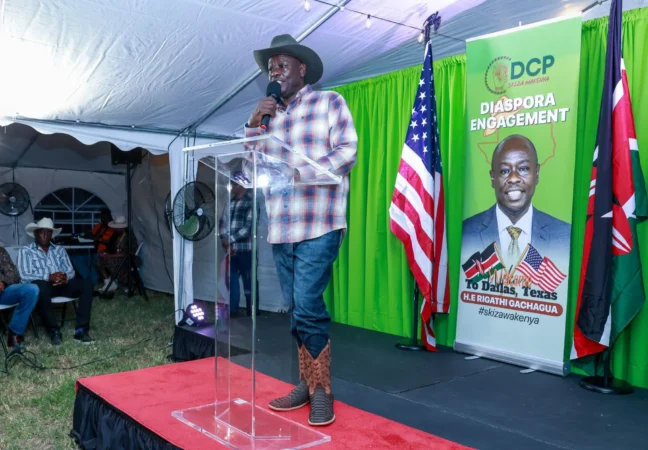
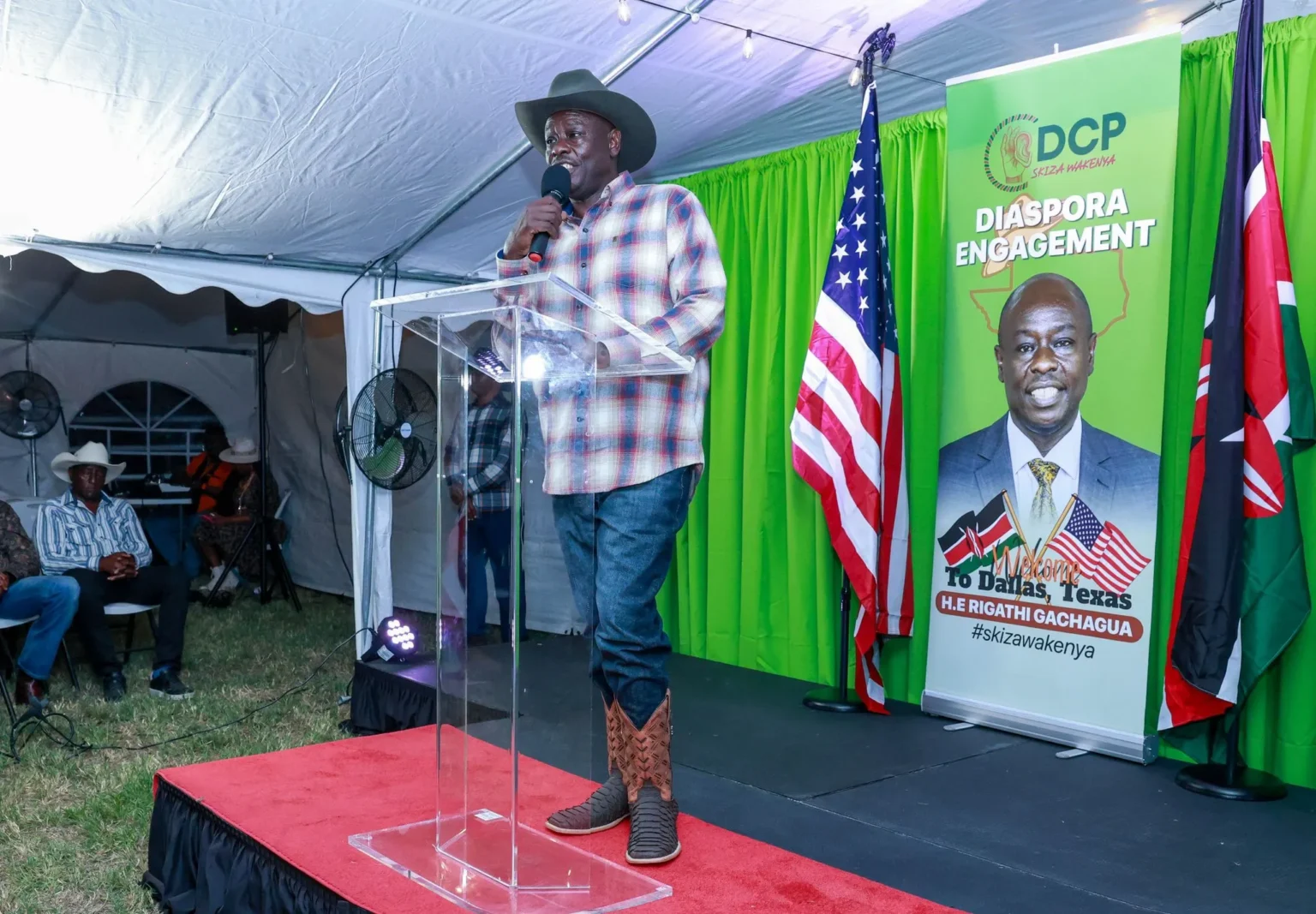
Speaking while in Texas, Gachagua said he had received calls through the night from residents of Samburu, Narok and Kajiado describing what he called their suffering and a sense of betrayal by leaders who had failed to speak up for them.
The livestock deaths Gachagua referenced occurred during a joint security operation in the Losea area of Waso Ward, Samburu East, near the Samburu-Isiolo border, where police and allied units were deployed to pursue armed bandits, recover illegal firearms and trace stolen government rifles following a spate of attacks that had killed police officers, a National Police Reservist and civilians.
The operation escalated into widespread livestock deaths, though the precise toll remains disputed. Samburu Senator Lelegwe Ltumbesi told the Senate that 415 goats and 102 cattle were killed over three days, while Samburu East MP Jackson Lekumontare put the figure considerably higher, at more than 700 goats and 500 cattle, alongside donkeys.
Other reports have cited losses of around 700 animals in total and estimated the financial cost to affected families at roughly Sh70 million. None of these figures have been independently verified, and no final official tally has been released. Two residents were also reported to have been shot and wounded during the operation.
Interior Cabinet Secretary Kipchumba Murkomen has acknowledged that livestock were killed during the operation and has directed security agencies to exercise greater caution to avoid civilian casualties and unnecessary loss of livestock, while maintaining that the government would continue operations against those holding illegal firearms or attacking officers and civilians.
Samburu Governor Lati Lelelit has been sharply critical of how the operation was conducted, describing its outcome as involving “severe human rights violations, atrocities, and the indiscriminate killing of livestock.”
Local leaders, including Lekumontare, have called for an independent investigation and compensation for affected families.
Gachagua went considerably further than local leaders in his characterisation of events, framing the killings as a deliberate act targeting the community rather than a security operation that caused unintended harm.
“Cows that have done no wrong, that have not opposed William Ruto, that do not vote, that cannot say ‘one term’ or ‘Ruto must go’ were shot. The Samburu and the wider Maasai community are asking why William Ruto is mistreating them in this way,” he said, describing the killings as a grave insult and a deliberate attempt to show the community it does not matter to the government.
He accused Murkomen directly of deploying the officers responsible. “I condemn in the strongest terms possible the killing of cows in Samburu County by William Ruto’s government, using Kipchumba Murkomen,” Gachagua said.
Neither Ruto’s office nor Murkomen has responded specifically to Gachagua’s characterisation of the operation as a deliberate attack rather than a security response that went wrong.
It is worth noting that Samburu and Maasai are related but distinct communities, both belonging to the wider Maa-speaking peoples of the Rift Valley, though they are generally identified as separate ethnic groups.
Gachagua’s remarks referred to the affected areas collectively as Maasai without distinguishing between the two communities.
Gachagua went on to allege a wider pattern of land seizures affecting Maa-speaking communities, claiming the government had taken land belonging to Maasai clans at Kibiko, that land at Amboseli in Kajiado had been taken from residents despite a court order requiring its return, and that land in Narok had been taken to build a hotel along a wildlife migration route.
He said affected communities had not received basic services such as roads and water despite these grievances. These specific land claims are Gachagua’s own allegations and have not been independently verified for this report.
He also linked the alleged seizures to mineral wealth, claiming land in Samburu, Narok and Kajiado contains deposits including lithium, and suggesting this was a motive behind government actions.
“Now that fellow Ruto has grabbed Maasai lands. He has grabbed lands containing minerals. He has hurt this community,” he said. No evidence was presented to substantiate a link between the Samburu security operation and mineral exploration interests.
Also Read: Uganda to import improved cattle breeds from Kenya, launches new anti-tick vaccine
Gachagua also criticised elected leaders in the affected counties, saying Samburu residents were unhappy that their governor and representatives had stayed silent rather than speaking out — a characterisation that sits somewhat at odds with Governor Lelelit’s own public criticism of the operation, cited above.
He made similar claims about Narok’s leadership, while saying only Kajiado’s governor had raised the issue and faced intimidation as a result, and naming the area’s senator as among the few who had spoken up.
Gachagua said he intends to travel to Kenya next month to meet directly with the affected communities.