


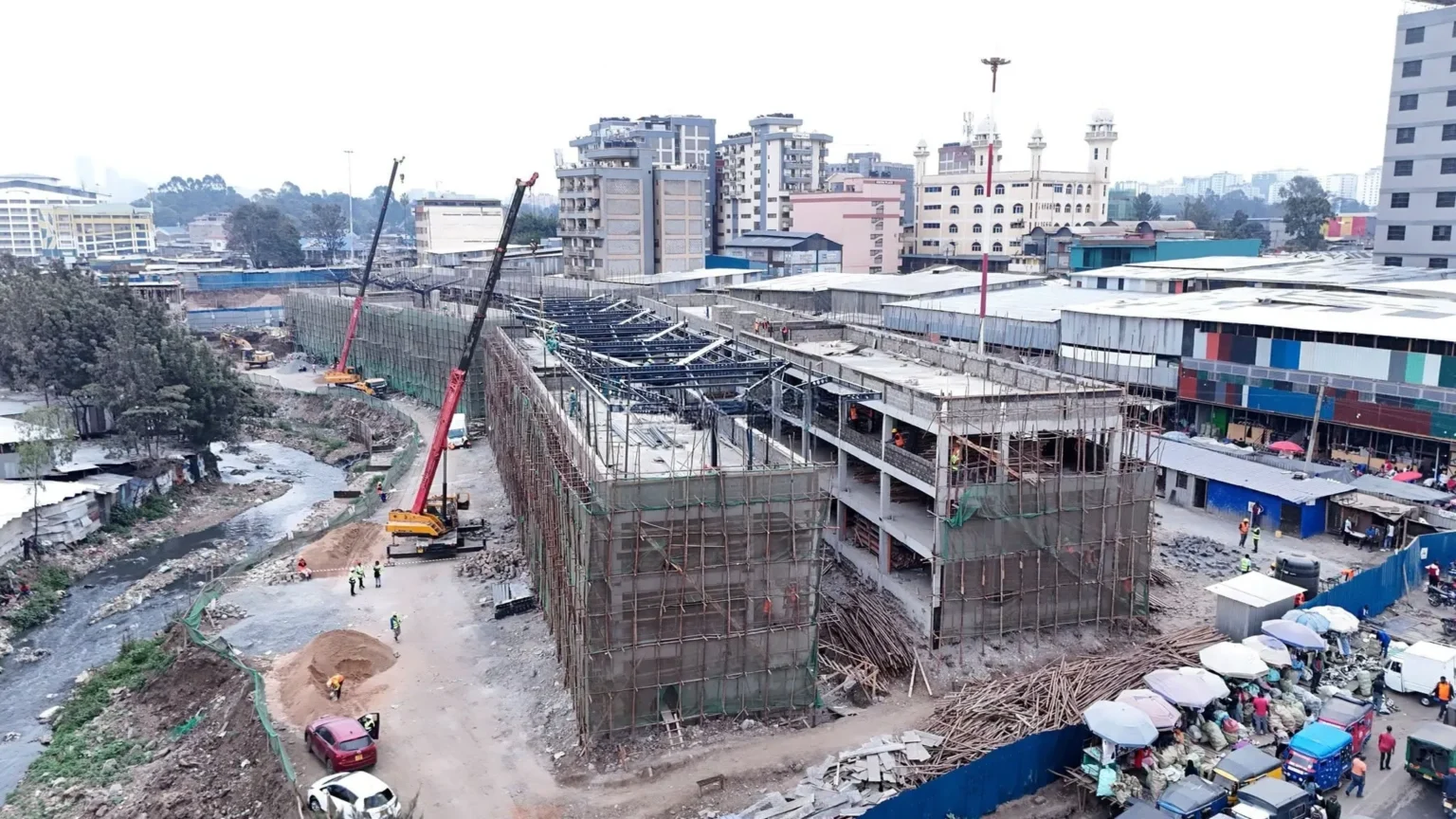
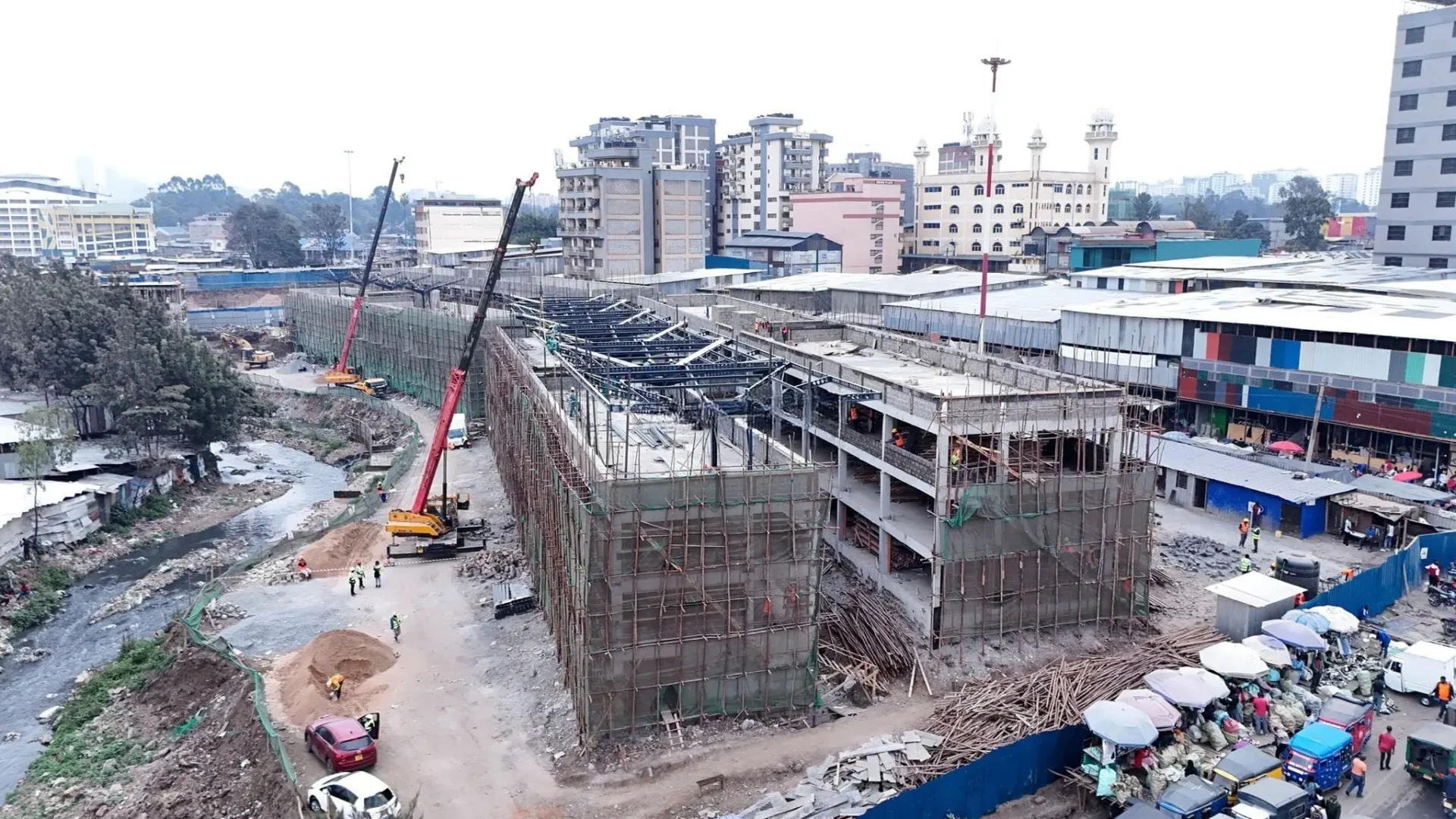
NAIROBI, Kenya — Construction of the new Gikomba Market in Nairobi is progressing, with three multi-storey blocks already standing as the government moves to transform the sprawling trading hub into a modern commercial complex.
Interior Principal Secretary Raymond Omollo said on Wednesday, August 19, that roofing and internal installations were underway as the first phase of the project advances.
“Three massive multi-storey market blocks have risen on site, with roofing and internal installations underway,” Omollo said.
The construction follows the initial clearance of informal timber structures along the Nairobi River corridor earlier this year, part of a broader plan to redevelop the area and improve safety and infrastructure around the market.
New market to accommodate 7,000 traders
According to Omollo, the first phase will provide well-ventilated, numbered stalls across multiple levels for up to 7,000 traders.
A dedicated fish-processing section will also be established, with space for about 300 traders operating in the sector.
The market is expected to include a range of facilities designed to improve working conditions for traders and visitors.
They include a day-care centre, modern kitchens, sanitation facilities, an ICT hub and a youth community centre.
The complex will also have basement parking, designated waste collection points and an integrated fire station.
The facilities are intended to address some of the long-standing challenges associated with Gikomba, one of Nairobi’s busiest and most congested trading centres.
Government targets phased construction
Housing Principal Secretary Charles Hinga announced the redevelopment plans on March 31, saying construction of the new market was expected to take about six months.
Hinga said the government had adopted a phased approach to avoid completely disrupting traders’ livelihoods during construction.
Alternative trading spaces, he said, had already been provided.
“There are no jobs that are being lost because we have provided them with an alternative space to trade. We have to do it in phases; you cannot displace over 200,000 traders in one day,” Hinga said.
He described Gikomba as an increasingly dysfunctional trading centre because of overcrowding, inadequate space and pressure from the growing number of traders and customers.
“It is the only place that does not reject anyone. Because of that pressure that has grown over time, Gikomba has become dysfunctional,” Hinga said.
Hinga said the government had committed KSh5 billion towards construction of the modern market.
The investment is intended to create a more organised and dignified trading environment while providing facilities that cater for the needs of traders and their families.
He said the redevelopment was discussed with President William Ruto, who committed the funding through the State Department responsible for housing and urban development.
The government has presented the project as a major upgrade of a market that has struggled to keep pace with the rapid growth of commercial activity.
Gikomba riverfront to be transformed
The market redevelopment is also being linked to the Nairobi Rivers Regeneration Programme, with plans extending beyond the commercial complex itself.
Omollo said retaining walls were being constructed to strengthen sections of the Nairobi River’s banks.
Plans also include recreational areas and sports fields alongside the rehabilitated waterway.
Also Read: Search and rescue operation ongoing after building collapse at Nairobi’s Gikomba market
“Retaining walls are strengthening the riverbanks, while plans provide for recreational spaces and sports fields alongside the rehabilitated waterway, creating a safer and more functional public environment,” Omollo said.
The riverfront component is expected to improve safety around the waterway while creating additional public spaces within the densely populated commercial area.
For traders, the success of the redevelopment will ultimately depend on whether the new facilities can accommodate existing businesses without disrupting livelihoods and whether the promised infrastructure can address the congestion, sanitation, fire safety and accessibility problems that have affected Gikomba for years.
With the first three blocks now taking shape, the government is presenting the project as a shift from Gikomba’s overcrowded traditional market model towards a planned multi-level commercial centre.