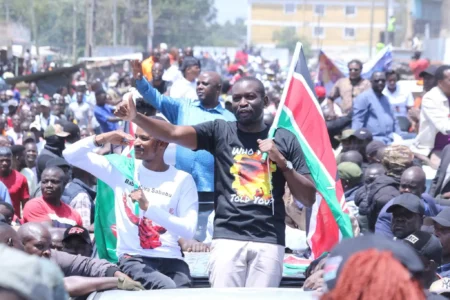




HOMA BAY, Kenya — Homa Bay Governor Gladys Wanga has defended the state of roads in the county after images taken during the Linda Mwananchi political tour triggered criticism and renewed debate over development in the region.
Speaking to the press on Monday, August 17, Wanga said she was not embarrassed by the condition of the roads, arguing that they reflected decades of infrastructure challenges and marginalisation rather than the failure of local residents.
“The dust on the Mbita–Sindo–Kiabuya–Sori corridor tells a story. But it is not the story of a people who have failed. It is the story of a region that has waited far too long for the infrastructure required to unlock its potential,” Wanga said.
The Governor’s remarks followed criticism from some Kenyans after images showing dusty roads and unfinished developments in parts of Suba South circulated online during the opposition-led Linda Mwananchi tour.
Wanga argued that the political tour had inadvertently drawn attention to infrastructure problems that residents had faced for years.
Wanga turns road criticism into political argument
The Governor said the condition of the Mbita–Sindo–Kiabuya–Sori corridor should be viewed in the context of the region’s long-standing development challenges.
She criticised Linda Mwananchi leaders for ridiculing the road, arguing that the political camp’s alleged sponsor had previously been part of governments responsible for development decisions affecting Homa Bay.
“What was billed as a tour of Homa Bay ended up doing something its organisers did not intend: it highlighted the very tribulations our community has been fighting to overcome,” Wanga said.
She said poor roads had consequences beyond their physical appearance, affecting access to markets and healthcare while increasing transportation and business costs.
Wanga also linked the region’s development history to Kenya’s broader political history, arguing that the failure to develop parts of Nyanza could partly be understood through the political marginalisation of prominent leaders from the region, including Jaramogi Oginga Odinga, Tom Mboya and Raila Odinga.
Wanga cites road construction figures
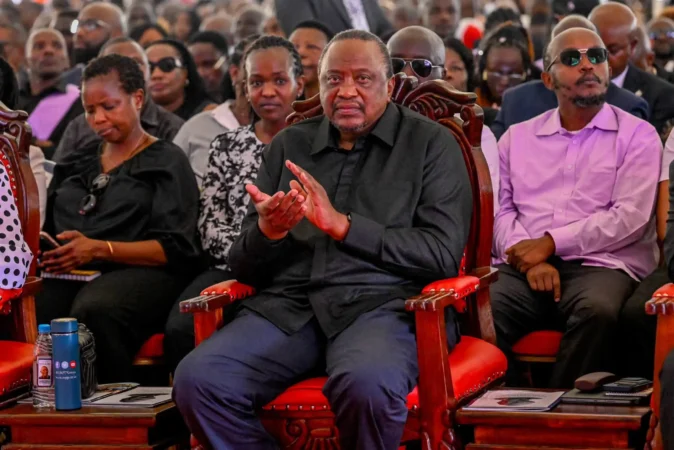
Wanga said the disputed road was initially scheduled for construction in 2016 but that only 74 kilometres had been completed under the administration of former President Uhuru Kenyatta.
She said the current administration had since accelerated work on the corridor.
“In the last two years, 28km have so far been tarmacked, with works currently ongoing,” she said.
Wanga emphasised that the construction of the major trunk road falls under the national government’s mandate rather than the county government.
She argued that a project of that scale could not reasonably be financed through devolved funds or the Constituency Development Fund.
“It is important to note that a 74km trunk road is not something that devolution or CDF can address,” she said.
Governor backs Ruto’s development record
Despite the criticism surrounding the road, Wanga praised President William Ruto’s administration for what she described as increased attention to infrastructure development in Homa Bay.
She said projects undertaken since 2024 included road improvements, construction of markets and development of the Raila Odinga Stadium.
Wanga said the projects demonstrated what she viewed as the national government’s willingness to address historical development gaps in Nyanza.
She went further to link the projects to the political choices facing residents ahead of the 2027 General Election.
“Neglect is a subject we do not shy away from; it is why we urge our people to look past sideshows and support an administration that has shown genuine willingness to correct the marginalisation of Nyanza and other underserved regions,” she said.
Her comments effectively turned the controversy over the viral road images into a broader political argument over the region’s development record and the responsibilities of successive national governments.
Viral images fuel Homa Bay debate
The debate began after images captured during the Linda Mwananchi tour showed dusty roads and unfinished developments in parts of Homa Bay County.
Some social media users compared the scenes to a war-torn environment, prompting criticism of the county’s development record.
The images also became part of the wider political contest between supporters of the government and opposition leaders participating in the Linda Mwananchi campaign.
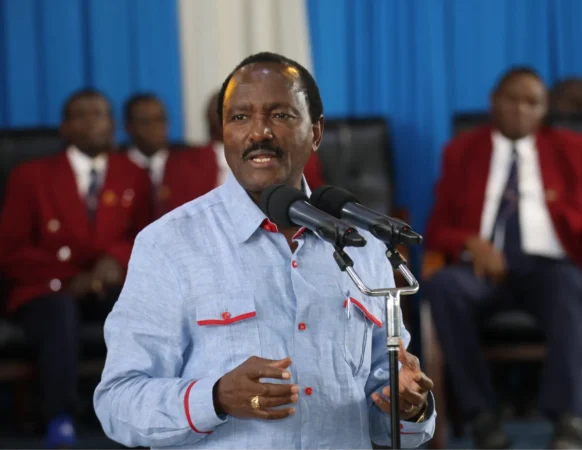
Also Read: Kalonzo hits back at Ruto over roads record, defends 40-year legacy
Government communications strategist Dennis Itumbi offered a different interpretation of the images, arguing that they also captured ongoing government development projects, including affordable housing units in the county.
The competing interpretations have since turned the images into a political debate over whether they demonstrate government neglect or ongoing development.
For Homa Bay residents, however, the road controversy goes beyond political messaging. The condition of rural and trunk roads directly affects movement, access to healthcare and markets, transport costs and the ability of businesses and farmers to reach customers.
The debate is therefore likely to continue as political parties and leaders increasingly use infrastructure and development records to make their case to voters ahead of the 2027 election.