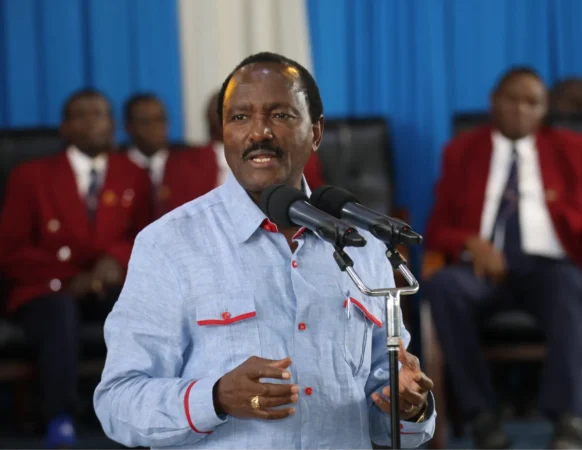



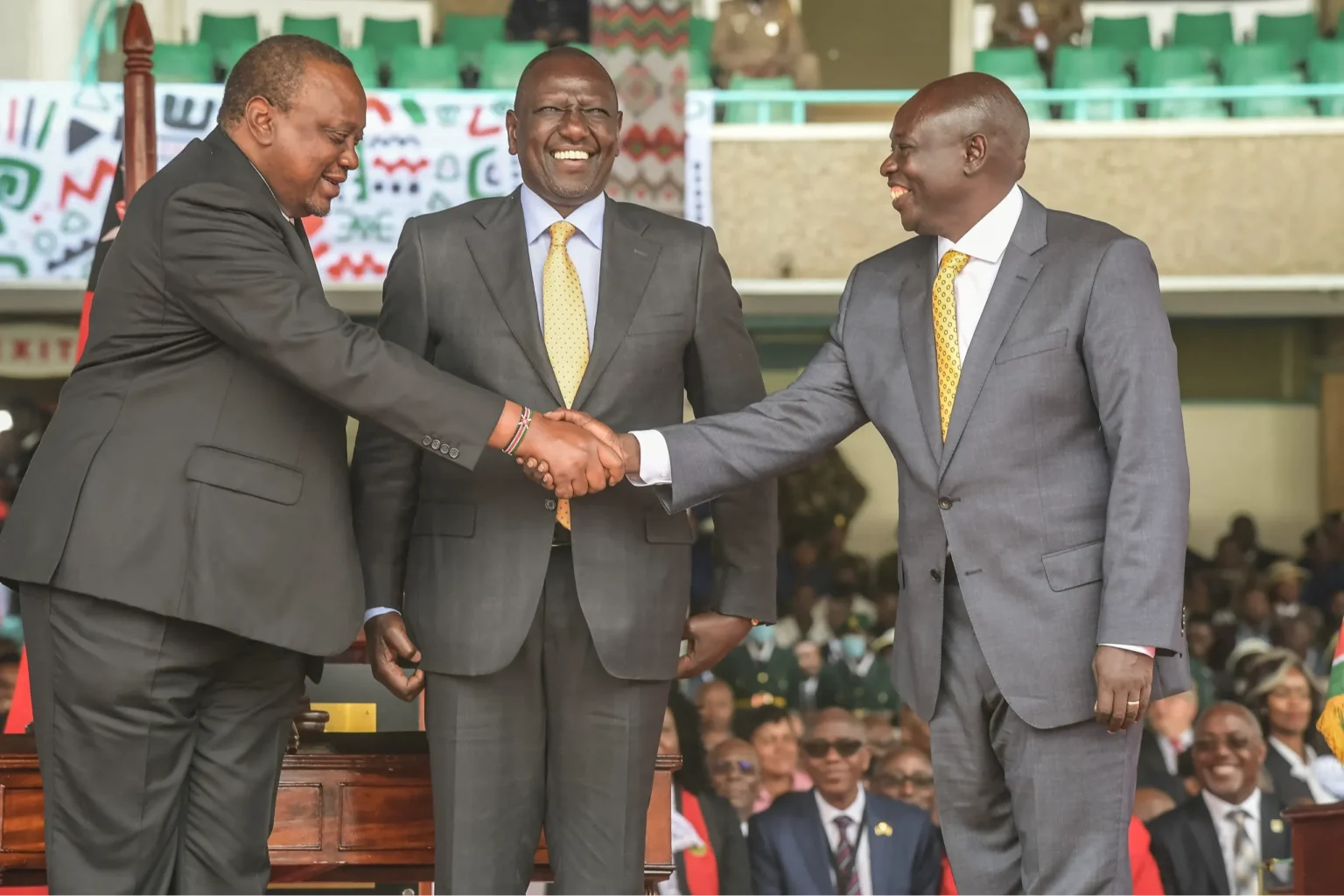
NAIROBI, Kenya — Kenya’s 2027 presidential contest is already taking shape, and one political calculation would be dangerous for President William Ruto’s camp to dismiss; Rigathi Gachagua may be far more consequential than his current political numbers suggest.
Gachagua does not yet have the nationwide machinery of a presidential frontrunner. He does not command the established national coalition that Raila Odinga once built, nor does he have the resources of a sitting President.
But politics is not always about the size of an organisation at a particular moment. It is also about timing, grievance, alliances, voter psychology and the ability to turn an opponent’s weaknesses into a political narrative.
And on those fronts, Gachagua has something potentially powerful; A personal political war with Ruto, intimate knowledge of the Kenya Kwanza administration and a potentially significant foothold in Mt Kenya.
The question is not whether Gachagua can simply walk into State House in 2027. The more interesting question is whether he can help construct a coalition capable of making Ruto’s re-election extraordinarily difficult.
There are reasons not to dismiss that possibility.
From Ruto’s running mate to his most relentless critic
The political irony is difficult to miss.
In 2022, Ruto and Gachagua campaigned together and defeated Raila Odinga and Martha Karua by a narrow national margin. Official results gave Ruto 7,176,141 (50.49 percent) of the valid presidential vote, narrowly beating his rival, Raila Odinga, who managed 6,942,930 (48.85 percent) — a difference of just 233,211 votes.
Gachagua was therefore not a peripheral figure in the coalition that brought Ruto to power.
He was part of the political architecture that won the election.
Three years later, the partnership had collapsed spectacularly.
The Senate removed Gachagua from office in October 2024 after upholding his impeachment by the National Assembly, making him the first holder of Kenya’s Deputy Presidency to leave office through impeachment proceedings.
Gachagua has since transformed that political defeat into the foundation of his opposition campaign.
His message is increasingly simple: Ruto betrayed the political partnership, removed him from office and must now be defeated at the ballot box.
That personal element matters.
Kenyan politics has repeatedly demonstrated that political grievances involving elite alliances can eventually become voter mobilisation when they are successfully translated into a broader story about exclusion, betrayal or economic hardship.
The Mt Kenya question
The most important piece of the Gachagua equation is not necessarily Gachagua himself. It is Mt Kenya.
For decades, Kenyan presidential politics has been shaped by alliances that bring together major ethnic voting blocs.
Academic research on Kenyan elections has found that ethnicity remains politically important, partly because voters use ethnic identity as a signal of political representation and access to patronage. But the same research cautions against treating ethnic blocs as permanently fixed; voters can change allegiance as elite alliances and political incentives change.
That distinction is crucial.
Gachagua cannot simply assume that every Kikuyu, Embu or Meru voter will follow him.
Nor should Ruto assume that the 2022 Mt Kenya vote automatically belongs to him.
The 2022 election demonstrated precisely how complicated this can be.
Uhuru Kenyatta, then President and the dominant political figure in Mt Kenya, openly supported Raila Odinga. Yet Ruto won enormous support in the region.
Research published in 2026 argues that the Mt Kenya vote in 2022 exposed the limits of assuming that ethnic communities simply follow political elites, with voters making calculations based on economic grievances, perceptions of exclusion and competing political narratives.
That should worry both camps.
For Gachagua, it means Uhuru’s endorsement alone will not deliver Mt Kenya.
For Ruto, however, it means Gachagua does not need unanimous support to create a serious problem.
If Gachagua can consolidate a substantial portion of Mt Kenya’s vote while simultaneously building alliances elsewhere, the arithmetic of 2027 changes.
Why Uhuru’s return to the political conversation matters
Ruto’s increasingly direct attacks on Uhuru Kenyatta may be revealing.
In August 2026, Ruto accused Uhuru of sponsoring or financing the opposition and seeking to undermine his administration. Uhuru’s Jubilee Party rejected the accusations and said Ruto should account for his own record rather than blame his predecessor.
Gachagua, meanwhile, has told Ruto to leave Uhuru alone and face him directly, presenting himself as Ruto’s principal political opponent for 2027.
That exchange is politically significant.
It suggests that Uhuru’s influence — whether formal, informal or simply symbolic — is once again part of the 2027 calculation.
But there is an important distinction between evidence and political allegation.
There is currently no publicly established evidence proving the extent to which Uhuru is financially supporting Gachagua or any opposition coalition. Ruto has made that accusation; it should remain characterised as an allegation unless independently substantiated.
Nevertheless, the political relationship between the former president’s network and Gachagua is something that deserves close observation.
Gachagua’s potentially powerful weapon: Insider knowledge
Perhaps Gachagua’s most interesting political asset is not his speeches. It is what he knows.
He served as Deputy President for more than two years and was deeply involved in the administration before the relationship deteriorated.
That gives him an understanding of government operations, political appointments, internal disagreements and the personalities surrounding the presidency that an ordinary opposition politician would not possess.
Gachagua has increasingly presented himself as someone capable of exposing what happens behind government doors.
But there is an important journalistic distinction here.
There is no verified public evidence establishing that Gachagua is receiving systematic leaks from serving officials or a so-called “deep state”. Claims about a network secretly feeding him government intelligence should therefore not be presented as fact.
Yet the political possibility is real enough to understand.
Every government contains dissatisfied insiders, competing factions and officials with different political interests. If information from inside government begins reaching an opposition leader, the political damage can be significant — particularly when the information concerns decisions that contradict the government’s public messaging.
For Gachagua, such information would allow him to attack the administration not merely as an outsider, but as a former insider who claims to know how the system works.
That is a potentially formidable political weapon.
The politics of embarrassment
Gachagua’s strategy increasingly appears to be built around making the government answer questions it would rather avoid.
At rallies, he attacks Ruto personally.
He questions government promises.
He highlights alleged failures.
He attacks appointments.
He raises questions about police conduct.
He reminds voters of promises Ruto made in 2022.
And he repeatedly returns to the theme of political betrayal.
This is not necessarily a conventional opposition strategy built around a detailed alternative manifesto.
It is closer to political attrition.
The objective is to make every government controversy another piece of evidence supporting the argument that Ruto deserves only one term.
The slogan “Wantam” — shorthand for “one-term” politics — fits perfectly into that strategy.
The more the opposition can make the 2027 election a referendum on Ruto personally, the less room there is for the administration to campaign solely on infrastructure projects, economic statistics or policy achievements.
But Ruto has powerful weapons of his own
It would be a mistake to interpret Gachagua’s rise as evidence that Ruto is politically finished.
Far from it.
A sitting President possesses enormous institutional, political and financial advantages.
Ruto controls the machinery of government, has access to a nationwide political network and has demonstrated an ability to bring former opponents into government.
The clearest example came after the 2024 anti-government protests, when Ruto began constructing what his administration called a broad-based government, bringing figures associated with Raila Odinga’s political camp into Cabinet. The President’s official announcement described the move as a partnership aimed at broadening government participation.
Critics interpreted the arrangement differently — as an attempt to weaken the opposition by absorbing influential figures.
Whatever one’s interpretation, the political lesson is clear: Ruto understands coalition politics.
And he can use government appointments, alliances and political negotiations to prevent an opposition coalition from becoming too cohesive.
That could become one of the central battles of 2027.
Could Ruto divide the opposition?
This is where Gachagua’s biggest challenge lies.
The opposition is not one organisation.
It contains politicians with different ambitions, ethnic constituencies, ideological positions and presidential calculations.
Some want Gachagua.
Others may prefer another candidate.
Some may want a coalition.
Others may want negotiations with the government.
And some politicians will always be tempted by access to government.
That creates an obvious vulnerability.
Ruto could seek to fragment the opposition by negotiating with individual leaders, offering political accommodation, exploiting rivalries or bringing influential opposition figures into government.
That is not necessarily illegal or unusual. Coalition-building and political realignment are longstanding features of Kenyan politics.
But it can have a devastating electoral effect.
The danger for the opposition is not simply that Ruto defeats it.
It is that the opposition defeats itself before voters reach the polling stations.
Money will matter — but money alone does not win elections
Kenya’s elections are expensive political contests.
Campaign logistics, mobilisation, advertising, transport, grassroots networks and party structures all require substantial resources.
Financial muscle therefore matters.
But Kenya’s electoral history also demonstrates that money cannot simply purchase an election.
Ruto’s 2022 victory is an important example.
He defeated a formidable opponent backed by the sitting President, despite the enormous political establishment surrounding Uhuru Kenyatta and Raila Odinga’s Azimio coalition. The final margin was only about 233,000 votes.
This is why the simplistic argument that “the richest candidate wins” is inadequate.
Money can build machinery.
It cannot manufacture legitimacy.
Voters still make calculations about economic conditions, identity, leadership, perceived fairness and who they believe will represent their interests.
The real Mt Kenya battle
For Gachagua, therefore, the objective should not simply be to proclaim himself the “Mt Kenya kingpin.”
That title must be earned at the ballot box.
The region has already shown that it can reject the preferences of its political elite.
In 2022, Uhuru backed Odinga, yet Ruto won the region decisively. Research on the election has specifically challenged the assumption that Mt Kenya voters mechanically followed Uhuru’s preferred candidate.
Gachagua therefore faces a difficult task.
He must convince voters that his political war with Ruto is also their political fight.
That means translating personal grievance into issues ordinary voters understand; Cost of living, jobs, taxation, healthcare, agriculture, public services, regional representation and the conduct of government.
If his campaign becomes simply “Ruto betrayed me”, it may eventually run out of fuel.
If he turns that grievance into “Ruto’s government failed you, and here is what I will do differently”, the political proposition becomes much stronger.
The revenge factor
There is another element that should not be underestimated: Gachagua appears politically motivated by a profound sense of betrayal.
That does not mean revenge will automatically win him an election.
But it can produce extraordinary political persistence.
Gachagua has repeatedly returned to the same message; he was removed from office, he believes the political partnership was broken, and he now wants to defeat the man with whom he shared the 2022 ticket.
His rhetoric has become increasingly personal.
His public attacks on Ruto have been relentless.
And instead of retreating after impeachment, he has moved deeper into opposition politics.
That makes him difficult to ignore.
The bigger question: Can Gachagua build beyond Mt Kenya?
This will ultimately determine whether his campaign becomes a genuine presidential threat or simply a powerful regional movement.
Kenya’s presidential system rewards candidates who can win significant support across the country. The constitutional threshold requires more than 50 per cent of the vote nationally and at least 25 per cent of the vote in at least 24 counties.
Ruto met that threshold in 2022, winning 50.49 per cent and reaching the 25 per cent threshold in 39 of the 47 counties. Odinga reached 25 per cent in 34 counties.
Gachagua therefore needs much more than Mt Kenya.
He needs partners in Rift Valley, Western Kenya, Coast, Ukambani, Nyanza and other strategically important regions.
And this is where alliances with figures outside his traditional political base become critical.
The candidate who can unite the largest number of anti-Ruto constituencies will have the strongest chance of turning dissatisfaction into an electoral majority.
Why Ruto should not dismiss him
There is a tendency in politics to judge challengers according to their present size.
That can be misleading.
Gachagua does not need to start 2027 with the largest political organisation.
He needs to arrive at the election with:
- A sufficiently consolidated Mt Kenya vote
- A credible national coalition
- A compelling economic message
- A disciplined campaign organisation
- Enough financial resources to compete nationally, and
- A candidate capable of attracting voters beyond ethnic loyalties.
If he achieves those six things, the political equation changes dramatically.
The 2022 election was decided by a margin of just 233,211 votes between Ruto and Odinga.
That is the figure political strategists should remember.
A presidential election that appears geographically predictable can be transformed by relatively small movements among swing voters and changes in elite alliances.
The 2027 election may become a referendum on alliances
The greatest mistake would be to assume that Kenyan voters will simply reproduce the 2022 map.
They will not necessarily do so.
Kenya’s electoral history shows both the strength and fragility of ethnic voting blocs. Research has found that ethnic identity remains important, but voters can change their political allegiances when alliances, incentives and perceptions of representation change.
That makes 2027 potentially fascinating.
Ruto will have the advantages of incumbency, state visibility, resources and an established national political machine.
Gachagua has something different; a grievance, a growing opposition profile, knowledge of the administration from the inside and an opportunity to become the political vessel for voters who want to punish Ruto.
Uhuru’s political network could add another layer to that equation, although the extent of any formal collaboration remains a matter for evidence rather than speculation.
Also Read: Gachagua tells Ruto to stop blaming Uhuru, declares himself main 2027 rival
And the opposition’s biggest challenge may ultimately be preventing Ruto from breaking it apart through political realignment.
Gachagua should not be underestimated.
But neither should he be prematurely declared the man who will defeat Ruto.
His political opportunity is real. His political limitations are equally real.
He has to transform anger into organisation, Mt Kenya support into a national coalition, personal grievance into a national message and political attacks into a credible alternative programme.
Ruto, meanwhile, has every incentive to prevent that from happening — through coalition-building, opposition outreach, political realignment and aggressive campaigning.
The battle may therefore be less about Gachagua versus Ruto than about who can assemble the broader coalition around them.
And that is why the 2027 contest could become one of the most consequential elections in Kenya’s post-2010 political era.
Gachagua has already demonstrated that he is unwilling to disappear quietly.
Whether he has enough political capital to turn his fight with Ruto into a winning national movement is the question Kenya will spend the next year answering.
One thing, however, is increasingly difficult to argue; Counting Gachagua out this early would be a political gamble.