


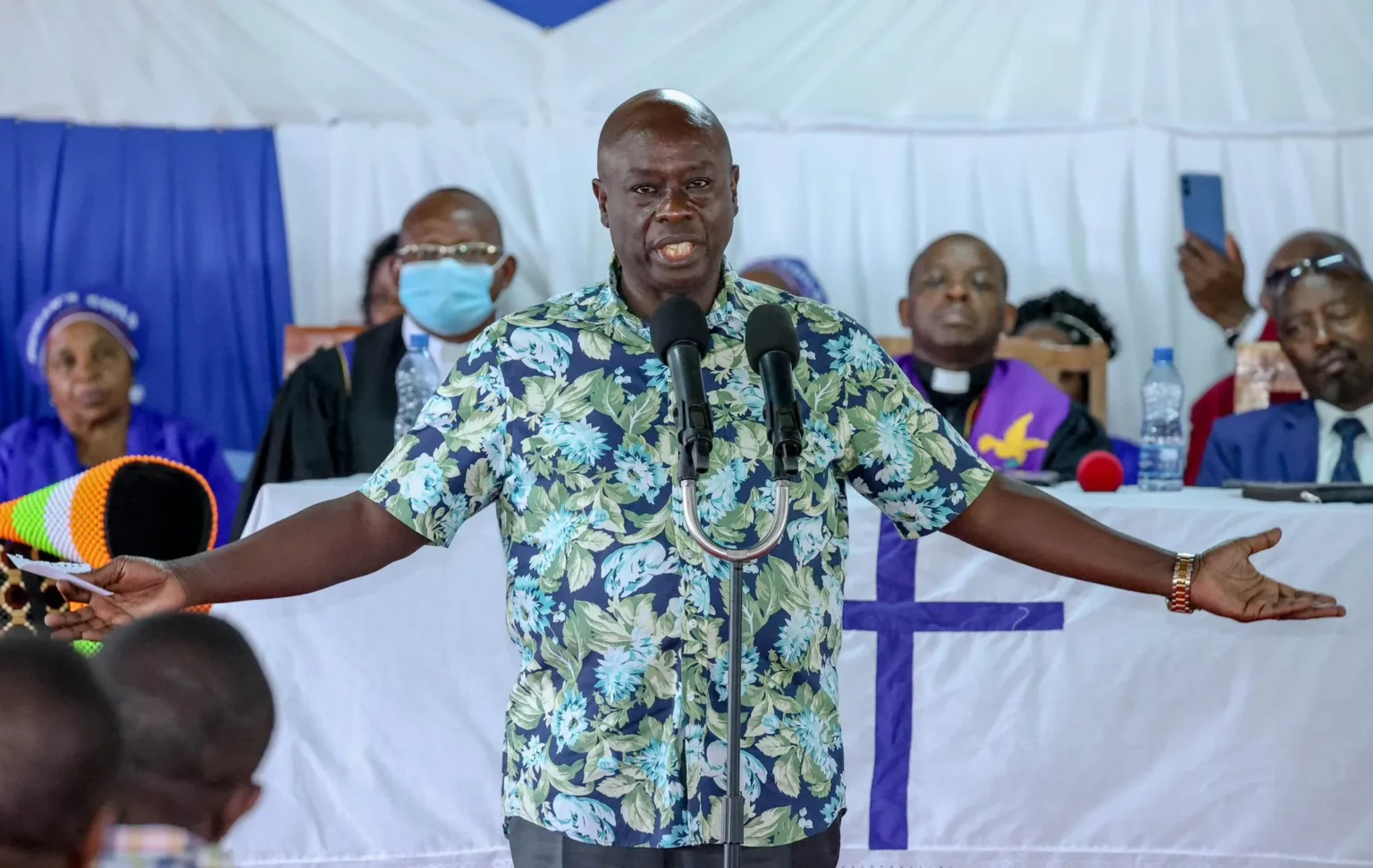
NAIROBI, Kenya — Former Deputy President Rigathi Gachagua is set to deliver a national address on Tuesday assessing President William Ruto’s four years in office, in what is likely to sharpen his criticism of the administration ahead of the 2027 General Election.
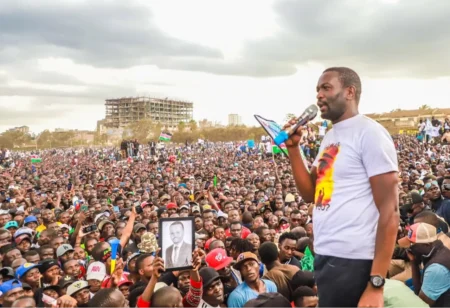
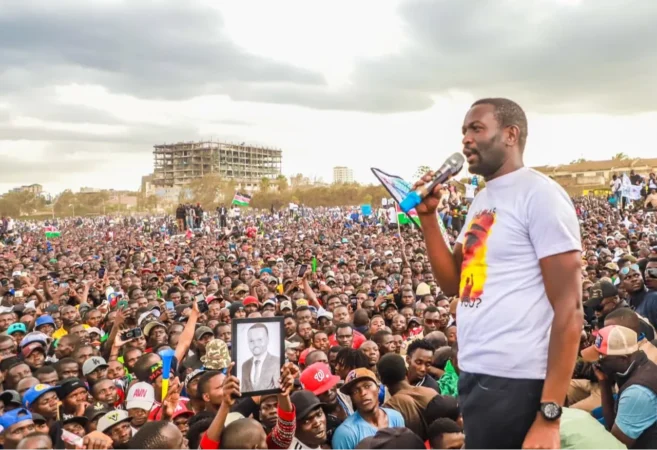
Gachagua announced the planned address during a public participation forum in Narok County on Monday, August 10, saying he would examine both what the Kenya Kwanza administration has achieved and what he considers its negative impact on Kenyans.
“Kesho nitatoa taarifa inaitwa Ruto at Four,” Gachagua said.
He said the address would explain to Kenyans why he believes Ruto should leave office.
“Natawaambia Wakenya ni miaka nne tangu Ruto achaguliwe. Kesho nitaongea na taifa ya kwamba ni kazi gani Ruto amefanya miaka nne na ile madhara ameletea Wakenya,” he said.
The planned address comes as Gachagua intensifies his political mobilisation and positions his Democracy for Citizens Party (DCP) as an alternative force ahead of the 2027 election.
Gachagua sharpens attack on Ruto
Gachagua has increasingly challenged Ruto’s claim to retain power for a second term, arguing that the President has lost support in several regions that were important to his 2022 victory.
In May, Gachagua claimed Ruto had lost backing among communities in Mount Kenya, Ukambani and parts of the Rift Valley.
“Huyo Ruto mlima imemtoroka, Wakamba wamemtoroka, Maa hawamtaki. Sasa atatoa wapi kura ya kubaki kwa ofisi?” he said during a public meeting in Kajiado.
Those claims have not been independently tested through polling data presented by Gachagua, but they illustrate the former deputy president’s increasingly direct effort to challenge the administration’s political standing.
The Tuesday address will provide Gachagua with a national platform to make the case against Ruto while outlining the record on which he believes Kenyans should judge the administration.
A new political alliance takes shape
Gachagua’s remarks in Narok also pointed to a broader strategy beyond criticism of the President.
He called for closer social, economic and political ties between the Kikuyu and Maasai communities, urging young people from both communities to intermarry, trade together and vote together.
“Jamii mbili hizi kazi yetu sasa ni kufanya biashara pamoja, tuoane, tuzaane mpaka tukuwe jamii moja,” he said.
Gachagua argued that stronger ties between the communities could translate into greater political influence.
His appeal comes as he attempts to expand his political base beyond Mount Kenya, where he has traditionally enjoyed significant support.
DCP targets wider national presence
The former deputy president’s national ambitions are also being reflected in the expansion of DCP.
On Monday, Gachagua said 10 Members of County Assembly in Kajiado had defected to DCP from ODM, UDA and Jubilee.
He described the defections as evidence that the party was making rapid progress in the county.
“The journey to 100% DCP in Kajiado is almost complete,” he said.
The claims could not independently establish the full number or political significance of the defections, but Gachagua has increasingly used defections and grassroots mobilisation to demonstrate that DCP is seeking a foothold outside Mount Kenya.
Similar political movements have been reported in counties including Laikipia, Nyandarua, Nyeri and Kirinyaga.
The strategy is significant because Gachagua faces the challenge of transforming his personal political following into a national electoral coalition capable of competing in 2027.
Ruto confident of re-election
Ruto, meanwhile, has continued to project confidence in his re-election prospects.
The President has said he is targeting a victory margin of between two and three million votes in the 2027 election.
Also Read: Moses Kuria hints at possible Ruto-Gachagua reunion ahead of 2027 election
That confidence contrasts sharply with Gachagua’s assessment that the administration is losing support.
The coming months are therefore likely to see an increasingly intense contest over competing narratives about the government’s performance, the cost of living, development projects and the political alliances that will shape the 2027 race.
Gachagua’s “Ruto at Four” address is expected to be an important part of that contest.
Rather than simply reviewing the President’s record, it will give the former deputy president an opportunity to frame the political argument he wants Kenyans to consider before the next election: whether Ruto deserves another term — and whether Gachagua and his emerging political alliance can offer an alternative.