





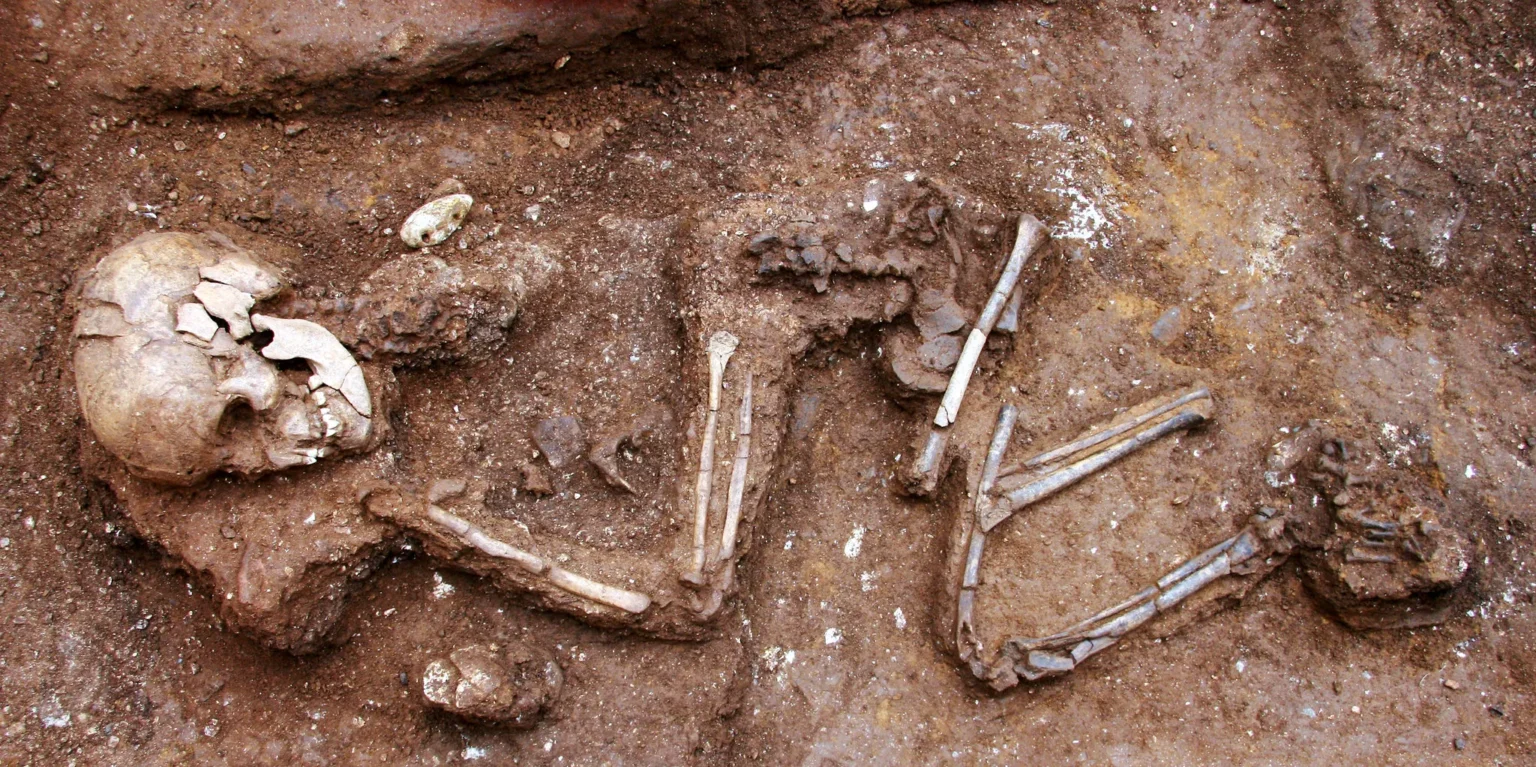
GOTLAND, Sweden —The remains of a pregnant Stone Age woman and a remarkably preserved foetus have been discovered in a cave on a small Swedish island, offering archaeologists a rare glimpse into the lives of hunter-gatherers who lived in the region thousands of years ago. Pregnant Stone Age woman, Ancient foetus discovery, Swedish archaeological discovery,
The remains are estimated to be between 7,000 and 10,000 years old, with researchers believing they are most likely around 9,000 years old.
The discovery was made on a small island off the coast of Gotland, where archaeologist Alexander Roesen Sjostrand has been conducting excavations since 2023.
Sjostrand, an independent researcher connected to Uppsala University, described the discovery as highly unusual.
Researchers reached what they believe is the deepest and oldest layer of the cave, dating to the Stone Age, where they found the remains of a young woman who appeared to have been deliberately buried.
“We have now found the remains of a young woman who has been buried in one way or another. With a very well-preserved foetus in her womb,” Sjostrand told Vivid Voice News.
The age of the remains has not yet been conclusively established. Researchers plan to conduct radiocarbon dating to determine when the woman and her unborn child lived.
A glimpse into early settlement
The discovery could provide important evidence about human activity in the region shortly after the end of the last Ice Age.
According to Sjostrand, the location of the remains suggests that people were living on the island at a much earlier stage than previously demonstrated, rather than merely visiting it as part of a temporary exploration expedition.
The finding could therefore help researchers understand how early hunter-gatherer communities moved through the Baltic region and established temporary or permanent settlements as the landscape changed following the retreat of the ice sheets.
“It’s really exciting because it gives an insight into how exploration was carried out. How people travelled around during the hunter-gatherer time of the Stone Age,” Sjostrand said.
The discovery of a pregnant woman is particularly significant because human remains from this period are relatively rare, while evidence preserving pregnancy and foetal remains together can provide additional information about prehistoric populations and burial practices.
Why the discovery matters
The remains could eventually help archaeologists investigate questions surrounding the woman’s age, health, diet, ancestry and the circumstances surrounding her death and burial.
The foetus may also provide information about pregnancy and maternal health among Stone Age populations, although researchers will need to complete laboratory analysis before drawing conclusions.
Also Read: New dinosaur species discovered in Zimbabwe
Radiocarbon dating will be among the next steps in establishing a more precise chronology for the remains.
For now, the discovery adds to growing archaeological evidence that hunter-gatherer communities were capable of travelling considerable distances and adapting to rapidly changing landscapes in the aftermath of the last Ice Age.
The cave’s deepest archaeological layer may ultimately provide further clues about how those communities lived, moved and interacted with the newly emerging landscapes of the Baltic region.
