
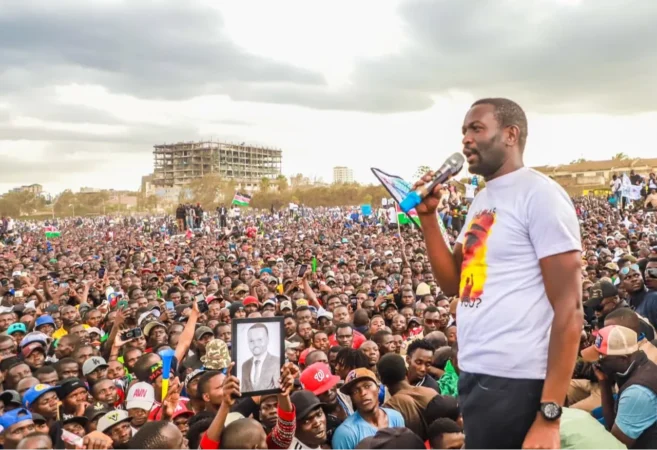
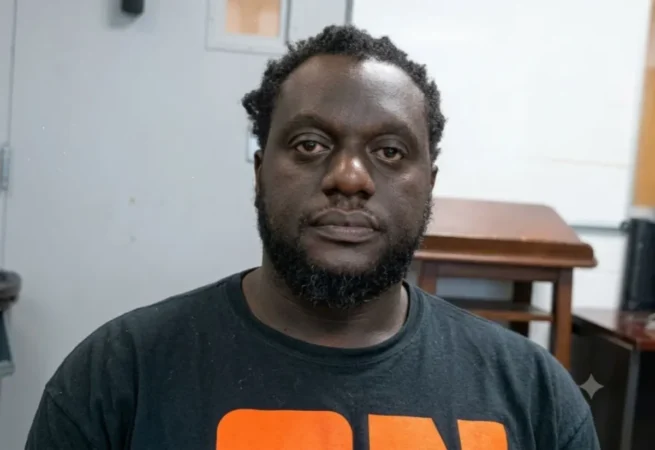



KAMPALA, Uganda — A group of activists and human rights defenders has launched a fundraising campaign to support academic and activist Dr Jimmy Spire Ssentongo after a High Court ruling arising from his legal dispute with Kampala International University (KIU).
The campaign, which officially begins on Monday, seeks public contributions to help Ssentongo meet financial obligations imposed by the court after he was found in contempt of an earlier order restricting his publications about the university.
Under the ruling delivered on June 18, 2026, High Court Civil Division Registrar Simon Kintu Zirintusa ordered Ssentongo to pay a Shs10 million fine, Shs20 million to KIU in punitive and exemplary damages, and costs of the application.
The court further directed that Ssentongo could be committed to civil prison for three months if he failed to pay the Shs10 million fine within 14 days.
The decision was issued in Miscellaneous Application No. 0221 of 2026, arising from proceedings initiated by KIU.
The case centres on an earlier order issued by the High Court on December 17, 2025, restraining Ssentongo from continuing to publish material that KIU argued contained unsubstantiated allegations capable of damaging the university’s name and reputation.
KIU had sought substantially heavier penalties, asking the court to award Shs1 billion in punitive and exemplary damages and impose a Shs200 million fine over the alleged violations.
The court ultimately awarded Shs20 million in punitive and exemplary damages and imposed the Shs10 million contempt fine.
In its ruling, the court found that Ssentongo was aware of the December order but continued publishing material covered by the restrictions.
“I therefore find that the Respondent had the ability to comply and he failed to comply,” the ruling states.
The court also found that the existence of an appeal did not, by itself, suspend Ssentongo’s obligation to comply with the order unless a stay of execution had been granted.
The new fundraising campaign has transformed the legal dispute into a wider debate over freedom of expression, institutional accountability and the limits of public criticism.
Organisers argue that the case has implications beyond Ssentongo because of the potential chilling effect that legal action and financial penalties can have on individuals who publicly scrutinise powerful institutions.
Human rights lawyer Eron Kiiza has backed the campaign, saying the public should not allow the legal penalties to silence Ssentongo.
“Courts can fine him. But we shouldn’t allow them to silence Spire,” Kiiza said.
Campaign organisers are urging members of the public to contribute towards the financial obligations while using the case to encourage discussion about the balance between protecting institutional reputations and safeguarding freedom of expression.
Contributions are being solicited through MTN Mobile Money, using the number provided by the organisers and the reference “SPIRE.”
The organisers said the formal campaign would begin Monday, although supporters had already been encouraged to contribute over the weekend.
Who is Jimmy Spire Ssentongo?
Ssentongo is a senior lecturer at Makerere University, an associate professor at Uganda Martyrs University, author, columnist, editorial cartoonist and human rights activist.
He has built a public profile through commentary on governance, corruption, social justice and public accountability, as well as through his political and social cartoons.
His supporters argue that his public interventions frequently draw on complaints and communications received from students, former employees and members of the public.
KIU, however, challenged some of his publications in court, arguing that they amounted to a smear campaign and contained information that was unsubstantiated and damaging to the university’s reputation.
That disagreement eventually produced the court order that became the basis of the contempt proceedings.
The fundraising campaign has also revived debate about the legal boundaries of public commentary once a court has issued an order restricting particular publications.
At the heart of the dispute is a tension between two competing principles: the right to protect an institution’s reputation and the public interest in allowing individuals to raise concerns about institutions and matters affecting society.
For Ssentongo’s supporters, the case raises concerns about whether legal proceedings can be used in ways that discourage public criticism.
For KIU, the issue has been one of compliance with a court order and protection of the university’s reputation.
Those positions are not mutually exclusive, but the court’s ruling makes clear that once an order is issued, a party is expected to comply with it unless the order is stayed or otherwise set aside through the appropriate legal process.
The proceedings have also prompted questions among some legal practitioners about the jurisdiction and powers exercised by registrars in contempt-related proceedings.
Those questions remain matters for appropriate legal challenge or appellate determination and should not be presented as established findings against the court or Registrar Zirintusa.
The immediate issue for Ssentongo is therefore the financial obligation imposed by the ruling and the possibility of civil imprisonment if the Shs10 million fine is not paid within the period stipulated by the court.
For the campaign organisers, however, the fundraising effort represents more than an attempt to raise money.
They want the case to become a broader conversation about how Ugandan institutions respond to criticism, the responsibilities of public commentators and the extent to which legal action can affect freedom of expression.
Also Read: Ugandan cartoonist Spire wins global Kofi Annan award for fearless satire on power
They argue that citizens should be able to question powerful institutions and raise concerns about matters of public interest without fear of disproportionate consequences.
At the same time, the case underscores an important distinction: freedom of expression does not remove the obligation to comply with lawful court orders, and disputes over the legality or scope of such orders must ordinarily be pursued through the courts.
The campaign now places Ssentongo’s supporters in the position of trying to meet the immediate financial consequences of the ruling while turning the controversy into a wider discussion about accountability, institutional power and freedom of expression in Uganda.
For its organisers, the central question is whether supporting Ssentongo can become part of a larger effort to defend the space for citizens to scrutinise institutions and raise issues of public concern.
For the university, the dispute remains fundamentally about publications it says harmed its reputation and Ssentongo’s alleged failure to comply with a court order.
The legal battle—and the debate surrounding it—is therefore far from over.