



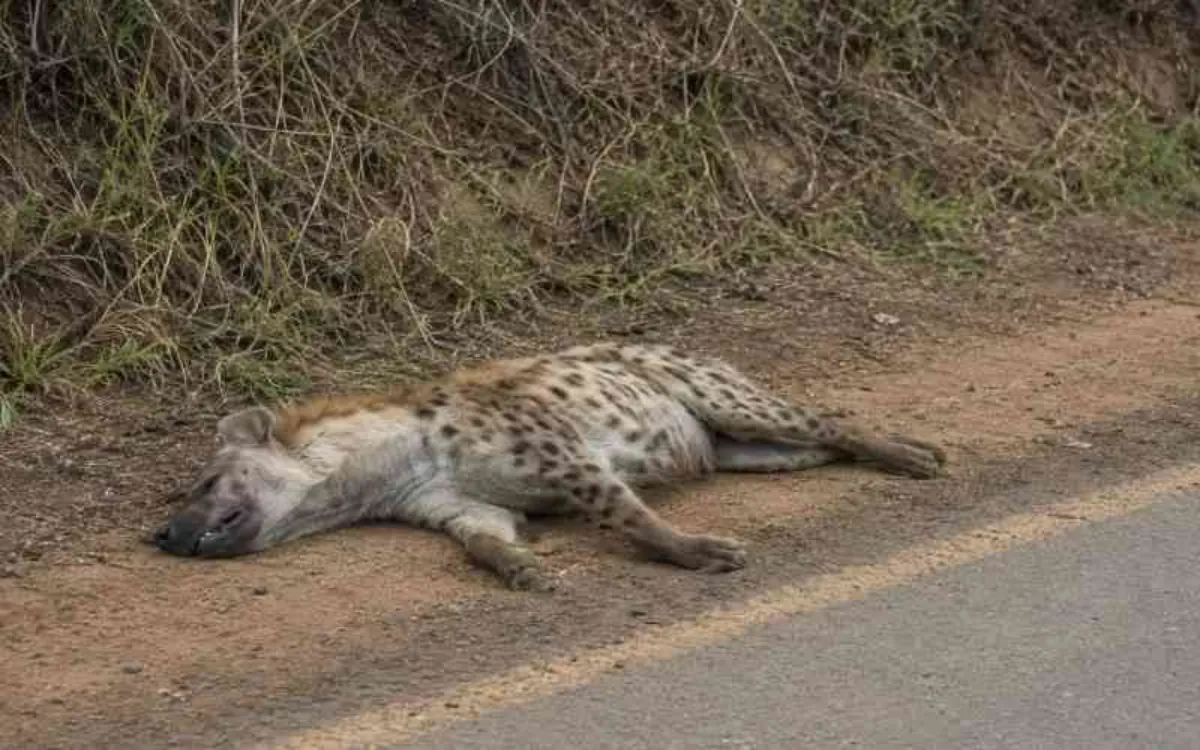
KAJIADO, Kenya — Residents of Ongata Rongai have been urged to exercise caution during early morning runs and walks after a dead hyena was discovered by the roadside on Wednesday 5, August 2026, reigniting concerns over recurring human-wildlife encounters in the area.
A video circulating widely on social media shows the carcass of the hyena lying on top of a roadside guardrail as a man recording the scene warns members of the public to remain alert.
“Kwa wale wapenda morning runs, mkuwe careful. Tumepata huyu mjamaa hapa,” the man says in the video.
The circumstances surrounding the animal’s death remain unclear, and the Kenya Wildlife Service (KWS) had not issued an official statement by the time of publication.
Discovery revives wildlife safety concerns
The incident has renewed fears among residents of Ongata Rongai and neighbouring estates, where hyenas have been sighted on several occasions in recent years.
Some previous encounters have reportedly resulted in attacks on people, while wildlife authorities have in the past investigated concerns over animals suspected of carrying rabies.
The southern boundary of Nairobi National Park has long been identified as a wildlife dispersal corridor, allowing animals such as hyenas, lions, buffaloes and zebras to occasionally stray into nearby residential areas, particularly as urban development continues to expand around the park.
Wildlife experts say increased human settlement, habitat fragmentation and competition for resources have contributed to more frequent encounters between people and wild animals.
Safety advice for residents
Residents have been advised not to approach or touch the dead animal and to keep a safe distance until wildlife officers assess and remove the carcass.
Experts also caution that anyone who encounters a live hyena should remain calm and avoid running, as fleeing may trigger the animal’s instinct to chase.
Instead, they recommend:
- Standing your ground while facing the animal.
- Making yourself appear larger by raising your arms or holding up clothing.
- Speaking loudly or making noise to discourage the animal.
- Slowly backing away without turning your back.
- Reporting the sighting immediately to the Kenya Wildlife Service (KWS).
People who jog or walk early in the morning are encouraged to exercise in groups, remain aware of their surroundings and carry mobile phones to report emergencies.
Similar incidents reported
The latest discovery is the latest in a series of human-wildlife incidents reported around Nairobi and other parts of Kenya.
In May, KWS issued a public advisory urging residents of Syokimau and surrounding areas to remain vigilant following reports of a hyena sighting.
“KWS wishes to assure the public that all necessary precautionary measures are being undertaken and there is no cause for panic,” the agency said at the time.
Also Read: Two lionesses escape Nairobi National Park and stray into Ongata Rongai
In July, residents living near the Maasai Mara National Reserve reported repeated hyena attacks in Talek Location, Narok County, after the animals allegedly killed more than 50 sheep and ventured dangerously close to homes, prompting some communities to impose informal night-time restrictions.
Late last year, two people were seriously injured after a hyena attacked them in Oloserian village, Ildamat, Kajiado County. Three dogs were also injured while attempting to fend off the animal before residents killed it.
“As we talk, two of our people are in hospital. We don’t even have money to pay their hospital bills. What is the government doing to protect us from these attacks?” resident Mary Nanai said following the incident.
Authorities have continued to urge members of the public to report wildlife sightings promptly and avoid attempting to confront or handle wild animals without trained personnel.