

ENTEBBE, Uganda — Few recent stories have exposed the complexities of Uganda’s security establishment quite like that of Stephen Nuwagaba.
Within months, the young man moved from being publicly described by President Yoweri Museveni as a torture survivor under presidential protection to being arrested by security operatives in an operation reportedly ordered by the country’s military chief.
His dramatic rise into the orbit of Uganda’s most powerful security figures—and his equally dramatic fall—has triggered intense public scrutiny, raising difficult questions about competing narratives inside the state, the conduct of security agencies, and what exactly happened behind the scenes.
While many details remain disputed, a reconstruction of public statements, official accounts and media reports reveals an extraordinary sequence of events.
The President’s intervention
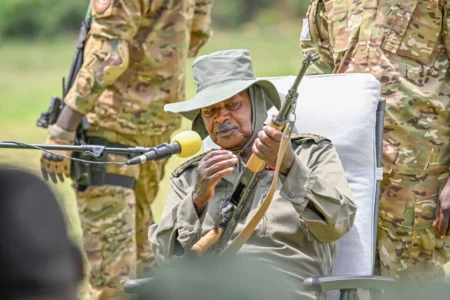
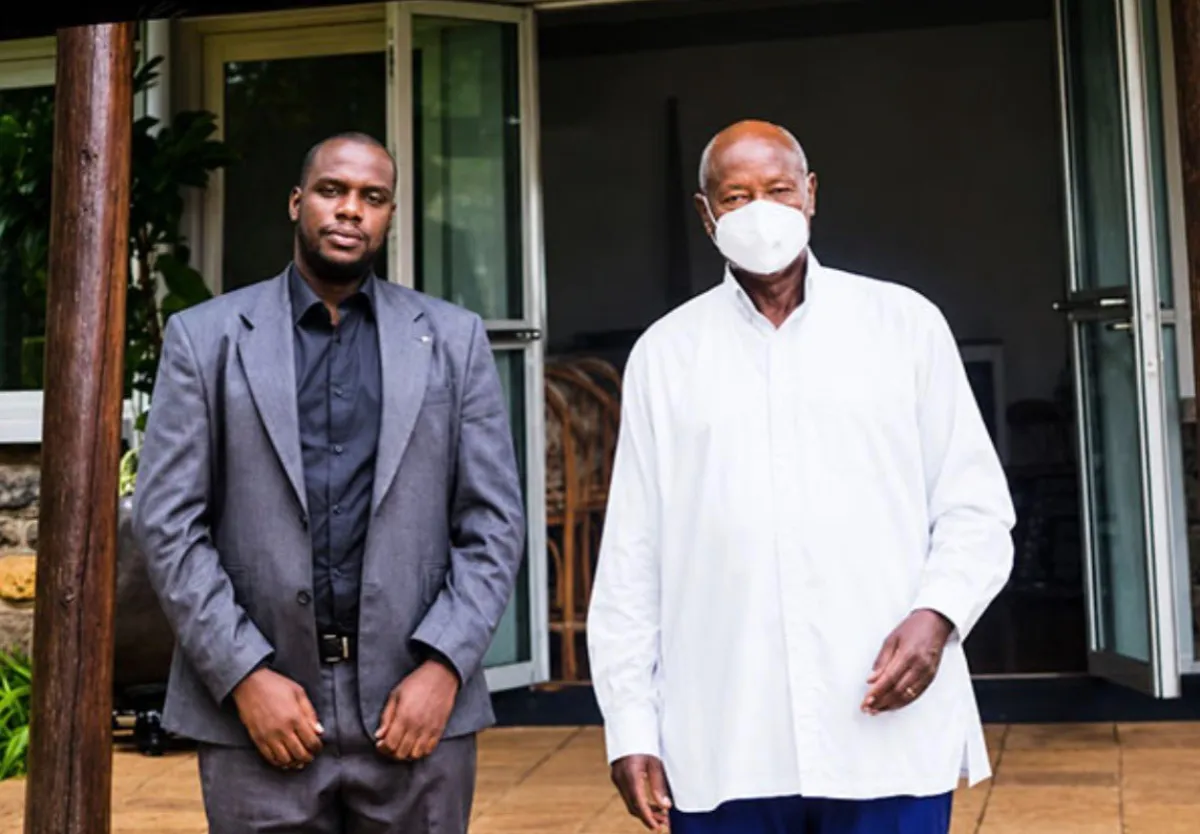
The story burst into national attention after President Museveni issued an unusually detailed public statement describing Stephen Nuwagaba as a victim of abuse by rogue security personnel.
“Nuwagaba is a young man in his mid-twenties who came to me as a fugitive, a victim of torture and maiming, whom some elements in the Security Services were trying to silence,” Museveni said.
The President disclosed that he personally intervened to ensure Nuwagaba received medical treatment.
“I had to send him to the hospitals in Uganda and abroad to save his life. He seems to have improved, but some of the maiming is still there.”
Museveni further revealed that he had quietly ordered investigations into the allegations and said some individuals allegedly responsible were already facing court proceedings, although he did not identify the suspects or the cases involved.
The statement immediately transformed what had largely remained an obscure security matter into a national political issue.
Claims that sparked controversy
Before Museveni’s intervention, The Independent magazine had published an account, citing unnamed sources, alleging that Stephen Nuwagaba had met Gen. Salim Saleh after allegedly being referred by human rights lawyer Nicholas Opiyo.
According to the publication, Stephen Nuwagaba claimed he had been tortured by officers attached to the Chieftaincy of Defence Intelligence and Security (CDIS) before allegedly being taken to the Rwandan High Commission in Kampala, where the abuse continued.
Those allegations have not been independently verified.
Rwanda rejects the allegations
The Rwandan government has firmly denied any involvement.
Speaking to Vivid Voice News before Museveni released his statement, Rwanda’s High Commissioner to Uganda, Col. Joseph Rutabana, said he had never met Nuwagaba and knew nothing about him.
“This has never happened and it can never happen,” Rutabana said when asked about allegations linking the embassy to torture.
Asked about reports that he had met Nuwagaba at a hotel in Entebbe, Rutabana replied:
“I don’t know him.”
“I think you have knocked on the wrong door. I only learnt about that story on social media.”
He added that the matter was “irrelevant to us.”
His denial remains the only official response from Rwanda regarding the allegations.
The reported January dossier
Months before the arrest, a document dated January 20, 2026 and reportedly addressed to President Museveni by a self-described “Concerned Citizen” painted an entirely different picture of Stephen Nuwagaba.
According to the report, Nuwagaba represented a potential national security concern.
The document urged investigations into his identity documents, alleged intimidation of government officials and reported use of armed state security personnel.
It further alleged that he possessed two Ugandan passports issued under different names.
This publication reported that it had not independently authenticated the passport details or verified how the documents were allegedly obtained.
The dossier also alleged that after gaining access to senior military officials, Stephen Nuwagaba travelled in convoys protected by armed personnel and claimed influence over senior government officials.
Those allegations have not been independently verified.
How Stephen Nuwagaba reportedly reached State House
The January report also attempted to explain how Nuwagaba allegedly reached Uganda’s highest levels of power.
According to the document, he first approached Maj. Gen. Moses Rwakitarate claiming he had previously been tortured by military intelligence officers.
The report alleges Rwakitarate referred him to Gen. Salim Saleh, who arranged for medical examinations into the torture claims.
Vivid Voice News reported that it had not independently obtained or verified the medical findings referred to in the document.
The report further alleges that Nuwagaba was later introduced to Maj. Gen. BD Mugisha, then commander of the Special Forces Command, before eventually meeting President Museveni.
Neither the officials named nor the Presidency publicly commented on those specific claims.
Arrest in dramatic reversal
On Thursday night, events took another dramatic turn.
Security operatives arrested Nuwagaba in Busega, Kampala, shortly after he returned from a traditional marriage ceremony in western Uganda.
Security sources familiar with the operation told Vivid Voice News that he was intercepted while travelling in a convoy guarded by personnel attached to the Special Forces Command (SFC).
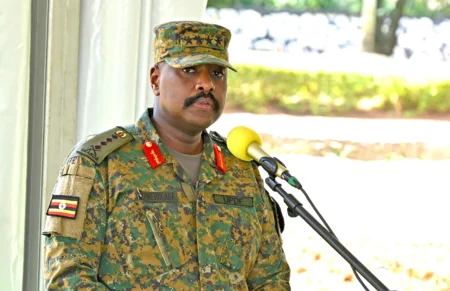
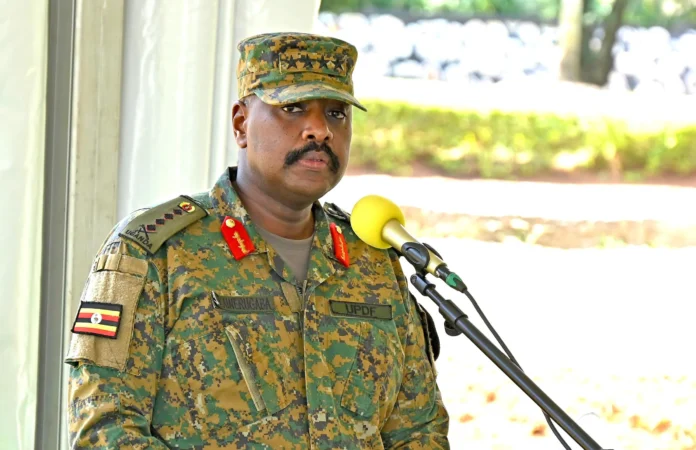
The same sources said the arrest had been ordered by the Chief of Defence Forces (CDF) Gen. Muhoozi Kainerugaba.
Authorities have not formally announced the offences for which Nuwagaba is being held.
Hours earlier, he had reportedly participated in a customary introduction ceremony involving his fiancée, Brilliane, a Uganda Revenue Authority (URA) employee, where he allegedly presented 16 Friesian cattle as part of the traditional bride price.
He was later transferred to what security sources described as a confidential security facility.
Neither the Uganda People’s Defence Forces (UPDF) nor the Uganda Police Force had issued a detailed public statement explaining the legal basis for his detention by the time this article was published.
A striking contradiction
What makes the case particularly unusual is the apparent contradiction between different official narratives.
On one hand, Museveni publicly described Nuwagaba as a torture survivor whose life required presidential intervention.
Also Read: Uganda court awards Shs172m to torture victim in landmark ruling against military intelligence
On the other, a security dossier reportedly submitted to the President portrayed him as someone whose activities warranted investigation.
Now, the same state security system that reportedly provided him with armed protection has placed him under arrest.
Authorities have yet to explain what changed.
Questions that remain unanswered
Several important questions remain unresolved.
Authorities have not disclosed:
- Why Nuwagaba was arrested;
- Whether the arrest relates to the January security dossier;
- Whether it concerns the reported passport allegations;
- Whether it relates to his reported access to armed security escorts; or
- Whether entirely separate investigations are underway.
Equally unclear is the status of the Special Forces Command personnel reportedly travelling with him at the time of the arrest.
Officials have also not explained whether those officers were questioned or simply recalled.
A case that continues to evolve
As investigators remain silent, Stephen Nuwagaba’s story has become far more than the account of one individual.
It has evolved into a case that touches on alleged abuses within security agencies, presidential intervention, diplomatic controversy, military influence and the limits of public accountability.
What began as allegations of torture has now become a broader examination of how Uganda’s security institutions operate—and how dramatically official narratives can change.
Until investigators publicly disclose the reasons behind Nuwagaba’s arrest and the evidence supporting it, one central question remains unanswered:
How did a man once publicly defended by Uganda’s President as a victim requiring protection end up in military custody only months later?
That question is likely to remain at the centre of public debate as the investigation unfolds.