


NAIROBI, Kenya — At 4.30am, before the sun rises over Nyeri County, Mrs. Mary Wanjiku is already awake.
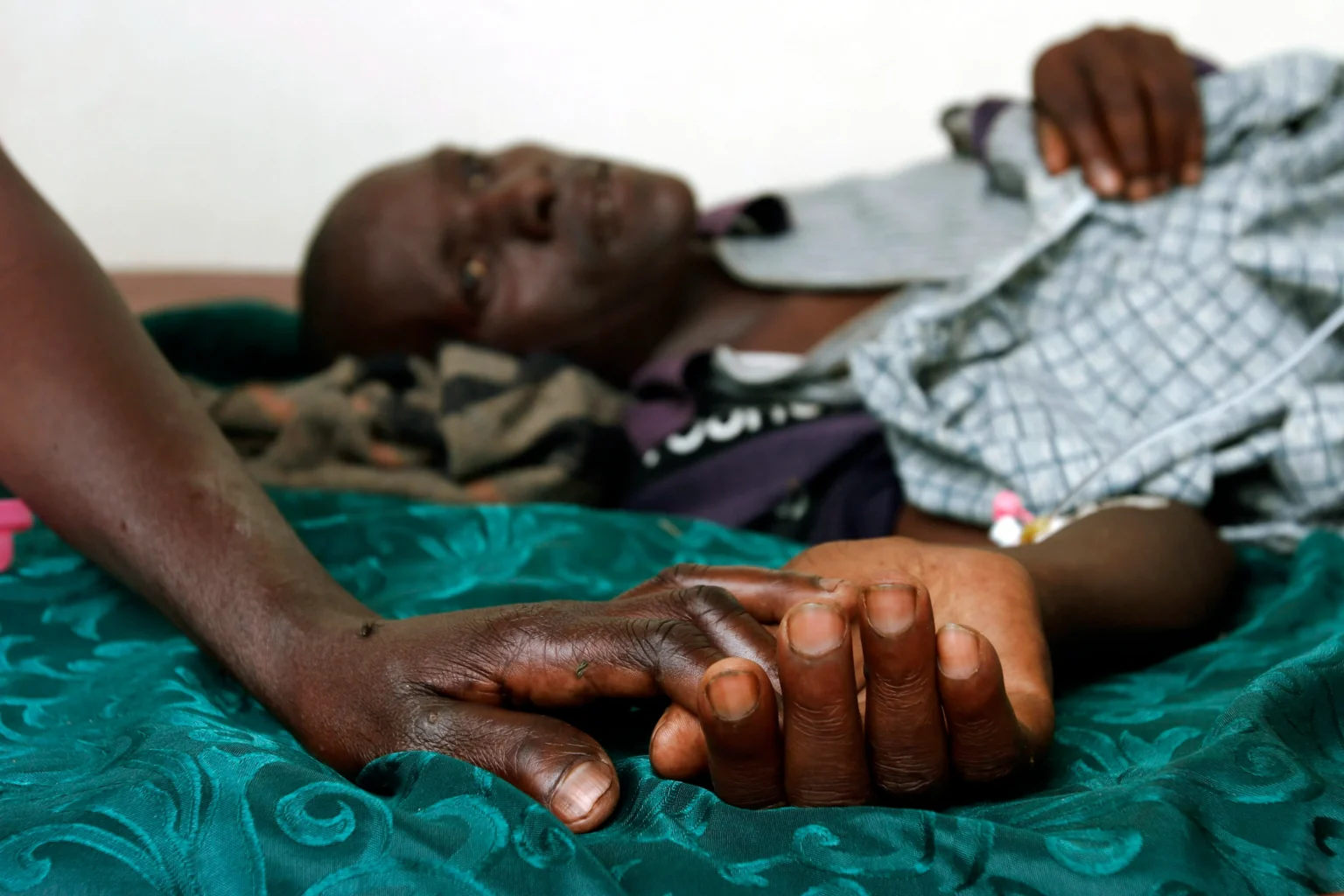
Her husband has barely slept through the night. The persistent chest pains that began several weeks ago have worsened, and today they must travel to a referral hospital more than 30 kilometres away. The journey will involve two matatus, several hours of waiting and money the family had not planned to spend.
The first expense of the day is not a hospital bill.
It is transport.
By the time they leave home, Mrs. Wanjiku has already borrowed money from a neighbour to cover the trip.
“We hadn’t even reached the hospital and we were already spending money,” she recalled.
Her story mirrors the experience of countless Kenyan families whose lives are disrupted by illness every year.
Public debate about healthcare often focuses on hospital charges, insurance coverage and government reforms. Yet for many households, the financial burden of sickness extends far beyond consultation fees and medical procedures.
The true cost of illness is often hidden in transport fares, missed workdays, medicine purchases, borrowed money, exhausted savings and the emotional strain placed on entire families.
For many Kenyans, getting sick is not simply a health crisis.
It is an economic one.
The journey that starts before treatment
In policy discussions, healthcare is often measured by the availability of hospitals, doctors and insurance coverage.
For patients, the experience begins much earlier.
It starts with the journey to seek care.
In many parts of Kenya, especially rural areas, specialised treatment is concentrated in urban centres and referral facilities. Patients frequently travel long distances to access services that may not be available closer to home.
For households already struggling with rising food prices, school fees and rent, repeated hospital visits can become a significant financial burden.
Mr. Peter Kariuki, a farmer from Nakuru County, remembers spending more money on transport than he expected during his wife’s treatment for a chronic condition.
“Every appointment meant paying for transport, food and sometimes accommodation if we had to stay overnight,” he said.
“The treatment itself was only one part of the expense.”
Health economists often describe these as indirect healthcare costs, but for ordinary families they feel anything but indirect. They are immediate, unavoidable and often paid long before any treatment begins.
When sickness hits, means no income
Illness has a cruel habit of arriving without warning.
Bills, however, rarely pause.
For workers in formal employment, sick leave may provide temporary relief. For millions of Kenyans working in the informal economy, there is often no such protection.
A boda boda rider who cannot ride earns nothing.
A market trader who stays home loses customers.
A casual labourer absent from work may simply forfeit the day’s pay.
As healthcare expenses increase, income often falls.
The result can be devastating.
Mr. James Otieno, a carpenter in Nairobi, spent nearly six weeks recovering from a serious injury.
The hospital eventually discharged him, but the financial consequences lingered much longer.
“The hospital bill was difficult,” he said.
“But what really hurt was not being able to work.”
During his recovery, rent still had to be paid. School fees remained due. Food prices did not suddenly become cheaper because he was injured.
“The family depended on savings, then loans, then help from relatives,” he said.
“Recovery took weeks. The debt took much longer.”
His experience reflects a reality increasingly recognised by health researchers: illness often creates a double financial shock.
Expenses rise precisely when earning capacity declines.
The medicine problem
Even when patients successfully access healthcare facilities, another challenge frequently emerges.
Medicine availability.
Patients are often prescribed treatment only to discover that certain drugs are unavailable at public facilities. They leave with prescriptions that must be filled elsewhere, usually at private pharmacies where prices can be considerably higher.
For families already stretched financially, this can transform a manageable expense into a significant burden.
Mrs. Grace Atieno, whose child recently required treatment for a respiratory illness, recalls receiving a prescription after waiting several hours at a public hospital.
The medication was unavailable.
She spent the remainder of the afternoon moving between pharmacies trying to find it.
“You feel relieved that the doctor has finally seen your child,” she said.
“Then you realise you still have another problem to solve.”
Healthcare experts note that medicine shortages have consequences beyond finances. Delayed access to treatment can prolong illness, increase complications and create additional expenses down the line.
The invisible workforce keeping patients alive
Behind many patients stands an unpaid caregiver.
A spouse.
A daughter.
A son.
A sibling.
A parent.
These individuals rarely appear in healthcare statistics, yet they often carry a significant share of the burden.
They accompany relatives to appointments.
They spend nights in hospital wards.
They manage medication schedules.
They provide emotional support.
They sacrifice time, income and personal commitments.
When Mrs. Margaret Njeri’s elderly mother was hospitalised, she temporarily closed her small business to provide care.
“There wasn’t really a choice,” she said.
“Someone had to be there.”
The closure lasted several weeks.
Customers went elsewhere.
Income disappeared.
The family adapted, but not without consequences.
“When people talk about healthcare costs, they rarely talk about caregivers,” she said.
“But the illness affects everyone.”
Experts increasingly argue that caregiving should be viewed as an essential component of healthcare systems rather than an invisible family responsibility.
Without it, many patients would struggle to recover.
The promise and reality of health insurance
The transition from the National Health Insurance Fund (NHIF) to the Social Health Authority (SHA) has generated significant public discussion.
Government officials describe the reforms as part of a broader effort to expand access and improve healthcare delivery.
Yet conversations with patients often reveal a more practical concern.
Will the system work when they need it?
For many families, healthcare policy is judged not by speeches or legislation but by experiences at registration desks, hospital counters and pharmacy windows.
Some patients report positive experiences.
Others describe confusion, delays and uncertainty as they navigate changing systems.
Mr. David Mwangi, who recently sought treatment through SHA, said the process raised questions he struggled to answer.
“There is a lot of information, but when you are actually sick, you need clarity,” he said.
“You need to know what is covered, what is not and what happens next.”
Health policy analysts argue that public trust in healthcare reforms ultimately depends on whether patients experience tangible improvements.
The measure of success is not merely the existence of a programme but whether families feel protected when illness strikes.
A burden that extends beyond finances
Money is only part of the story.
Illness carries emotional costs that are far harder to quantify.
Families worry about treatment outcomes.
Patients fear losing jobs.
Parents wonder how they will continue supporting children.
Savings disappear.
Future plans are postponed.
Stress becomes a constant companion.
Clinical psychologist Dr Susan Muthoni says financial pressure and health anxiety often reinforce each other.
“When families are uncertain about treatment costs, income and recovery, stress levels increase significantly,” she explained.
“The psychological burden can be as challenging as the physical illness itself.”
For some households, the effects continue long after recovery.
Debts remain.
Savings need rebuilding.
Opportunities that were postponed may never return.
The bigger picture
Kenya has made significant investments in healthcare infrastructure, insurance reforms and digital health systems. These efforts are important and have the potential to improve access for millions of people.
Yet the experiences of patients suggest that healthcare affordability cannot be measured solely through hospital fees or insurance coverage.
A family may receive subsidised treatment and still face severe financial hardship.
A patient may survive an illness and still struggle with the economic consequences months later.
The reality is that sickness rarely affects only one person.
Also Read: Lupita Nyong’o breaks silence on 11-year battle with uterine fibroids
It affects households.
It affects livelihoods.
It affects plans, savings and opportunities.
The ripple effects extend far beyond hospital walls.
More than a medical issue
By the time Mary Wanjiku’s husband recovered, the family had spent months rebuilding their finances.
The transport costs had accumulated.
The borrowed money had to be repaid.
Income lost during the illness could not be recovered.
Life eventually returned to normal.
But the experience changed how the family viewed healthcare.
“We always thought the biggest worry would be paying the hospital,” she said.
“It turned out the hospital was only part of it.”
Her reflection captures a reality faced by millions of Kenyan families.
When illness strikes, the hospital bill is often only the beginning.
The true cost lies in everything that follows.