




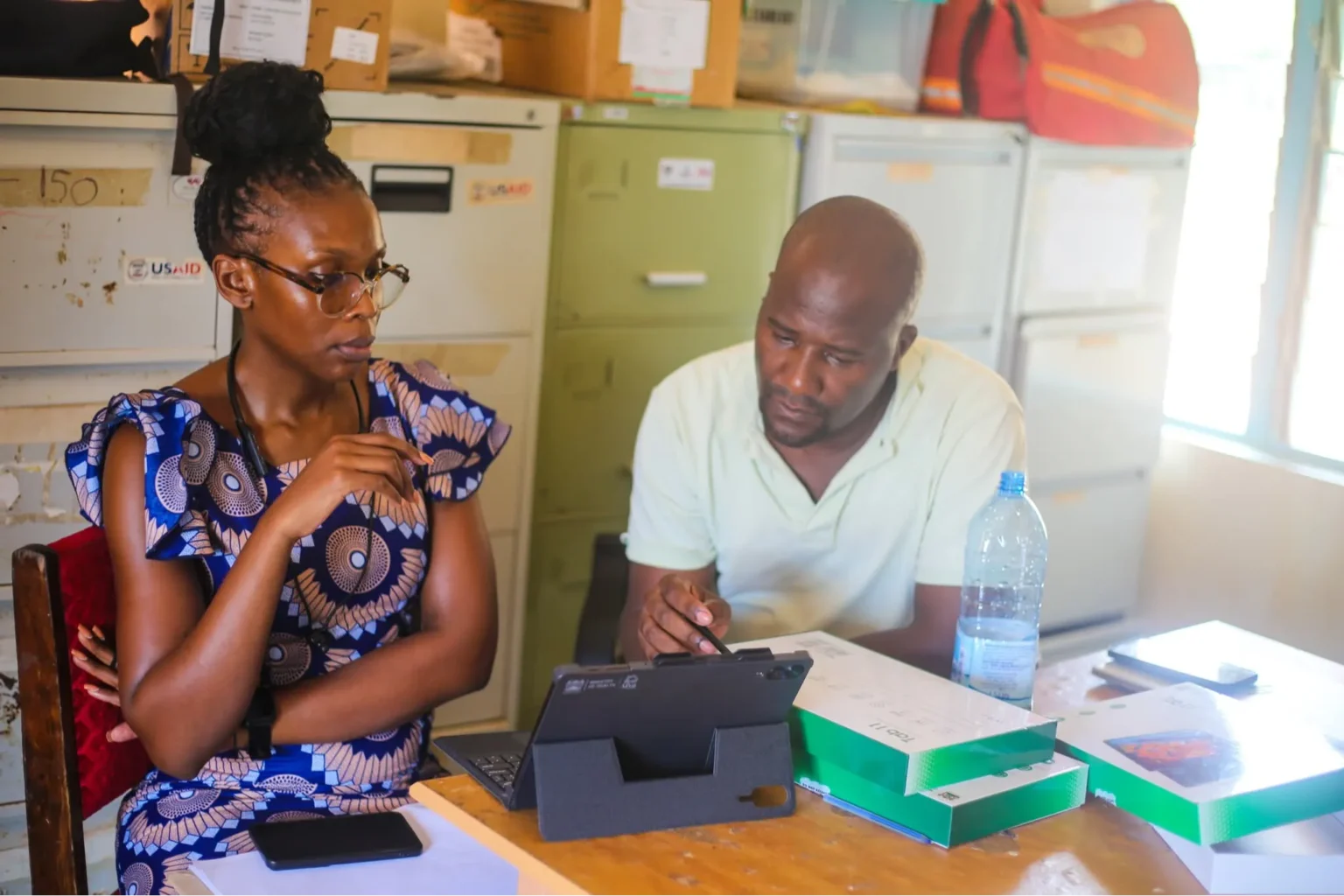
NAIROBI, Kenya — For decades, interactions with government services in Kenya were often defined by long queues, endless paperwork and repeated trips between public offices.
Whether applying for a passport, filing taxes, registering a business or obtaining a Certificate of Good Conduct, citizens frequently spent hours—or even days—navigating bureaucratic processes that many considered slow, inefficient and vulnerable to corruption.
Today, much of that experience has changed.
Government services that once required physical visits can now be accessed through digital platforms such as eCitizen, iTax and a growing network of online government portals. Applications are increasingly submitted electronically, payments are made digitally and official records are gradually moving online.
The transformation has been promoted as one of Kenya’s most significant public service reforms.
But as the country accelerates its digital agenda, a crucial question remains:
Has digitisation genuinely made life easier for ordinary Kenyans—or has it simply moved the queue from government counters to computer screens?
A digital revolution in public services
Kenya has emerged as one of Africa’s leaders in digital public services.
Through platforms such as eCitizen, citizens can now access dozens of services including passport applications, business registration, birth certificates, driving licence services and police clearance certificates.
Government officials argue that digitisation has reduced opportunities for corruption, improved transparency and shortened the time required to access services.
The shift accelerated further following the government’s broader digital transformation agenda, which seeks to integrate services, strengthen digital identity systems and reduce dependence on manual processes.
For many Kenyans, the changes are undeniable.
Huduma Centres: Fewer queues, new challenges
At a busy Huduma Centre in Nairobi, citizens continue arriving daily seeking assistance with government services.
One citizen, who recently applied for a replacement identity card, said the online process had significantly reduced the number of visits required.
“A few years ago, I would have spent almost an entire day moving between offices. Now most of the process starts online. It definitely saves time,” said the applicant.
Another visitor agreed that digitisation had simplified certain services but argued that challenges remain.
“The applications are online, yes, but when systems go down, everything stops. You can spend hours waiting because a portal isn’t working.”
For frontline service centres, digitalisation has reduced some physical congestion while introducing a new dependency on technology infrastructure.
When systems function smoothly, service delivery improves dramatically.
When they fail, delays quickly return.
Passport applications: Easier forms, same waiting anxiety
Among the most frequently used digital government services are passport applications.
Applicants can now complete forms, upload documents and make payments online before attending appointments for biometric capture.
A recent passport applicant, Joseph Mwaluma described the process as more organised than in previous years.
“The paperwork was easier because I completed everything online. I didn’t need multiple visits just to submit forms.”
Yet another applicant Lucy Mueni pointed out that digitalisation has not necessarily eliminated uncertainty.
“The application is digital, but the waiting still exists. You keep checking your status online and waiting for an SMS notification on your phone, wondering when the passport will be ready.”
For many citizens, digitisation has improved access while not always reducing the anxiety associated with processing timelines.
Business owners welcome convenience
Small business owners are among the groups that have benefited most from digital services.
Business registration, tax compliance and licence renewals can now be completed without travelling repeatedly to government offices.
A Nairobi entrepreneur Jennifer Mukami said the difference compared to a decade ago is significant.
“Registering a business used to involve multiple offices and a lot of paperwork. Today, much of it happens online. That has made life easier for entrepreneurs.”
Another business owner Peter Kamau, however, noted that technical challenges occasionally disrupt operations.
“The biggest frustration is when a system goes down near a deadline. Digital services are excellent when they work, but businesses depend on reliability.”
For entrepreneurs, efficiency often matters as much as accessibility.
The SHA experience
Kenya’s ongoing transition to digital health services has also transformed how citizens interact with healthcare systems.
Many Kenyans have been required to register and update information through digital platforms associated with the Social Health Authority (SHA).
Experiences have varied widely.
One registrant described the process as straightforward.
“I completed registration using my phone and received confirmation quickly. It was much easier than I expected.”
Another citizen reported encountering difficulties.
“The challenge wasn’t registration itself. It was understanding some of the requirements and getting assistance when questions came up.”
The experiences illustrate a broader reality: digital services may simplify procedures, but users still require support when navigating unfamiliar systems.
Good Conduct Certificates: Faster, but still costly
For students and graduates entering the labour market, obtaining a Certificate of Good Conduct has become a routine requirement.
Applications are now processed online through eCitizen, and the Directorate of Criminal Investigations (DCI) recently announced a new biometric platform aimed at reducing waiting times.
A university graduate described the online application process as an improvement.
“At least I didn’t have to collect forms physically. Everything started online.”
Yet another applicant noted that digitisation does not eliminate every burden.
“The process may be online, but you still need internet access, transport for biometrics and money for the application fee. For unemployed graduates, those costs matter.”
The comments highlight a recurring theme: digital convenience does not always equal affordability.
The elderly and the digital divide
Perhaps nowhere is the challenge of digital transformation more visible than among older citizens.
While younger Kenyans generally adapt quickly to online services, many elderly citizens struggle with digital platforms.
At a Huduma Centre in central Kenya, one elderly citizen admitted relying heavily on relatives for assistance.
“I own a phone, but some of these systems are difficult to understand. My children usually help me complete applications.”
Another senior citizen expressed concern about increasing dependence on technology.
“Not everyone grew up using computers or smartphones. Sometimes you feel left behind.”
Experts say digital literacy remains one of the most important challenges facing Kenya’s digital transformation agenda.
While internet penetration continues to grow, access does not automatically translate into digital confidence.
Has corruption been reduced?
One of the government’s strongest arguments for digitisation is that it reduces opportunities for corruption.
Electronic systems create transaction records, reduce direct interactions between citizens and officials and increase transparency.
Governance experts generally agree that digital platforms can improve accountability.
“Technology makes it easier to track applications and payments. That reduces some opportunities for manipulation,” said a public administration analyst.
However, experts caution that technology alone cannot solve institutional challenges.
“Digitisation is a tool, not a solution by itself. The quality of service still depends on how institutions manage the systems.”
The new queue
For many Kenyans, digitisation has undeniably improved access to government services.
Applications that once required lengthy travel can now be completed from a smartphone.
Payments are faster.
Documents are easier to track.
Also Read: Kenya’s gig economy grows as youth turn to digital jobs
Information is more accessible.
Yet the frustrations have not disappeared entirely.
Instead of waiting outside government buildings, citizens may now find themselves waiting for verification codes, system approvals, portal updates or technical support.
The queue, some argue, has not vanished.
It has simply changed form.
The verdict
Kenya’s digital government project represents one of the country’s most ambitious public sector reforms.
The benefits are real.
Many services are faster, more transparent and easier to access than they were a decade ago.
Businesses have gained convenience.
Citizens spend less time travelling between offices.
Government agencies increasingly operate through integrated digital systems.
Yet the transformation remains incomplete.
Technical outages, digital literacy gaps, affordability concerns and accessibility challenges continue to shape citizens’ experiences.
For some Kenyans, digital government has delivered on its promise.
For others, the benefits remain uneven.
What is clear is that digitisation is no longer the future of government service delivery in Kenya—it is the present.
The question now is whether the next phase of reforms can ensure that convenience, accessibility and reliability are experienced equally by all citizens.
Because while many physical queues have disappeared, millions of Kenyans are still waiting—for systems that work consistently, services that are fully integrated and a digital government that truly leaves no one behind.