




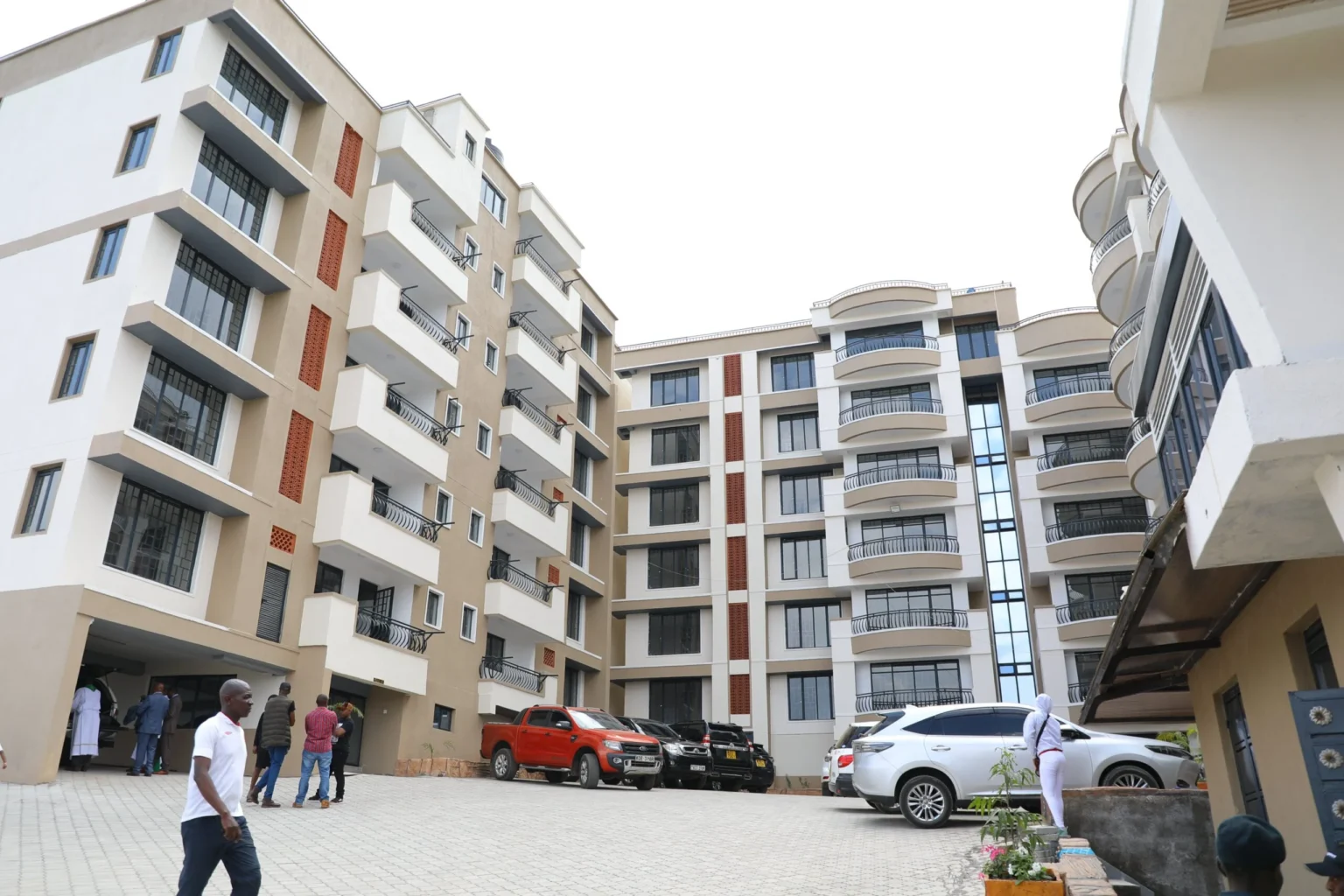
NAIROBI, Kenya — The apartment looked perfect on paper. It sat on the third floor of a newly completed block in Kasarani, with reliable water, secure parking and easy access to the Thika Superhighway. For Brian Otieno, a 28-year-old marketing executive, it seemed like the answer to months of searching.
The advertised rent was KSh22,000 a month — not cheap, but manageable.
After weeks of scrolling through property listings, attending viewings and competing with dozens of other prospective tenants, he finally felt he had found a place he could afford.
Then reality arrived in the form of a calculator.
There was one month’s rent in advance.
One month’s security deposit.
Agency fees.
Moving costs.
Electricity connection charges.
Internet installation.
Transport expenses.
Basic household items.
Curtains.
Kitchen equipment.
A bed.
By the time everything had been added together, the cost of moving into the apartment had climbed to nearly KSh70,000.
“The rent wasn’t actually the problem,” Otieno recalls.
“It was everything around the rent.”
Like thousands of Nairobi residents, he discovered that finding a house is often the easiest part of the process.
Paying for it is something else entirely.
Because in modern Nairobi, the true cost of renting begins long before the first month’s rent is due.
The illusion of affordability
Every day, property advertisements flood social media platforms, housing websites and WhatsApp groups.
One-bedroom apartment: KSh20,000.
Studio apartment: KSh15,000.
Two-bedroom apartment: KSh35,000.
For prospective tenants, these figures often become the foundation of their housing budgets.
Yet housing experts argue that the advertised rent frequently tells only a fraction of the story.
The actual financial hurdle is not the monthly payment itself but the amount of money required before a tenant can occupy the property.
In many cases, a renter must produce two, three or even four times the monthly rent upfront.
For young professionals earning their first salaries, families relocating across the city and workers moving closer to employment opportunities, that requirement can be overwhelming.
Housing analyst Dr Peter Mwangi believes Nairobi’s rental market suffers from what he describes as an “affordability illusion.”
“When people discuss housing affordability, they focus almost entirely on rent,” he says.
“But affordability starts much earlier than that. Before someone pays the first month’s rent, they must overcome a series of financial barriers that can be just as significant.”
According to Mwangi, many households that appear capable of sustaining monthly rent payments are effectively locked out because they cannot raise the lump sum required at the beginning.
“The challenge isn’t always maintaining tenancy,” he explains.
“It’s gaining access to tenancy in the first place.”
A city that charges entry fees
For decades, Nairobi’s rental system operated on a relatively straightforward model.
Tenants paid a security deposit and one month’s rent in advance.
The arrangement was demanding but predictable.
Today, many renters say the list of costs has expanded.
Property agents often charge commissions.
Movers charge according to distance and volume.
Internet providers require installation fees.
Utility reconnections may attract additional charges.
Some estates require service fees.
Others charge parking fees.
Then comes the expensive process of transforming an empty apartment into a functioning home.
For a young professional moving out independently, even basic furnishings can cost tens of thousands of shillings.
A mattress.
A cooker.
Kitchen utensils.
Curtains.
Storage furniture.
Cleaning supplies.
Each purchase may seem modest in isolation.
Together, they create a financial mountain that many new tenants struggle to climb.
The result is that a person capable of paying KSh20,000 in monthly rent may still be unable to afford a KSh20,000 apartment.
Starting work, starting over
For many young Kenyans, the challenge begins at precisely the moment they believe life is finally moving forward.
Grace Nafula remembers receiving the phone call that changed her life.
After months of applications, interviews and uncertainty, she had secured her first full-time job in Nairobi.
The excitement lasted until she began searching for accommodation.
“I thought employment would solve my problems,” she says.
“Instead, I discovered a completely new set of expenses.”
Relocating from Nyeri to Nairobi required far more than paying rent.
She needed transport.
Furniture.
Kitchen items.
Bedding.
Internet.
Household supplies.
Within weeks, most of her savings had disappeared.
By her estimate, establishing herself in Nairobi consumed almost three months of earnings.
“You finally get a job and then immediately spend everything trying to create a life around that job,” she says.
For thousands of graduates entering the workforce each year, the experience has become almost a rite of passage.
The first salary often arrives long after the biggest expenses.
Many rely on family support, salary advances or informal loans simply to bridge the gap.
When families move, costs multiply
The financial pressure becomes even more pronounced for families.
Unlike young professionals moving alone, families must consider school transfers, larger moving vehicles, utility reconnections and the logistical complexities of relocating an entire household.
Joseph and Mary Lumala recently moved from one Nairobi estate to another in search of better security and improved access to schools.
The rent increase was manageable.
Everything else was not.
“We budgeted for the rent difference,” Joseph says.
“What we didn’t budget for was everything surrounding the move.”
The family spent money repainting sections of the new house, reconnecting services, transporting furniture and replacing damaged household items.
The total bill exceeded their expectations by tens of thousands of shillings.
Mary says the experience fundamentally changed how she thinks about housing affordability.
“People assume affordability means rent,” she says.
“But affordability also means being able to enter the house.”
That distinction matters because it reveals a growing disconnect between what tenants see in advertisements and what they actually pay.
The economics of staying put
One consequence of high moving costs is that many people delay relocation even when moving might improve their quality of life.
Workers remain far from their jobs.
Families stay in overcrowded homes.
Young professionals postpone independence.
Others continue living in unsuitable accommodation simply because relocating has become too expensive.
Economist Dr Susan Muthoni believes this has broader implications beyond individual households.
Housing, she argues, is deeply connected to economic productivity.
“When moving becomes expensive, labour mobility suffers,” she explains.
“People may decline employment opportunities or endure long commutes because relocating is financially impossible.”
In effect, the cost of moving influences where people work, how long they travel and how efficiently cities function.
The issue is no longer simply a housing problem.
It is becoming an economic one.
The Nairobi paradox
The irony is that Nairobi continues expanding at remarkable speed.
New apartment blocks rise across the city.
Entire neighbourhoods are transformed by construction.
Developers market modern housing projects aimed at a growing urban population.
Yet despite increasing supply, many residents feel that accessing housing is becoming harder rather than easier.
Part of the explanation lies in the difference between availability and accessibility.
An apartment may exist.
It may even appear affordable.
But if the upfront cost remains beyond reach, availability means little.
Housing advocates argue that policymakers often underestimate this distinction.
Discussions about affordability frequently focus on monthly rental rates while overlooking the financial barriers that prevent people from becoming tenants in the first place.
Some experts have proposed caps on deposits.
Others advocate phased payment systems or stronger disclosure requirements to ensure prospective tenants understand the full cost of renting before committing to a property.
Whether such reforms gain traction remains uncertain.
What is clear is that the affordability debate is incomplete without addressing entry costs.
A house is more than rent
As Nairobi grows, so too does the number of people chasing opportunity.
Graduates arrive seeking careers.
Families relocate for better schools.
Workers move closer to jobs.
Entrepreneurs search for neighbourhoods where businesses can thrive.
Also Read: World Bank cuts private financing for Ruto’s affordable housing programme
All require housing.
Yet for many, the greatest obstacle is not the monthly rent advertised on a signboard.
It is the invisible price tag attached to everything that comes before it.
The deposit.
The fees.
The transport.
The furniture.
The connections.
The countless expenses that rarely appear in advertisements but determine whether a move is possible.
And so the housing conversation facing Nairobi may need to evolve.
Because for a growing number of residents, the question is no longer whether they can afford the rent.
The question is whether they can afford to start renting at all.
That distinction may explain why, in one of Africa’s fastest-growing cities, the hidden cost of moving has quietly become one of the biggest barriers to finding a place to call home.