

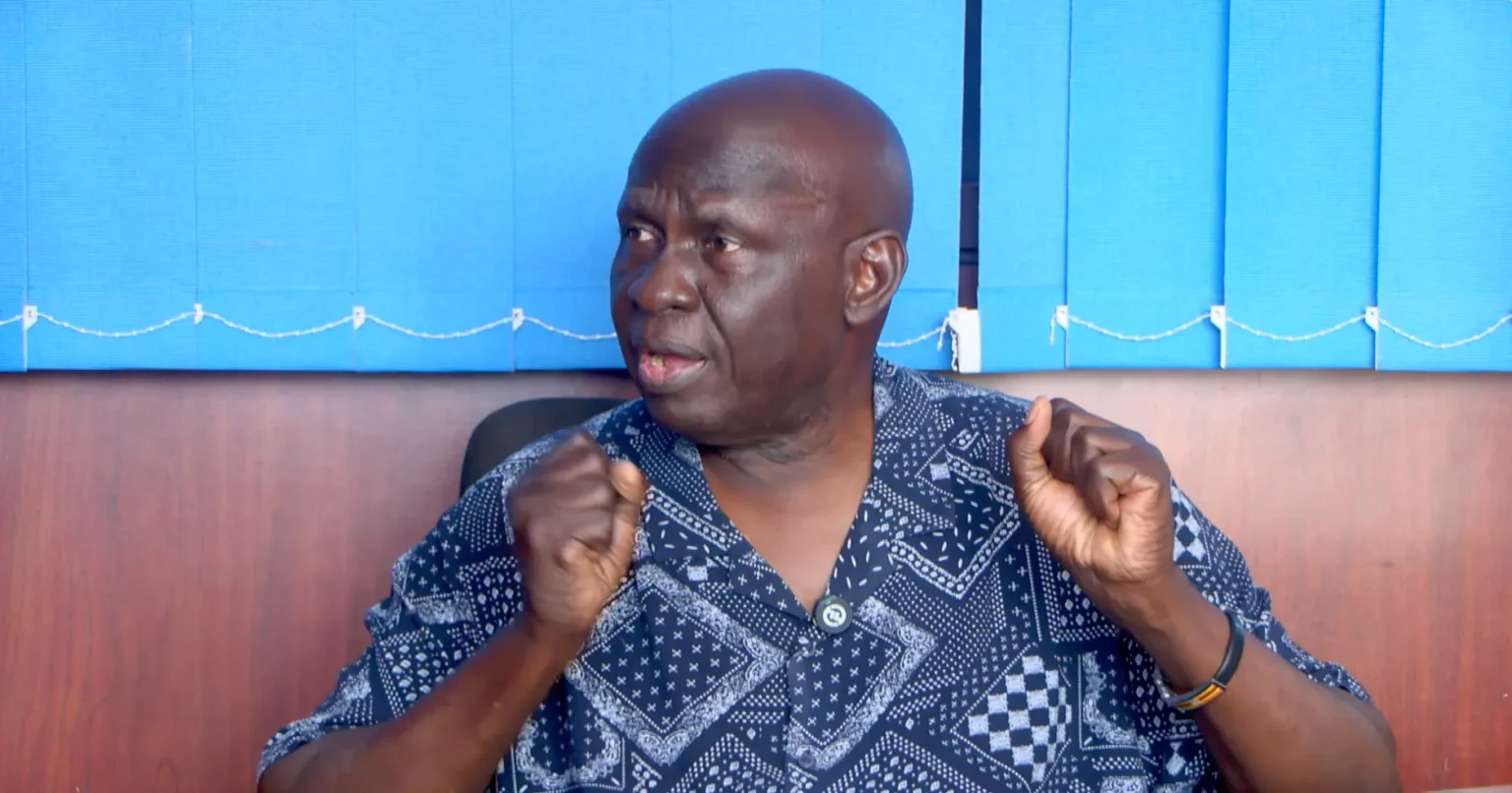
KAMPALA, Uganda — Daily Monitor co-founder Phillip Wafula Oguttu has cautioned Nation Media Group (NMG) against accepting any arrangement that could compromise editorial independence as negotiations continue over the reopening of Daily Monitor and NTV Uganda.
Speaking amid ongoing talks between NMG executives and Uganda’s military leadership, Mr. Oguttu said the newspaper was founded on the principle of independent journalism and should not sacrifice that mission in exchange for a return to operations.
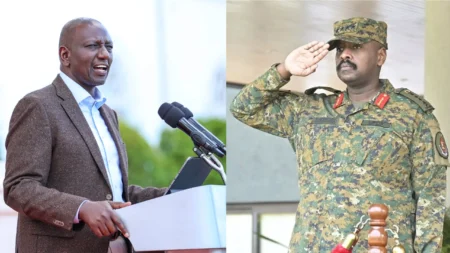
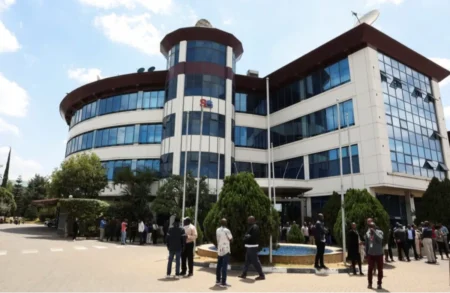
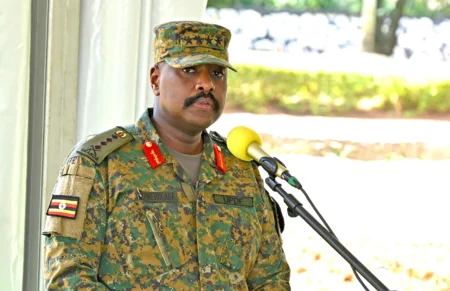
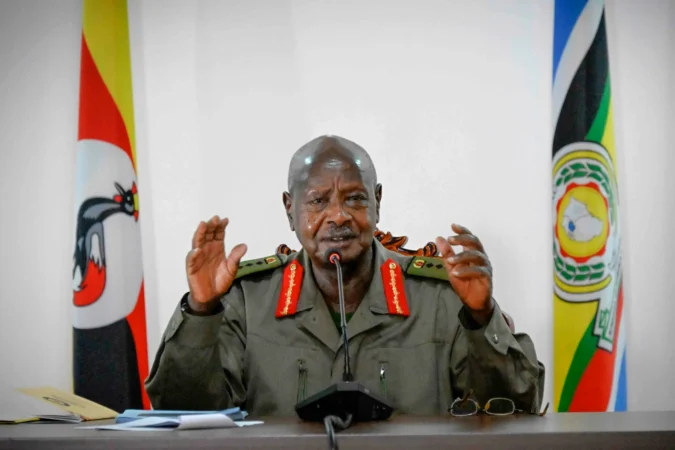
His remarks come as senior NMG officials from Nairobi continue discussions with the Uganda People’s Defence Forces (UPDF) following the closure of the company’s Ugandan operations after directives issued by Chief of Defence Forces (CDF) Gen Muhoozi Kainerugaba.
“The most important thing is not simply reopening. The most important thing is preserving the editorial independence on which the Monitor was founded,” Mr. Oguttu said during a public engagement hosted by the Uganda Law Society.
Concerns over military-led negotiations
The negotiations have generated significant debate within media and legal circles because they are reportedly being conducted through the military rather than Uganda’s statutory communications regulator, the Uganda Communications Commission (UCC).
Press freedom advocates have questioned why discussions concerning a media house’s operations are being handled by security agencies instead of regulatory institutions established under law.
Sources familiar with the talks have indicated that Gen Muhoozi presented NMG executives with a collection of Daily Monitor articles and NTV Uganda reports that he considered hostile to government interests.
According to military spokesperson Col Chris Magezi, NMG management committed itself to adopting what he described as a more “patriotic, balanced and objective” approach to journalism.
The statement triggered concern among journalists and civil society organisations, who warned that concepts such as “patriotic journalism” can be interpreted in ways that undermine editorial independence.
NMG assures staff of commitment to independent journalism
Despite the pressure, sources familiar with internal discussions say NMG management has assured staff that the company remains committed to professional and independent journalism.
During a meeting with employees, management reportedly stressed that editorial standards would remain intact while acknowledging the political realities surrounding the company’s operations.
The reassurance came shortly after NMG suspended online news publication in Uganda.
The company had initially continued publishing digitally after its physical operations were shut down, arguing that no formal closure order had been issued by the Uganda Communications Commission.
However, management later halted online publishing to avoid complicating ongoing negotiations.
A newspaper born during Uganda’s no-party era
Oguttu used the occasion to reflect on the origins of the Daily Monitor, which was established in the early 1990s by journalists who broke away from The Weekly Topic.
At the time, Uganda was operating under the Movement political system, which restricted party political activity and limited avenues for organised opposition.
According to Mr. Oguttu, the founders sought to create a platform where Ugandans could debate national issues freely while adhering to principles of factual reporting and non-sectarianism.
“We started this paper to allow people to speak freely, provided they were telling the truth and not promoting sectarianism based on tribe, religion or race,” he said.
He argued that because opposition political activity was heavily restricted, the newspaper inevitably became one of the few institutions willing to scrutinise government decisions.
“There was no effective opposition at the time. We asked difficult questions, and because of that many people viewed us as the opposition.”
History of state pressure
The veteran journalist recalled that the government responded to the newspaper’s growing influence by restricting public-sector advertising and purchases of the publication.
For nearly three years, ministries and government agencies reportedly avoided advertising in the Monitor, significantly affecting its revenues.
Despite the financial pressure, strong circulation and public support enabled the publication to survive.
The current standoff, Mr. Oguttu argued, differs from previous confrontations because the central issue is no longer whether the newspaper can survive economically but whether it can continue operating independently.
Oguttu’s political and journalistic legacy
Beyond journalism, Mr. Oguttu has played a prominent role in Uganda’s political history.
He served as treasurer of the 1979 Moshi Conference, which helped shape the political transition that followed the fall of Idi Amin, and later became a Member of Parliament (MP).
His dual experience in politics and journalism, he said, has given him a unique perspective on how governments interact with independent media.
Mr. Oguttu described President Museveni as a patient political strategist who has historically relied on a mixture of persuasion, engagement and pressure when dealing with critical media organisations.
He recalled numerous meetings between editors and the President aimed at influencing editorial direction and moderating critical coverage.
He also noted that successive governments have recruited senior journalists into public service while security agencies have repeatedly intervened in media disputes.
Press freedom concerns
The Daily Monitor has long been at the centre of major legal and constitutional battles involving press freedom in Uganda.
The newspaper played a significant role in campaigns that contributed to the enactment of the Access to Information Act and supported legal challenges that led to the striking down of offences such as sedition and the publication of false news.
Also Read: State sets editorial reform conditions for NTV Uganda, Daily Monitor reopening
Those laws had frequently been used to prosecute journalists and restrict media activity.
The current closure adds to a long list of confrontations between the state and the Monitor, particularly over reporting on military affairs, governance, succession politics and national security.
For Mr. Oguttu, the dispute reflects a broader trend affecting Uganda’s media landscape.
“The space for independent journalism continues to shrink,” he warned, arguing that pressure on mainstream media is increasing and that even social media platforms are facing growing scrutiny and regulation.
As negotiations continue, the outcome is likely to be closely watched by journalists, civil society organisations and international media freedom advocates concerned about the future of independent journalism in Uganda.