



NAIROBI, Kenya — Thirty-six years after thousands of Kenyans defied a government ban and took to the streets demanding political freedom, Saba Saba remains one of the most powerful symbols of civic resistance in the country’s history.
What began on July 7, 1990 as a campaign against one-party rule under former President Daniel arap Moi has evolved into a broader struggle centred on accountability, human rights, economic justice and constitutional governance.
As Kenya prepares for another Saba Saba commemoration on July 7, 2026, the movement finds itself at a historic crossroads.
The generation leading today’s demonstrations is largely different from the one that challenged KANU rule in the early 1990s, yet many activists argue the underlying fight for a more responsive and accountable state remains unfinished.
The birth of Saba Saba
The original Saba Saba movement emerged at a time when Kenya was governed under a de facto one-party system dominated by the Kenya African National Union (KANU).
By 1990, growing dissatisfaction with political repression, corruption, economic decline and restrictions on civil liberties had fuelled demands for democratic reforms.
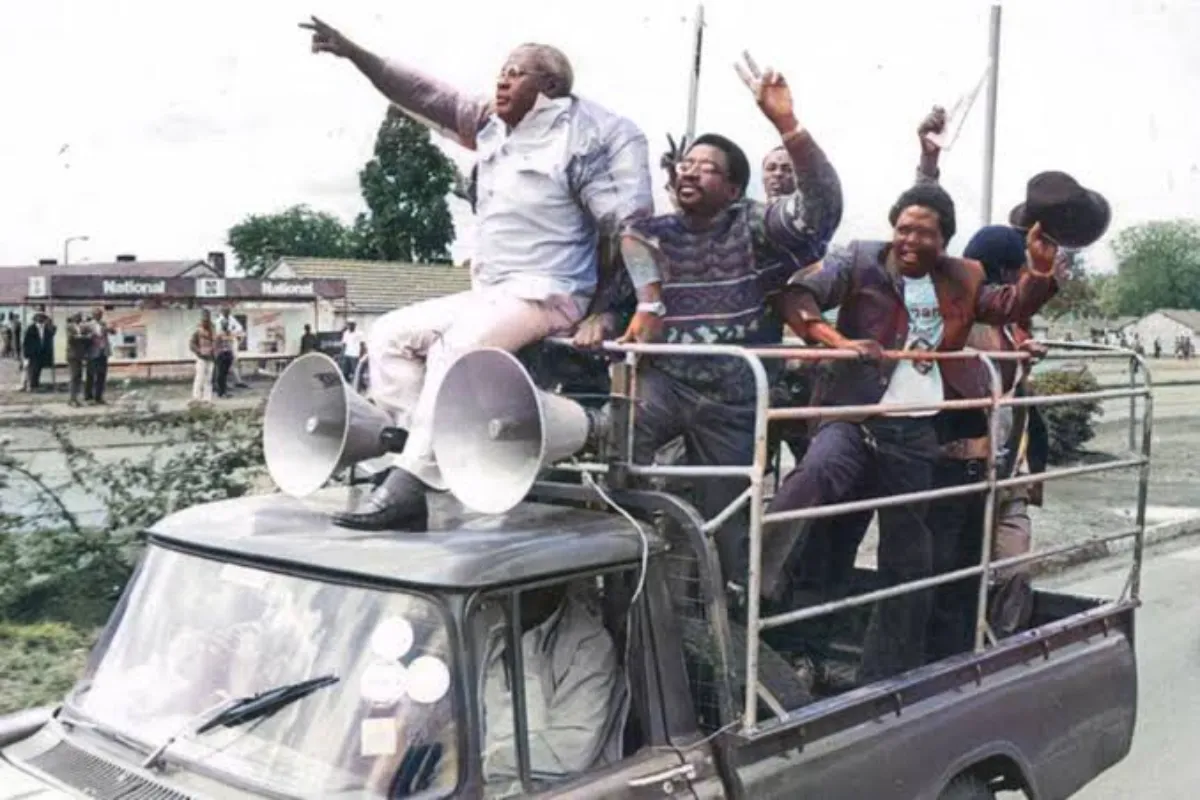
Opposition leaders Kenneth Matiba, Charles Rubia, Jaramogi Oginga Odinga, Martin Shikuku, George Anyona, and other pro-democracy advocates pushed for constitutional change and the reintroduction of multiparty politics.
On July 7, 1990, the government banned a planned pro-democracy rally at Kamukunji Grounds and arrested Matiba and Rubia in an attempt to stop the movement.
Instead, the crackdown sparked nationwide protests.
Thousands of Kenyans took to the streets in Nairobi and other towns despite heavy police deployments. Security forces responded with tear gas, batons and live ammunition.
Human rights organisations documented numerous deaths, injuries and mass arrests during the unrest.
While casualty figures vary across historical accounts, rights groups estimate dozens of people were killed while hundreds more were injured or detained.
The protests marked a turning point in Kenya’s political history.
How Saba Saba changed Kenya
Although the demonstrations were suppressed, they intensified domestic and international pressure on the Moi administration.
The growing pro-democracy movement eventually forced the government to repeal Section 2A of the Constitution in December 1991, ending Kenya’s one-party state and restoring multiparty politics.
That decision paved the way for:
- The 1992 multiparty elections.
- Expanded political freedoms.
- Constitutional reforms throughout the 1990s and 2000s.
- The promulgation of the Constitution of Kenya, 2010.
Many historians regard Saba Saba as one of the defining moments that reshaped Kenya’s democratic trajectory.
A new generation, A new agenda
Unlike the original movement, which focused primarily on political pluralism and electoral freedoms, today’s Saba Saba demonstrations are centred on governance and accountability.
Organisers of the 2026 commemorations are calling for:
- An end to extrajudicial killings.
- Action against enforced disappearances.
- Greater police accountability.
- Protection of constitutional rights.
- Responsible public spending.
- Economic justice and youth inclusion.
- Stronger anti-corruption measures.
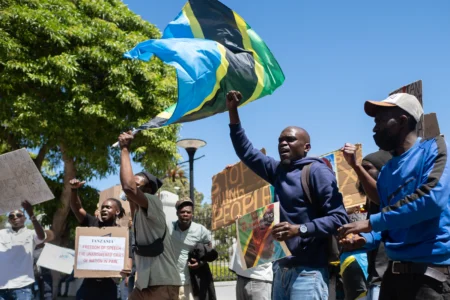
The movement has also been heavily influenced by the Gen Z-led protests that gained prominence during demonstrations against the Finance Bill and wider concerns over governance, taxation and public accountability.
From political leaders to civic movements
Another major difference lies in leadership.
The 1990 protests were driven largely by opposition politicians and veteran pro-democracy figures.
In 2026, the movement is being led primarily by:
- Youth activists.
- Human rights defenders.
- Civil society organisations.
- Grassroots community networks.
Among the groups leading this year’s mobilisation is the Grassroots Economic Justice Movement (GEJM), also known as Mtetezi.
The movement’s National Convenor Francis Awino says organisers expect between 1,000 and 3,000 participants to march from Jeevanjee Gardens to Parliament Buildings to present petitions on governance and human rights issues.
The notification dispute
The planned demonstrations have triggered a dispute between organisers and police.
Activists insist they formally notified the National Police Service in compliance with the Public Order Act, which requires organisers to notify authorities before public processions.
However, Nairobi Regional Police Commander Issa Mohamud has publicly stated that police have not received any valid notification.
The disagreement has reignited debate about the interpretation of Article 37 of the Constitution, which guarantees every person the right to assemble, demonstrate, picket and present petitions peacefully and unarmed.
Legal experts have repeatedly argued that Kenyan law requires notification rather than permission.
From leaflets to livestreams
Perhaps no aspect of Saba Saba has changed more dramatically than how it is organised.
In 1990, activists relied on:
- Secret meetings.
- Printed pamphlets.
- Underground networks.
- Word-of-mouth mobilisation.
Today, mobilisation occurs largely through:
- X (formerly Twitter).
- TikTok.
- Facebook.
- WhatsApp groups.
- Livestream platforms.
Social media has enabled organisers to coordinate activities, raise funds, document incidents and reach both domestic and international audiences in real time.
Kamukunji to Jeevanjee
The geography of protest has also evolved.
Historically, Kamukunji Grounds became synonymous with Kenya’s democracy movement.
Modern demonstrations are often organised from Jeevanjee Gardens, with marchers proceeding through Nairobi’s Central Business District before presenting petitions to Parliament.
The focus has increasingly shifted from political rallies to direct engagement with state institutions.
Has the State’s response changed?
Kenya’s democratic environment has transformed significantly since the Moi era, but activists argue that state responses to dissent continue to raise concerns.
During the 1990s, authorities frequently relied on:
- Political bans.
- Detentions without trial.
- Restrictions on opposition activity.
Today, critics point to:
- Heavy police deployments.
- Road closures.
- Surveillance technologies.
- Allegations of excessive force during demonstrations.
Human rights organisations have repeatedly called for greater accountability in the policing of public assemblies.
The public holiday debate
This year’s commemorations have also sparked debate over whether July 7 should be treated as an unofficial public holiday.
Activist Muteti Mulinge has urged Kenyans to stay away from work and participate in the demonstrations.
Also Read: Police declare Saba Saba protests illegal, warn demonstrators of arrest
Meanwhile, the opposition Orange Democratic Movement (ODM) has distanced itself from the protests.
ODM leaders have said they respect citizens’ rights to demonstrate but will not officially participate.
Why Saba Saba still matters
Thirty-six years after citizens first challenged one-party rule, Saba Saba remains more than a historical anniversary.
It has become a mirror reflecting Kenya’s evolving democratic journey.
In 1990, protesters fought for the right to vote and organise politically.
In 2026, many are fighting for what they see as the next phase of that struggle: accountable governance, economic inclusion, respect for human rights and stronger constitutional protections.
The personalities, methods and demands may have changed, but the central idea remains remarkably consistent.
Across generations, Saba Saba continues to embody a belief that citizens have both the right and responsibility to demand reform when institutions fall short of public expectations.