

KAMPALA, Uganda — The military shutdown of NTV Uganda, Spark TV, Daily Monitor, KFM and Dembe FM marks one of the most serious confrontations between the Ugandan state and an independent media organisation in more than a decade.
Beyond the immediate disruption of broadcasting and publishing operations, the incident raises fundamental questions about press freedom, the growing political influence of Uganda’s military chief Gen Muhoozi Kainerugaba, and the future of democratic accountability in Uganda.
The night Uganda’s largest independent media house went dark
Shortly after midnight on June 29, security personnel moved into premises operated by Nation Media Group (NMG) Uganda, effectively shutting down some of the country’s most influential media platforms.
By dawn, viewers attempting to access NTV Uganda and Spark TV were met with blank screens.
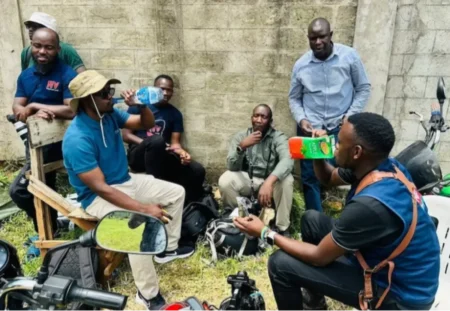
Listeners reported that KFM and Dembe FM had gone off air. Staff arriving for work at NMG’s Namuwongo headquarters and broadcasting facilities at Kampala Serena Hotel found security personnel controlling access to the premises.
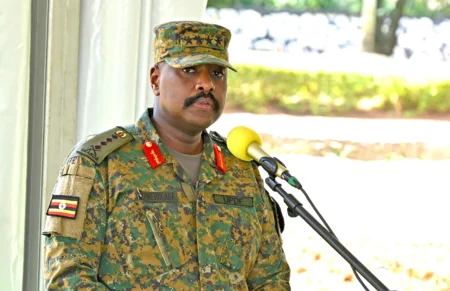
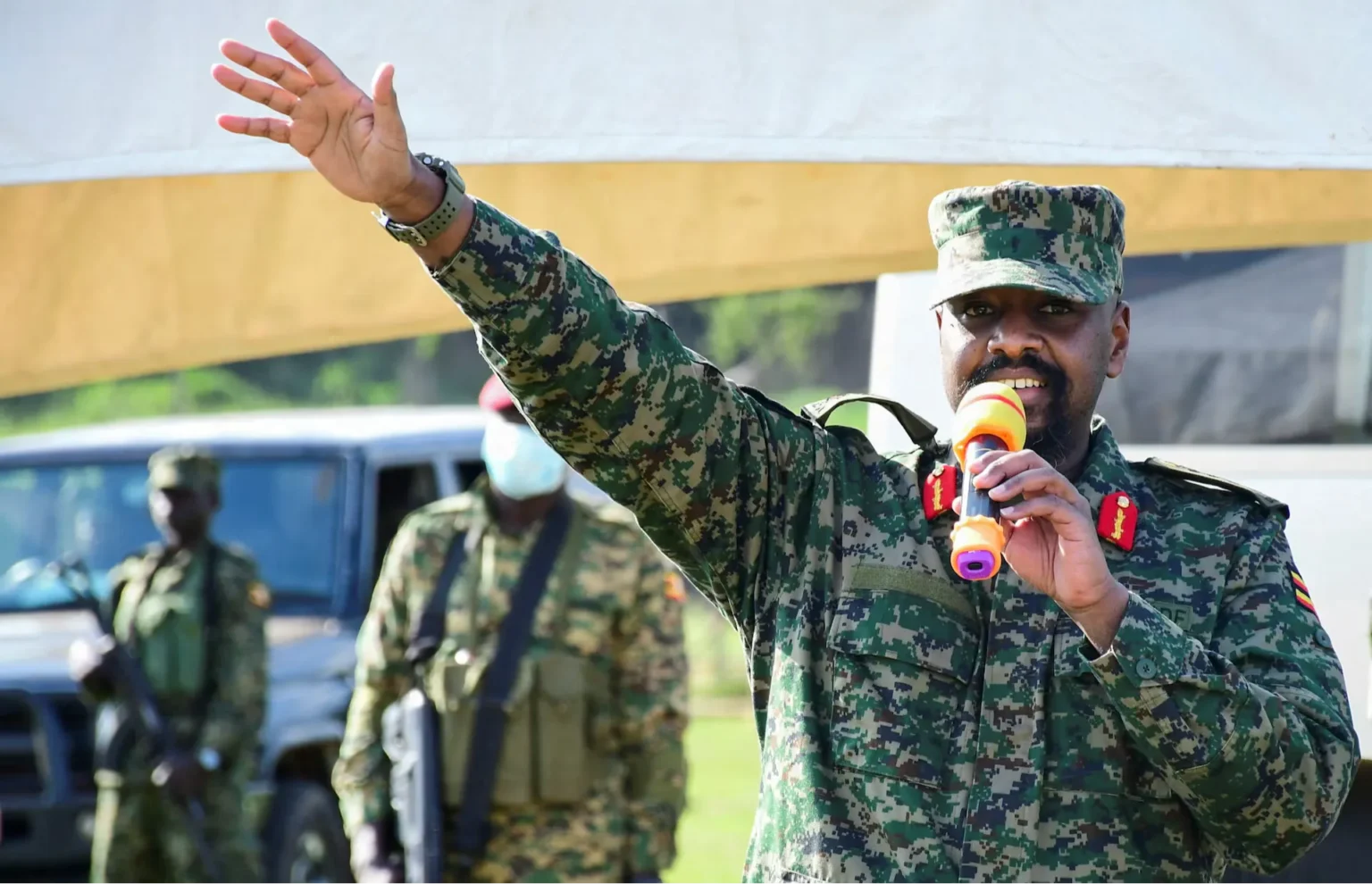
The operation followed a series of social media posts by Uganda’s Chief of Defence Forces (CDF), Gen Muhoozi Kainerugaba. In one post, he declared that NTV Uganda and Daily Monitor were being shut down.
In subsequent posts, he stated that the outlets would not reopen without his permission and openly questioned the concept of a free press.
“In Uganda, I do not believe in a free press!” Kainerugaba, who is the president’s son, wrote on X.
“From now on ALL bad stories about Uganda have to be cleared by my office!” he said in one of a series of posts, adding that all media in Uganda would follow the rules, going forward.
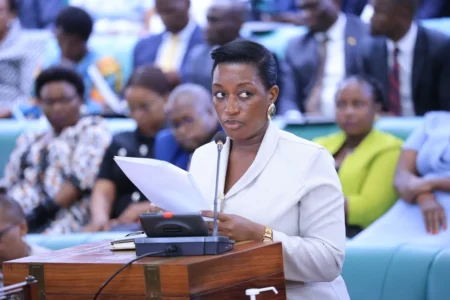
What made the incident particularly significant was the absence of an immediate public explanation from the Uganda Communications Commission (UCC), the statutory regulator responsible for broadcasting and telecommunications.
No court order, regulatory directive or publicly available legal instrument was initially produced to justify the closure.
The result was a dramatic and unprecedented spectacle: a military-led operation against one of East Africa’s most established independent media organisations.
Why Nation Media Group matters
The significance of the shutdown extends beyond Uganda because Nation Media Group (NMG) is not an ordinary media company.
Headquartered in Kenya, NMG is East Africa’s largest independent media house, operating newspapers, television stations, radio networks and digital platforms across the region. Its publications and broadcasts reach millions of readers, viewers and listeners.
In Uganda, the Daily Monitor has long been regarded as one of the country’s most influential newspapers, while NTV Uganda has emerged as a major television news platform since its launch.
The organisation has built a reputation for investigative journalism and political reporting, frequently covering corruption allegations, governance issues, elections and security matters. That watchdog role has often placed it on a collision course with political power.
For governments that view media criticism as a threat rather than a democratic necessity, institutions such as NMG become particularly uncomfortable actors.
Museveni and the Daily Monitor: A long history of tension
The latest shutdown did not emerge in isolation. It is part of a relationship between the Ugandan state and the Daily Monitor that has been characterised by recurring confrontation for decades.
The newspaper was founded in 1992 and quickly established itself as an independent voice willing to challenge official narratives.
Over the years, journalists associated with the publication have faced arrests, lawsuits, interrogations and intimidation. State officials have frequently accused the paper of bias, while the newspaper has defended its reporting as being in the public interest.
One of the most significant confrontations occurred in 2013 when security forces raided Daily Monitor offices and temporarily shut down operations after the newspaper published a letter linked to what became known as the “Muhoozi Project”—allegations that Gen Muhoozi Kainerugaba was being prepared to eventually succeed President Yoweri Museveni.
The premises remained sealed for more than a week before the outlets were allowed to resume operations after signing police search certificates and other documents.
In February 2007, barely two months after NTV Uganda launched in December 2006, the broadcaster was forced off air by the government following accusations that its news coverage was negative.
Authorities justified the operation on national security grounds, but critics viewed it as an attack on press freedom.
Over the years, President Museveni has repeatedly criticised the newspaper. At one point he described Daily Monitor as an “enemy and evil newspaper,” accusing it of unfair reporting and political hostility.
The pattern has been consistent: when media reporting intersects with sensitive political questions, particularly those involving succession, security or governance, tensions between the state and independent media intensify.
Enter Gen Muhoozi Kainerugaba
The latest confrontation cannot be understood without examining the increasingly prominent role of Gen Muhoozi Kainerugaba.
For years, Gen Muhoozi was viewed primarily as a military officer. Today he occupies a far more significant position in Uganda’s political landscape.
As Chief of Defence Forces (CDF) and one of the country’s most influential public figures, he frequently communicates directly with the public through social media, often making statements that attract national and international attention.
His online presence has become an extension of political power. Unlike traditional military leaders who communicate through official channels, Gen Muhoozi has cultivated a style that is personal, direct and often confrontational.
The shutdown of Nation Media Group (NMG) Uganda represents perhaps the most dramatic example yet of that approach.
According to Gen Muhoozi, he has had the power to shut down any media outlet since 2017, when his father, President Yoweri Museveni, granted him this ability.
His statements claiming authority to shut down media organisations and his remarks regarding the role of the press raise questions not only about media freedom but also about the evolving relationship between military authority and civilian institutions.
Uganda’s National Association of Broadcasters said it was closely monitoring the situation, adding that it was “deeply concerned about this action and its impact on the media ecosystem” and the rights enshrined in the constitution.
“I do not believe in a free press”
Among the most controversial aspects of the episode were Gen Muhoozi’s public comments about journalism itself.
His assertion that he does not believe in a free press and that media should be guided by “cadres of the revolution” stands in sharp contrast to internationally recognised democratic norms.
In constitutional democracies, independent media serves as a watchdog over government power.
Journalists are expected to scrutinise leaders, investigate wrongdoing and provide citizens with information necessary for informed participation in public life.
Uganda’s Constitution guarantees freedom of expression and freedom of the press.
Uganda is also party to international instruments including the African Charter on Human and Peoples’ Rights and the International Covenant on Civil and Political Rights (ICCPR), both of which protect freedom of expression and access to information.
Within the East African Community (EAC), member states have repeatedly affirmed commitments to democratic governance, accountability and human rights.
Against that backdrop, the idea that media should operate primarily as an extension of state ideology represents a fundamentally different vision of journalism.
Can the military legally shut down media?
One of the central questions arising from the incident is whether the military possesses legal authority to shut down media organisations.
Under Uganda’s legal framework, media regulation generally falls under civilian institutions, particularly the Uganda Communications Commission (UCC).
The Constitution establishes protections for freedom of expression, while courts are typically expected to adjudicate disputes involving alleged violations of media laws.
Constitutional lawyers and media rights advocates have argued that any closure of a media organisation should follow due process, including regulatory procedures and judicial oversight.
The absence of a publicly disclosed legal basis for the shutdown has therefore generated intense debate.
If media houses can be closed through military intervention rather than transparent legal processes, critics argue that constitutional safeguards become vulnerable to executive discretion.
Press freedom under Museveni
The latest developments fit into a broader history of media-state tensions under President Museveni’s nearly four-decade rule.
While Uganda has maintained a vibrant media sector compared to some neighbouring countries, journalists and media organisations have frequently faced restrictions.
These have included arrests, suspensions, broadcasting restrictions during elections, internet shutdowns, regulatory actions against broadcasters and pressure on civil society organisations.
International press freedom organisations have repeatedly expressed concern about shrinking civic space, particularly during election periods.
The government’s position has generally been that restrictions are necessary for national security, public order and stability.
Critics, however, argue that such measures often target dissenting voices and undermine democratic accountability.
The succession question
Although the current dispute revolves around media operations, it inevitably intersects with a larger political issue: succession.
For years, discussions about who might eventually succeed President Museveni have been politically sensitive.
The “Muhoozi Project” story that triggered the 2013 Daily Monitor closure remains one of the most significant examples.
As Gen Muhoozi’s public profile has grown, media coverage of his political influence has attracted increasing scrutiny.
Independent reporting on succession politics is often viewed as controversial because it touches on the future direction of Uganda’s leadership.
The result is a media environment where coverage of political transition can become particularly contentious.
Regional implications
The shutdown has implications far beyond Uganda.
For investors, the incident raises questions about regulatory predictability and institutional independence.
For journalists across East Africa, it sends a powerful message about the potential consequences of reporting on politically sensitive issues.
For the East African Community (EAC), it tests commitments to democratic governance and freedom of expression.
The development also affects foreign correspondents and international media organisations operating in the region, many of whom rely on local media partnerships and sources.
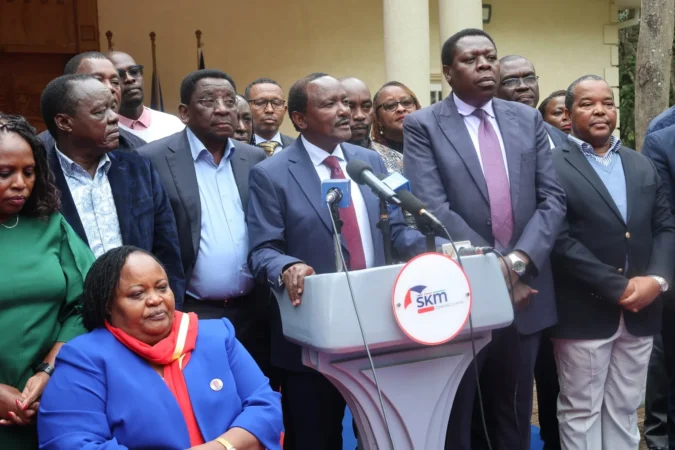
The reaction from regional bodies, press freedom organisations and diplomatic missions will likely shape perceptions of Uganda’s commitment to democratic principles.
What happens next?
Several pathways could emerge.
Media organisations may pursue constitutional petitions challenging the legality of the shutdown.
The Uganda Communications Commission (UCC) could clarify its position and provide a regulatory basis for any actions taken.
Regional institutions and international press freedom groups may increase pressure on authorities to restore operations.
Also Read: Gen Muhoozi orders hunt for Nation Media boss Susan Nsibirwa
The matter could also attract attention from human rights bodies at the African continental level.
Ultimately, the outcome will depend on whether Uganda’s institutions demonstrate that disputes involving media organisations can be resolved through law rather than force.
The shutdown of Nation Media Group (NMG) Uganda is more than a dispute between a government and a media company.
It is a test of constitutional protections, institutional independence and democratic accountability.
The incident echoes the 2013 Daily Monitor closure but occurs in a different political environment—one shaped by growing discussions about succession, expanding military influence and increasing scrutiny of state power.
Whether the shutdown proves temporary or becomes a turning point in Uganda’s media landscape, it has already become one of the most significant press freedom stories in East Africa in recent years.
For journalists, citizens and policymakers alike, the central question remains unchanged: who gets to decide what can be reported, and what happens when those in power decide they no longer like the answer?