



KAMPALA, Uganda — As Uganda battles a relatively limited Ebola outbreak linked to cross-border transmission from the Democratic Republic of Congo (DRC), an increasingly contentious question is emerging in political, media, and public discourse: Why has Uganda become the focus of extensive travel restrictions and advisories while the outbreak’s origin remains across the border in Congo?
The question was recently amplified by veteran East African journalist and political analyst Charles Onyango-Obbo, whose commentary has resonated widely among Ugandans frustrated by what they perceive as an uneven international response to the current outbreak.
At the centre of the debate lies a tension that often accompanies infectious disease crises: where does legitimate public health precaution end and geopolitical perception begin?
The numbers behind the controversy
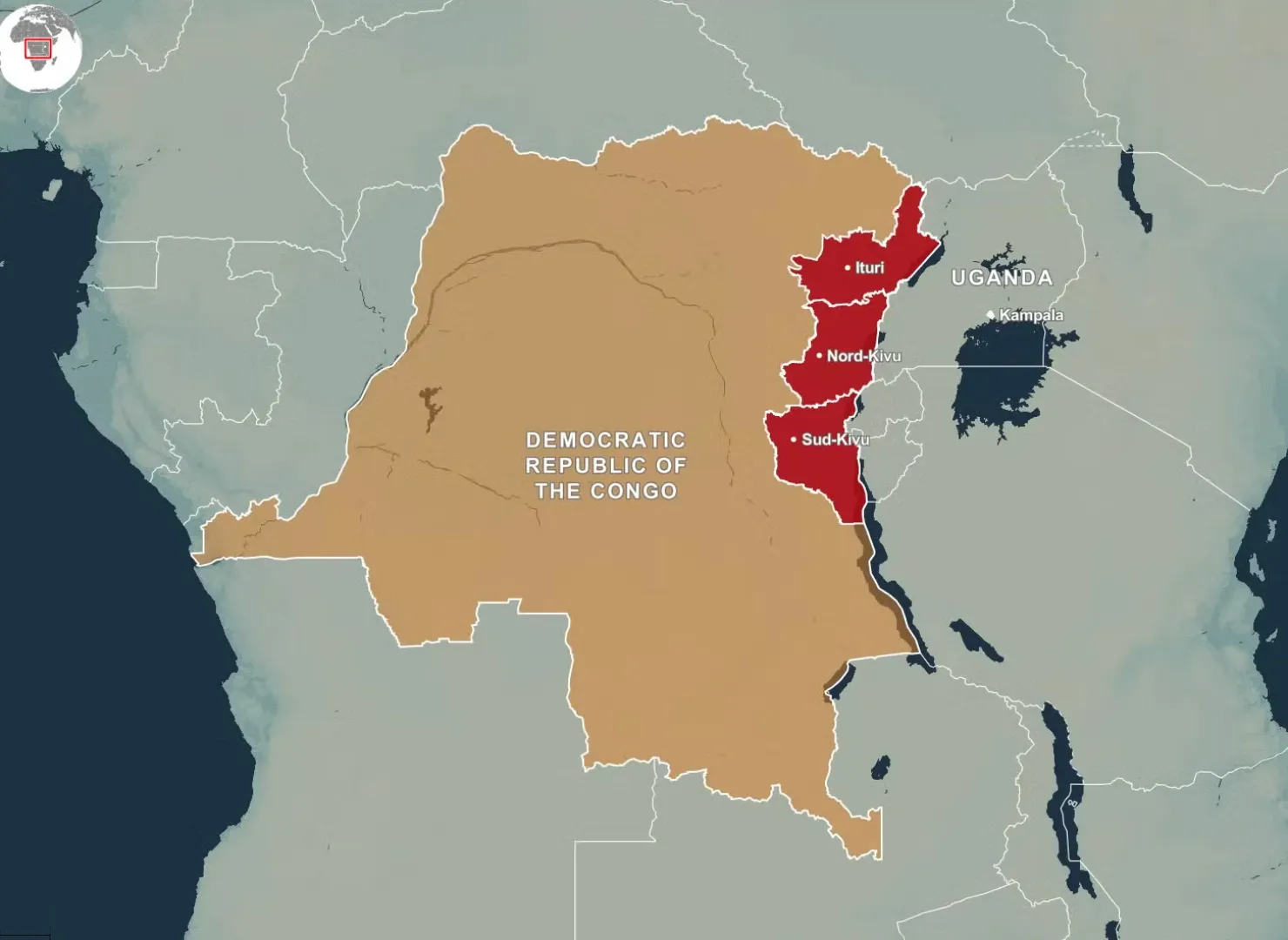
The current outbreak was first reported in eastern Democratic Republic of Congo (DRC), a region that has experienced repeated Ebola epidemics over the past two decades.
According to official figures cited in regional reporting, the DR Congo has recorded significantly higher numbers of confirmed, suspected, and fatal cases (452 cases) than Uganda (19 confirmed cases).
Uganda’s outbreak, by contrast, has largely been characterised by imported infections linked to cross-border movement from Congo.
Ugandan health authorities have consistently maintained that the majority of confirmed cases have been imported and that aggressive surveillance, contact tracing, isolation, and treatment measures have helped prevent wider community transmission.
The country has also repeatedly stressed that its outbreak remains under control and that it possesses one of Africa’s most experienced Ebola response systems.
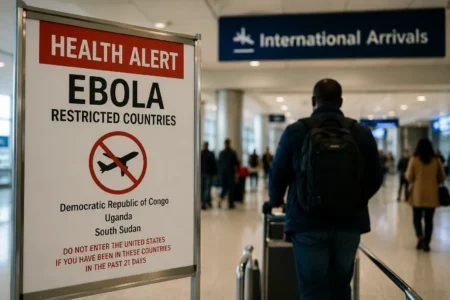
Yet despite these assurances, Uganda has faced a growing list of travel advisories, health alerts, and precautionary measures from foreign governments and international institutions.
For many Ugandans, that disparity has become difficult to ignore.
A country shaped by Ebola experience
Few countries outside the DRC possess Uganda’s experience in managing Ebola outbreaks.
Since the first major outbreak in 2000, Uganda has developed extensive institutional expertise in surveillance, contact tracing, laboratory diagnostics, quarantine management, and public health communication.
Ugandan scientists, epidemiologists, and frontline health workers have frequently been deployed to support outbreak responses elsewhere in Africa.
Indeed, global health agencies have often pointed to Uganda as a model for Ebola preparedness.
That reputation makes the current situation particularly sensitive.
Critics argue that a country widely regarded as one of Africa’s most capable Ebola responders is now being treated internationally as a primary risk destination despite facing what officials describe as a contained spillover event.
The perception gap has helped fuel speculation, suspicion, and political debate.
The travel advisory dilemma
From a public health perspective, governments typically issue travel advisories based not only on case numbers but also on factors such as cross-border mobility, international flight connections, healthcare capacity, surveillance concerns, and risk assessments.
Health experts note that travel advisories are often precautionary rather than punitive.
However, perception matters.
When restrictions appear disproportionate to the scale of an outbreak, affected countries can experience significant economic consequences.
Tourism declines.
Conference bookings are cancelled.
Foreign investors become cautious.
Airlines adjust schedules.
International media coverage often amplifies public fears.
For developing economies, the reputational impact can sometimes outlast the outbreak itself.
This reality partly explains why travel advisories frequently become politically charged.
The Kenya factor and emerging suspicions
The debate has become even more complicated following controversy in neighbouring Kenya over a proposed quarantine facility reportedly linked to managing potential Ebola exposures.
The proposal triggered protests, legal challenges, and intense public scrutiny after details emerged suggesting the facility could be used to isolate individuals potentially exposed to the virus.
Against this backdrop, claims have circulated that Uganda may have previously been approached regarding similar arrangements but declined due to its own outbreak management priorities.
Also Read: Why Kenya’s proposed Ebola quarantine facility is a strategic necessity, not a threat
No public evidence has emerged confirming that Uganda was formally requested to host such a facility, nor have U.S. authorities publicly linked travel advisories to any disagreement with Kampala.
Nevertheless, the claims have gained traction among sections of the public already sceptical about the international response.
This is often how conspiracy theories take root during health emergencies: information gaps become filled by assumptions, political grievances, and historical mistrust.
The shadow of history
Uganda’s suspicions do not exist in a vacuum.
Across Africa, memories remain fresh of how some countries were treated during previous disease outbreaks, including Ebola, COVID-19, and even HIV/AIDS.
Several African governments have long argued that international responses sometimes reflect perceptions about the continent rather than actual epidemiological realities.
The debate resurfaced during the COVID-19 pandemic when African countries complained about blanket restrictions imposed despite comparatively lower case burdens in some regions.
Many policymakers fear that once a country becomes associated with a dangerous disease, international actors often react to headlines rather than data.
That concern appears to be resurfacing in Uganda.
A public health challenge, not a political weapon
Yet while questions about consistency and fairness deserve scrutiny, public health experts warn against framing disease control entirely through a geopolitical lens.
Travel advisories are typically issued by sovereign governments based on their own risk calculations.
Some may be overly cautious.
Others may be influenced by domestic political considerations.
But proving deliberate international targeting requires evidence rather than suspicion.
Also Read: UAE imposes travel ban on Uganda, DRC and South Sudan over Ebola risk
The greater challenge may be ensuring that public health decisions remain transparent, proportionate, and grounded in science.
Countries facing outbreaks need cooperation, not isolation.
Likewise, citizens deserve clear explanations for why certain restrictions are imposed and how risk assessments are reached.
The larger question
Whether or not Uganda has been treated unfairly, the controversy highlights a broader global problem: the uneven way health crises are perceived and communicated.
For many Ugandans, the issue is no longer solely about Ebola.
It is about recognition, fairness, and trust.
Why, they ask, is a country managing a limited spillover outbreak being discussed internationally in the same breath as the epicentre itself?
The answer may ultimately lie less in conspiracy and more in the complex intersection of public health, diplomacy, media narratives, and international risk management.
But until those distinctions are clearly explained, questions will continue to grow.
And in an era where information travels faster than viruses, perception can become almost as consequential as the outbreak itself.