

KAMPALA, Uganda — President Yoweri Museveni has issued a stern warning against corruption, non-performance and what he described as “parasitic leadership,” urging both public officials and citizens to intensify efforts towards Uganda’s economic transformation.
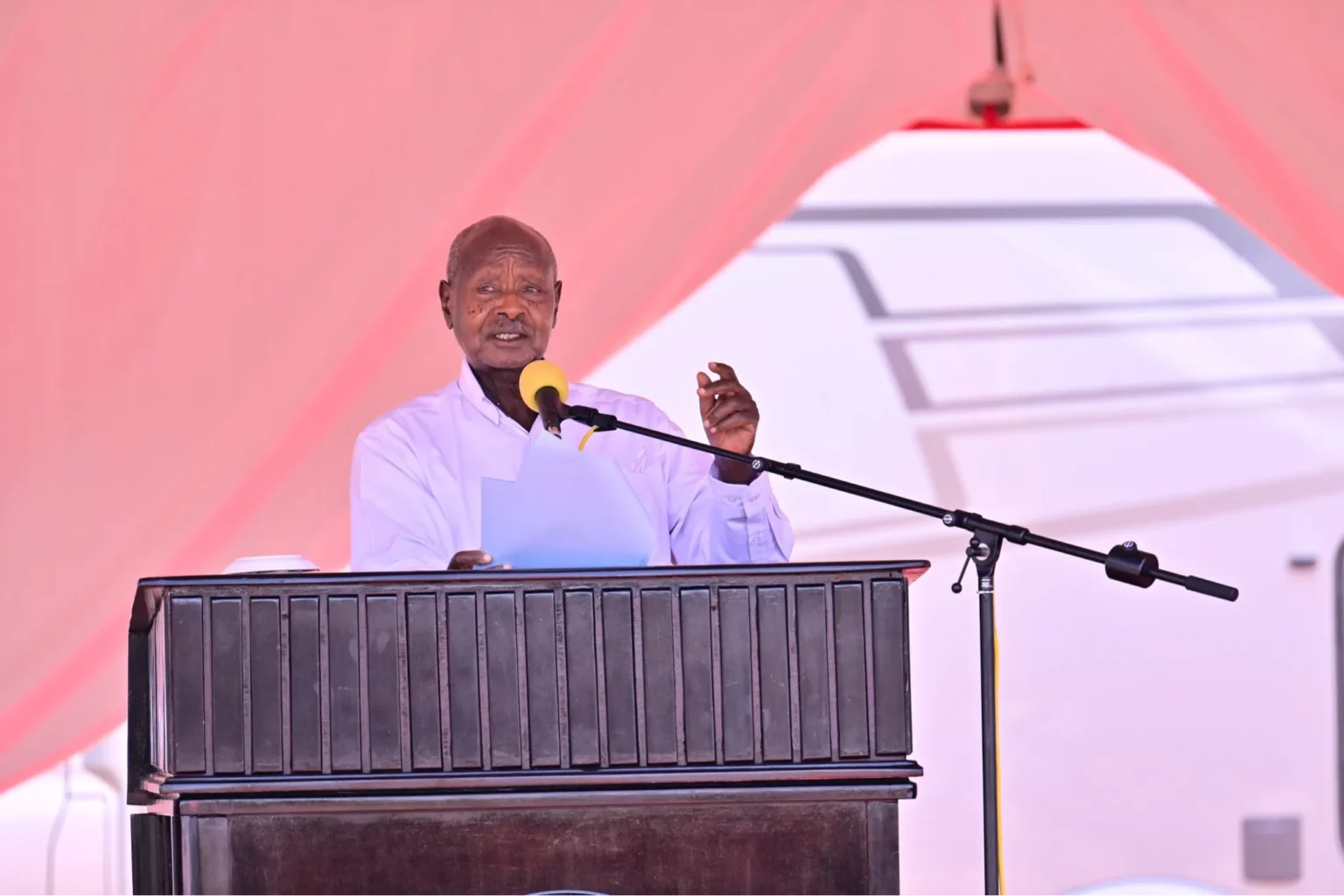
Speaking during the 2026 State of the Nation Address at Kololo Independence Grounds on Thursday 4, June 2026, Museveni said Uganda’s future prosperity depends on disciplined leadership, effective implementation of government programmes and the active participation of citizens in the money economy.
The President addressed Parliament, senior government officials and the wider public through a hybrid format, using the occasion to outline achievements, challenges and priorities for the country’s next phase of development.
He began by thanking Ugandans for participating in the electoral process and for supporting the ruling National Resistance Movement (NRM), before turning to what he described as Uganda’s most pressing challenge: eliminating economic inefficiency and weak leadership.
“Above all, I thank God for all these victories and for the peace in the country in spite of so many evil people that have been plotting to disturb the peace,” Museveni said.
The President revisited a message he delivered during his inauguration earlier this year, clarifying what he meant by his call for “no more sleep.”
According to Museveni, the phrase was intended as a broader call for accountability and action rather than a literal instruction.
“During the presidential inauguration, I put forward a call for ‘no more sleep.’ Some people are already distorting it as just ‘no sleep’,” he said.
“To clarify the message: it means no more sleep, no more corruption, no more diversions, no more politeness for non-performers who want leadership positions for ego and personal intentions.”
Museveni argued that Uganda cannot achieve meaningful transformation if leaders fail to guide citizens into productive economic activity.
A significant portion of the address focused on what Museveni described as Uganda’s long-standing mission of moving citizens from subsistence livelihoods into structured participation in the money economy.
He traced this philosophy back to development debates in the 1960s and later to the National Resistance Movement’s 10-point programme, particularly its commitment to building “an independent, integrated and self-sustaining national economy.”
Drawing on his personal experiences as a young student travelling through areas such as Ntungamo, Mbarara and Nyabushozi, Museveni said early exposure to subsistence farming shaped his understanding of economic transformation.
He described the shift from okukolera ekidda kyoonka — working solely for survival — to commercial production driven by planning and profit.
According to the President, years of mobilisation encouraged communities in Uganda’s cattle corridor to abandon nomadic pastoralism and embrace settled commercial agriculture.
“Between 1966 and 1986, in spite of the wars, we sensitized people about abandoning nomadism for sedentary agriculture,” he said.
Museveni cited the dairy sector as a key success story, noting that milk production had increased from approximately 200 million litres in 1986 to 5.4 billion litres today.
“That was all. They converted their indigenous Ankole cattle into half-breeds with the Friesians and they took off,” he said.
The President said initiatives such as the Parish Development Model (PDM), Emyooga, National Agricultural Advisory Services (NAADS) and Operation Wealth Creation were designed to help households enter the money economy.
However, he stressed that the effectiveness of these programmes depends on proper implementation and accountable leadership.
Museveni warned that government interventions alone cannot succeed if leaders fail to execute their responsibilities.
He also highlighted investments in infrastructure, including roads, electricity generation and transport networks, describing them as essential foundations for industrialisation and market access.
According to the President, Uganda’s electricity generation capacity has increased from about 60 megawatts in 1986 to more than 2,000 megawatts today.
Museveni pointed to progress in GDP growth, poverty reduction, life expectancy and exports, arguing that Uganda has undergone multiple phases of economic transformation.
He said the country has moved through stages of recovery, expansion, diversification, value addition and knowledge-based production.
The President also reiterated the importance of regional and continental integration, arguing that Uganda’s domestic market alone is insufficient to sustain long-term growth.
“Africa’s economic future depends on integration,” he said, adding that larger markets are necessary to absorb increasing production and support sustained prosperity.
In one of the most direct sections of his speech, Museveni criticised officials who seek additional facilitation to perform duties he believes should be part of their mandate.
“Either you lead or you stay in your home,” he said.
“I hear of leaders talking about allowances to reach their people and mobilise them against poverty. I get nauseous. Out of politeness, I’ve been keeping quiet, but now I’m telling you. All non-performers must leave leadership.”
Also Read: Museveni urges Africa to ‘wake up’ as Kenya, Uganda push SGR integration drive
The President also questioned demands for government-provided motorcycles by local leaders.
“Why should a Muluka chief ask for a motorcycle to do his work? Let him ride a bicycle. It is better for him and he will live longer,” Museveni remarked.
“I’m really sick and tired of parasitism and that’s why I said, in this kisanja, no more sleep.”
The State of the Nation Address marked the formal opening of Parliament’s legislative business and outlined government priorities for the year ahead.
Speaker of Parliament Jacob Oboth-Oboth reminded lawmakers of the constitutional significance of the address and urged them to prioritise the interests of their constituents.
He called for unity, discipline and hard work among legislators while reaffirming Parliament’s commitment to supporting Uganda’s ambition of achieving a tenfold economic expansion to a US$500 billion economy.
The event was attended by Vice President Jessica Alupo, Prime Minister Robinah Nabbanja, Cabinet ministers, diplomats and other senior government officials.