


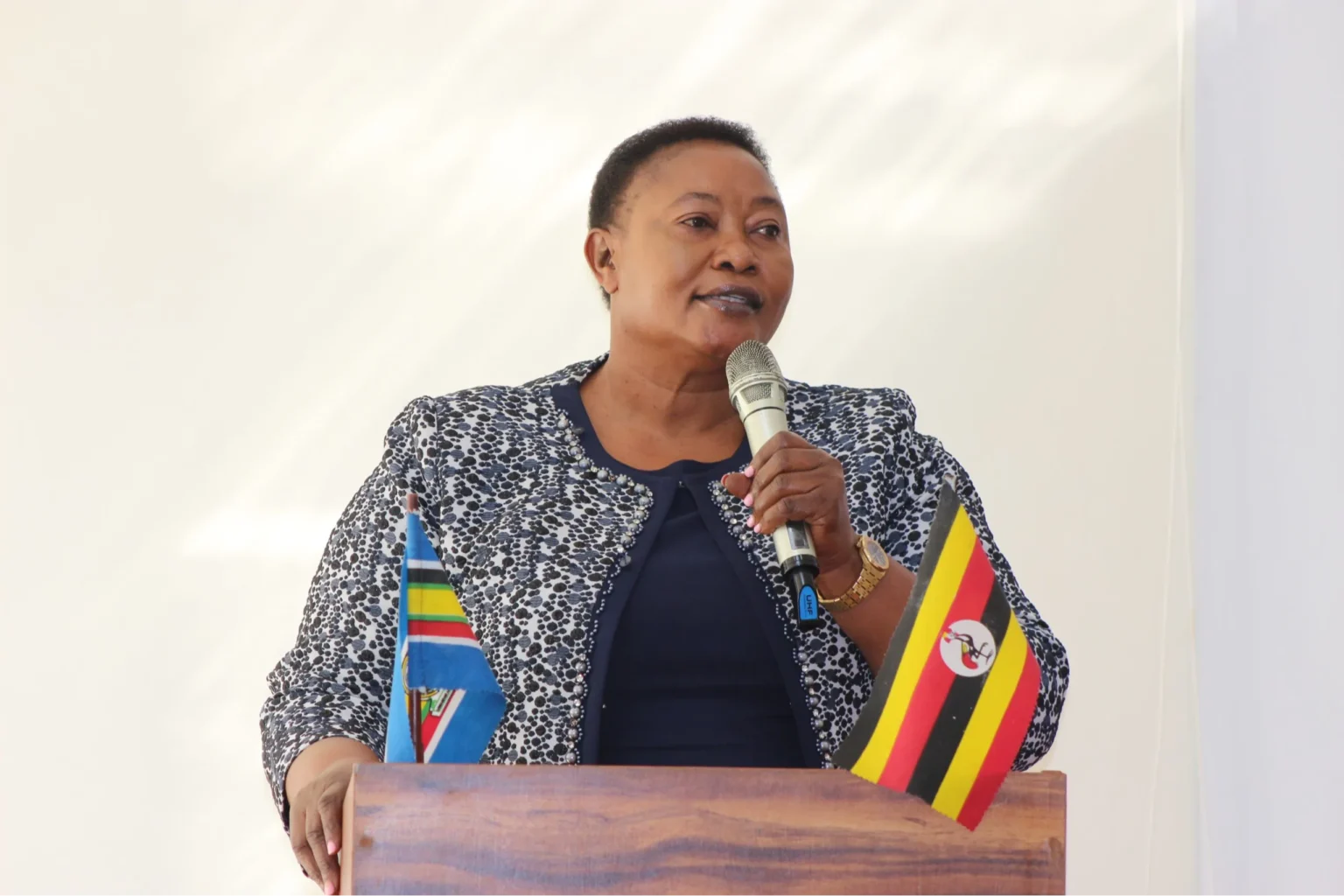
KAMPALA, Uganda — When Minister for the Presidency, Babirye Milly Babalanda stood before Resident District Commissioners (RDCs) and Resident City Commissioners (RCCs) this week, her message was unmistakable.
Monitor every government project.
Track every contractor.
Expose corruption.
Report procurement fraud.
Stop the sale of government jobs.
Ensure public money delivers public services.
The directive echoed a familiar theme that has become a recurring feature of Uganda’s governance landscape for more than three decades: the promise of a renewed war against corruption.
Yet beyond the headlines and official pronouncements lies a more uncomfortable reality.
Uganda has launched numerous anti-corruption campaigns, established oversight agencies, strengthened accountability frameworks and repeatedly warned public officials against stealing public funds.
Despite these efforts, reports of ghost projects, inflated contracts, abandoned infrastructure, payroll fraud and misappropriated government resources continue to emerge across the country.
The latest directive therefore raises a question that many Ugandans have heard before:
Why does corruption remain such a persistent problem despite years of promises to eliminate it?
A familiar government message
Babalanda’s instructions reflect growing concern within government about the implementation of public programmes, particularly as Uganda channels billions of shillings into development initiatives such as the Parish Development Model (PDM), road construction, education, healthcare and agricultural modernisation.
The minister ordered RDCs and RCCs to maintain detailed monitoring registers tracking project progress, contractor performance, implementation challenges and recommended interventions.
She also warned against the sale of public jobs and instructed officials to report cases involving bribery, ghost workers, abuse of office and diversion of public funds.
On paper, the measures appear comprehensive.
They seek to close loopholes that have repeatedly enabled losses of taxpayer money.
But governance experts argue that Uganda’s challenge has rarely been the absence of directives.
The challenge has often been implementation.
“Uganda does not necessarily suffer from a shortage of anti-corruption policies,” said political analyst Dr Samuel Kato.
“The country has repeatedly introduced regulations, institutions and directives designed to improve accountability. The bigger question is whether those measures are consistently enforced.”
That distinction may explain why anti-corruption announcements frequently generate public interest but often fail to produce lasting confidence among citizens.
The long shadow of ghost projects
Few issues illustrate the problem more clearly than ghost projects.
Across different parts of the country, investigations over the years have uncovered schools that existed only on paper, health facilities that received funding but never materialised, roads that were paid for but poorly executed and beneficiaries listed under government programmes who could not be traced.
Each revelation follows a similar pattern.
Funds are allocated.
Implementation reports indicate progress.
Audits later reveal irregularities.
Investigations begin.
In some cases, prosecutions follow.
Yet similar cases continue to emerge elsewhere.
For many Ugandans, the persistence of such scandals has fuelled concerns that corruption is not merely an individual problem but a systemic one.
A district-based civil society monitor, whose experience reflects concerns raised by accountability advocates, said project failures often occur because oversight mechanisms become active only after money has already disappeared.
“We are usually reacting to corruption rather than preventing it,” he said.
“By the time investigations begin, the damage has often already been done.”
That reality may explain why Babalanda’s directive places particular emphasis on continuous monitoring rather than periodic inspections.
Why monitoring alone may not be enough
Government officials frequently argue that stronger supervision can reduce opportunities for corruption.
The logic is straightforward.
If projects are inspected regularly, irregularities can be detected earlier.
If district leaders maintain accurate records, fraud becomes more difficult to conceal.
If citizens report wrongdoing through anti-corruption hotlines, accountability improves.
Yet monitoring systems themselves are not new.
Various government agencies already conduct inspections, audits and evaluations.
Parliamentary committees review expenditures.
The Auditor General (AG) publishes annual findings.
The Inspectorate of Government (IG) investigates complaints.
The challenge is that corruption often persists despite these structures.
Governance researcher Dr Sarah Nankya argues that accountability systems are only as effective as the consequences attached to them.
“Monitoring identifies problems,” she explained.
“Deterrence comes from what happens after the problems are identified.”
If investigations do not lead to meaningful sanctions, she noted, officials may conclude that the risks associated with corruption remain manageable.
That perception can weaken the effectiveness of even the most sophisticated oversight mechanisms.
The Parish Development Model (PDM) test
Much of the government’s attention is currently focused on the Parish Development Model (PDM), one of President Museveni’s flagship programmes aimed at lifting households out of subsistence poverty.
Billions of shillings have already been disbursed to parishes across the country.
The programme’s success carries significant political and economic importance.
Government officials point to increases in agricultural production and growing participation in income-generating activities as evidence that the initiative is beginning to produce results.
Babalanda cited data suggesting substantial increases in banana, root crop, cereal and oil crop production since the programme’s introduction.
However, concerns about misuse of funds have repeatedly surfaced.
In several districts, investigations have uncovered allegations involving ghost beneficiaries, manipulated records and irregular disbursements.
The minister herself highlighted the recent exposure of an alleged racket involving ghost PDM beneficiaries in Kween District.
The episode illustrates both the opportunities and vulnerabilities associated with large-scale development programmes.
Where significant public resources flow, opportunities for abuse often follow.
The public’s growing skepticism
Perhaps the greatest challenge facing any new anti-corruption campaign is public trust.
Many citizens support stronger accountability measures.
At the same time, repeated scandals have created scepticism.
For some Ugandans, anti-corruption announcements now provoke a mixture of hope and caution.
Hope because effective accountability could improve public services and protect taxpayer money.
Caution because similar promises have been made before.
A shopkeeper in Mbarara, whose views mirror sentiments frequently expressed by citizens, said the public often judges anti-corruption efforts by outcomes rather than announcements.
“We hear these directives every few years,” he said.
“What people want to see is whether roads get completed, hospitals get medicine and money reaches the intended beneficiaries.”
His observation points to a broader truth.
Citizens rarely evaluate governance through policy documents.
They evaluate it through lived experience.
The bigger question
The significance of Babalanda’s directive extends beyond RDCs, RCCs and district monitoring registers.
At its core, it touches on one of the most important questions confronting Uganda’s development agenda.
Can the country ensure that public resources consistently reach the people they are intended to serve?
The answer will influence everything from healthcare and education to infrastructure and poverty reduction.
For years, Uganda’s anti-corruption efforts have resembled a cycle of investigations, warnings, reforms and renewed crackdowns.
Also Read: ‘Corruption must stop’: Nameere backs Muhoozi’s hardline approach
Each new initiative arrives with fresh determination.
Yet corruption scandals continue to emerge with striking regularity.
That does not mean accountability efforts are futile.
It means success will likely depend on something more difficult than issuing directives.
It will depend on whether institutions can consistently enforce them.
Because for many Ugandans, the issue is no longer whether government recognises corruption as a problem.
The issue is whether this latest crackdown will finally achieve what so many previous campaigns promised but struggled to deliver.