



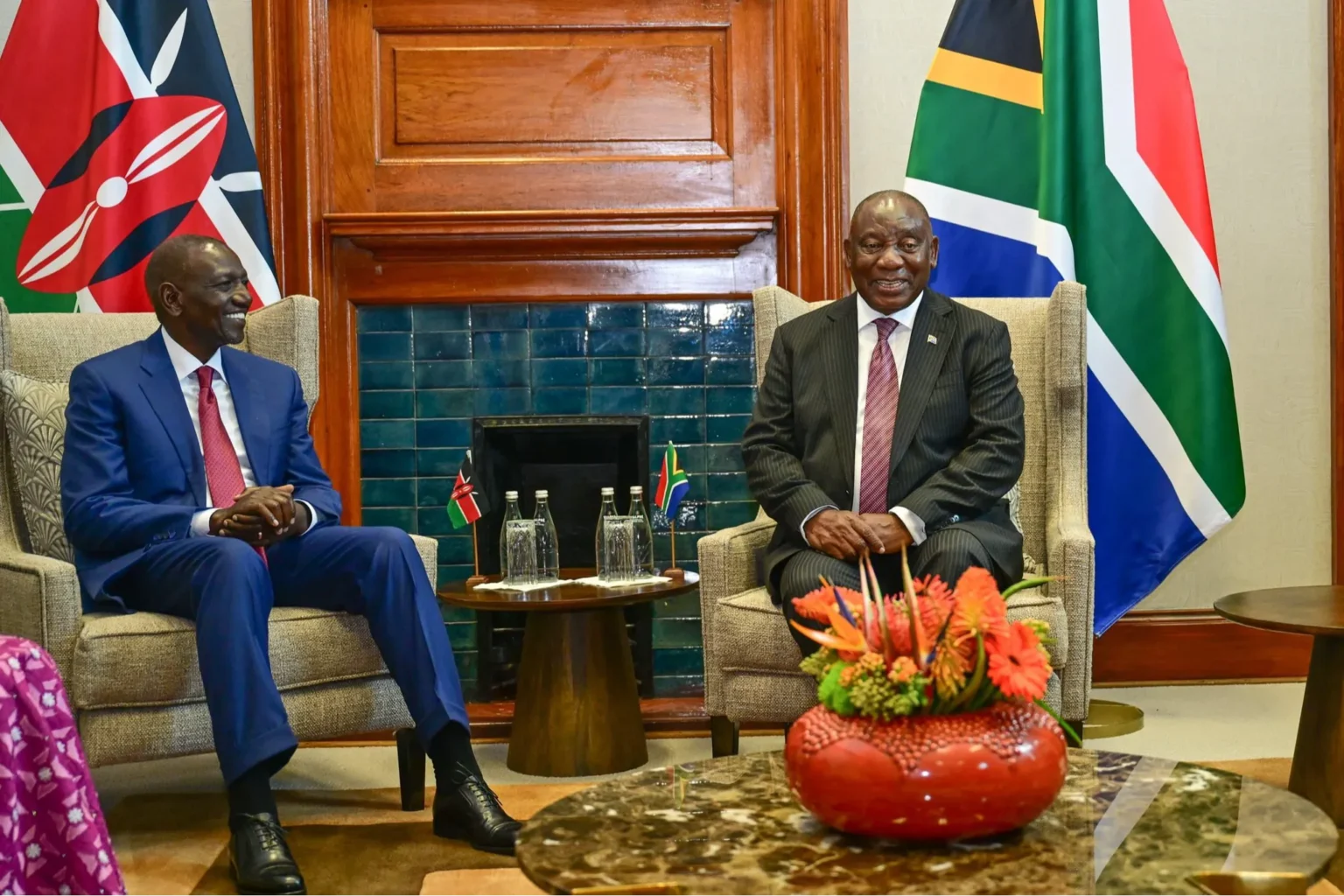
PRETORIA, South Africa — Kenya and South Africa have signed six Memoranda of Understanding (MoUs) aimed at strengthening trade, maritime connectivity, skills development, cultural exchange and broader economic cooperation between the continent’s two leading economies.
The agreements were signed on Thursday at the Union Buildings in Pretoria during President William Ruto’s State Visit to South Africa, following bilateral talks with South African President Cyril Ramaphosa.
The pacts form part of renewed efforts by Nairobi and Pretoria to deepen economic ties, expand intra-African trade and advance the objectives of the African Continental Free Trade Area (AfCFTA).
Six agreements signed
The six agreements cover:
- Trade facilitation and standards cooperation
- Maritime and shipping cooperation
- Gender equality and women’s empowerment
- Technical and Vocational Education and Training (TVET)
- Arts and cultural exchanges
- Sports and recreation
Among the most significant agreements was a trade facilitation framework focused on standardisation, technical regulations, conformity assessment, accreditation and metrology.
Officials said the arrangement is expected to reduce non-tariff barriers and ease market access between the two countries, supporting the movement of goods and services under AfCFTA.
A separate maritime cooperation agreement seeks to strengthen shipping and logistics links between East and Southern Africa, a key pillar in efforts to improve continental trade connectivity.
Ramaphosa: Kenya is a strategic partner
Speaking after the signing ceremony, President Ramaphosa described Kenya as one of South Africa’s most important strategic partners on the continent.
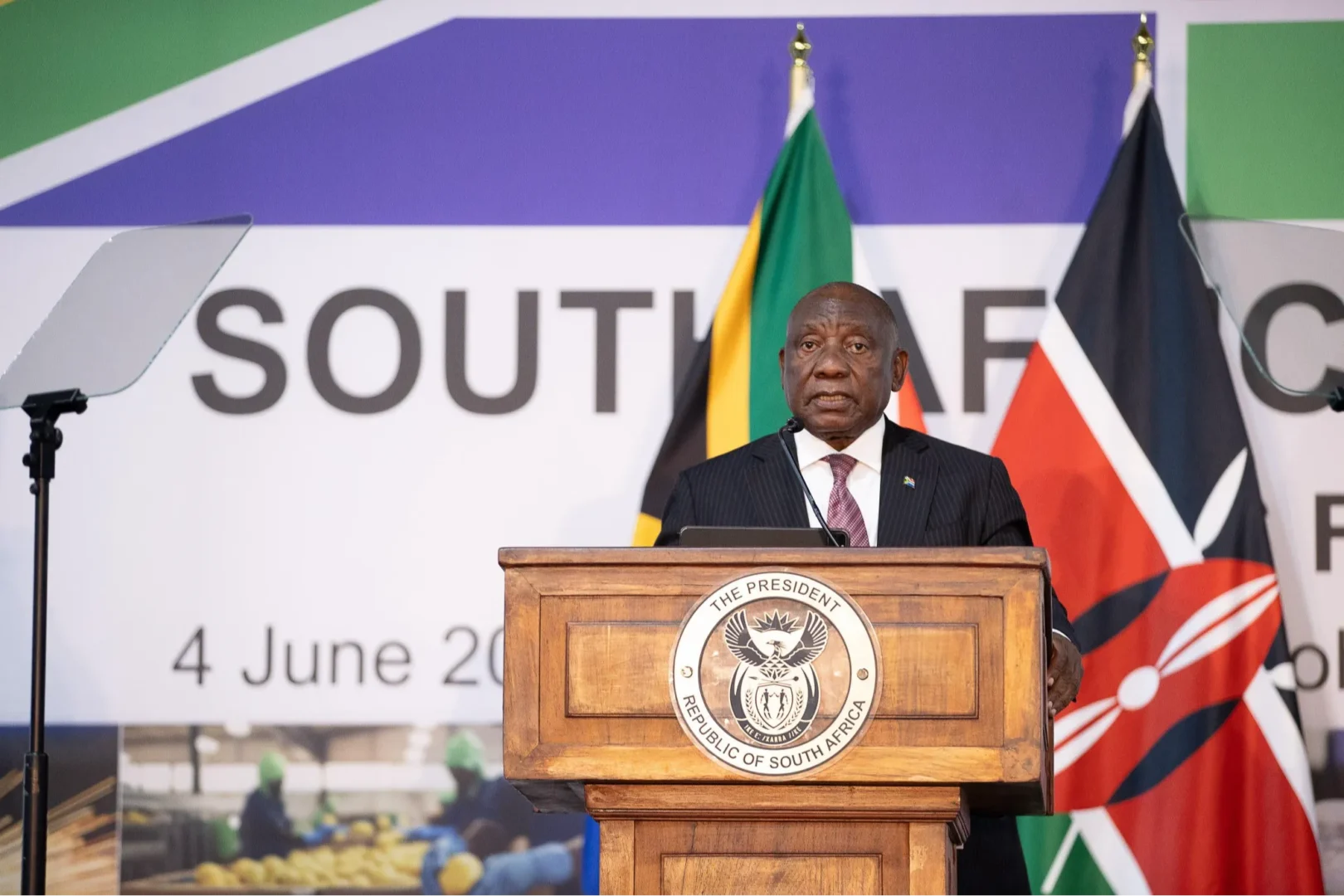
“The memoranda of understanding that have just been signed provide a legal framework to further expand our cooperation, a cooperation that continues to deepen each time our officials and ministers engage with each other,” he said.
Ramaphosa noted that Kenya remains South Africa’s largest trading partner in East Africa and a major destination for South African investments across sectors including telecommunications, financial services, retail, manufacturing, pharmaceuticals and infrastructure.
He said both countries were committed to leveraging AfCFTA to accelerate industrialisation, create jobs and strengthen regional value chains.
“President Ruto and I agreed that the African Continental Free Trade Area must serve as a catalyst for inclusive growth, industrialisation and job creation for our peoples,” he said.
The South African leader also encouraged greater Kenyan investment in South Africa and called for increased market access for Kenyan products.
“We want to see more Kenyan businesses investing in our market, and we want to see more Kenyan goods on the shelves of our country,” Ramaphosa added.
Ruto pushes for deeper economic cooperation
President Ruto described the agreements as a major milestone in advancing relations between the two countries into a broader strategic partnership.
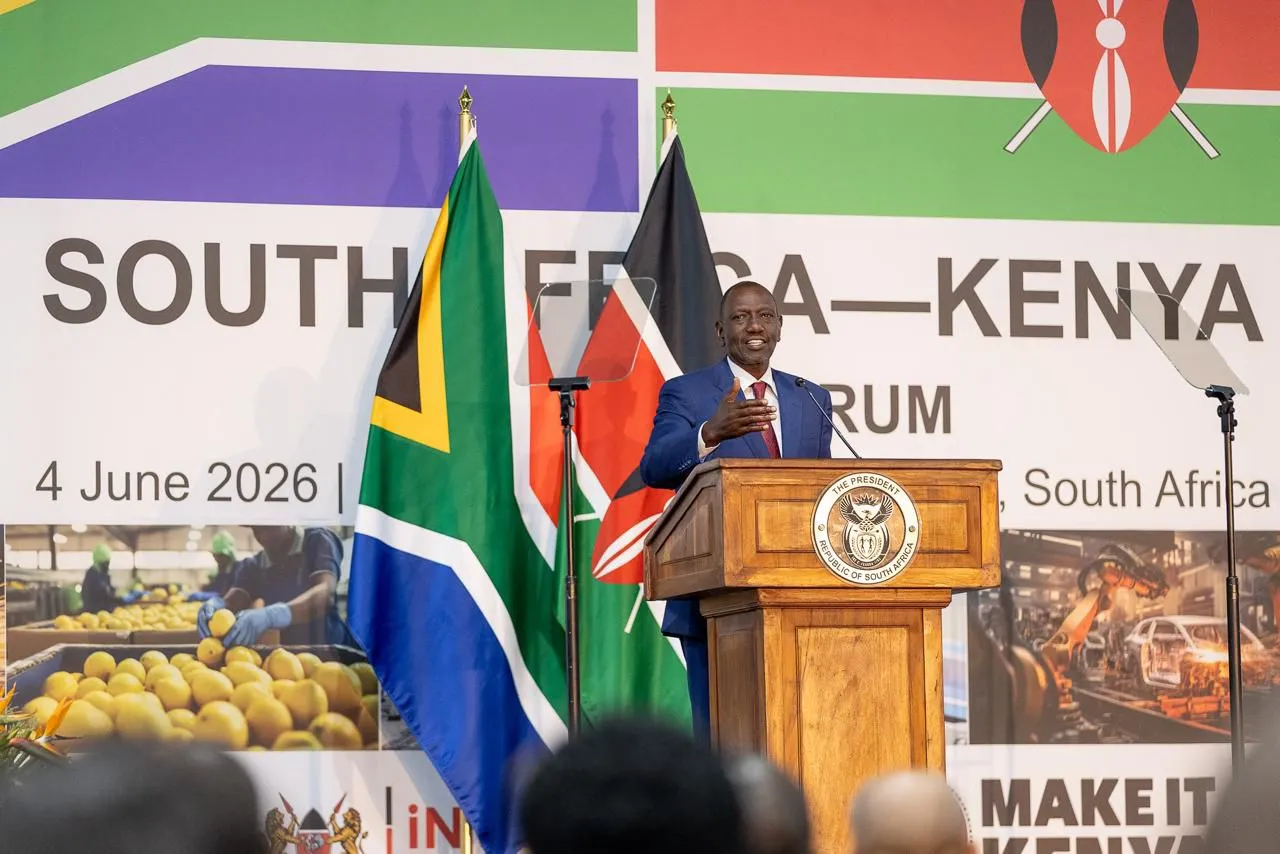
“The conclusion of the additional agreements in trade facilitation, maritime cooperation, gender equality and women empowerment, technical and vocational training, arts, culture and sports is an important milestone for this visit,” Ruto said.
“Their effective implementation will grant the people of our two countries tangible benefits.”
The Kenyan leader highlighted the complementary strengths of the two economies, arguing that deeper cooperation in trade, logistics, industrialisation and technology could unlock significant economic opportunities.
Ruto specifically pointed to the automotive sector, proposing that South African vehicle manufacturers establish spare-parts production facilities within Kenya’s Special Economic Zones to serve the wider East African market.
He also welcomed plans to establish a Kenya-South Africa Joint Business Council, which will bring together private-sector players to pursue investments, joint ventures and public-private partnerships.
Focus on trade and investment
While trade between the two countries has grown steadily in recent years, Kenya continues to import significantly more from South Africa than it exports.
Both leaders acknowledged the imbalance and pledged to address remaining tariff and non-tariff barriers that continue to constrain trade and investment flows.
Analysts view the agreements as part of a broader push by African economies to strengthen intra-continental trade and reduce dependence on external markets.
Beyond commerce
In addition to economic cooperation, the agreements seek to expand collaboration in skills development, women’s empowerment, arts, culture and sports.
The two leaders also reaffirmed their commitment to continental priorities, including African Union reforms, peace and security initiatives, and stronger African representation in global governance institutions.
Ramaphosa praised Kenya’s role in advancing African Union reforms, while Ruto commended South Africa’s G20 presidency and its efforts to elevate African priorities on the global stage.
The leaders are expected to engage business executives and investors during the Kenya-South Africa Business Forum, where discussions will focus on expanding commercial partnerships and unlocking new investment opportunities across Africa.
The agreements underscore growing efforts by Kenya and South Africa to position themselves as key drivers of African integration, industrialisation and economic transformation under the AfCFTA framework.