





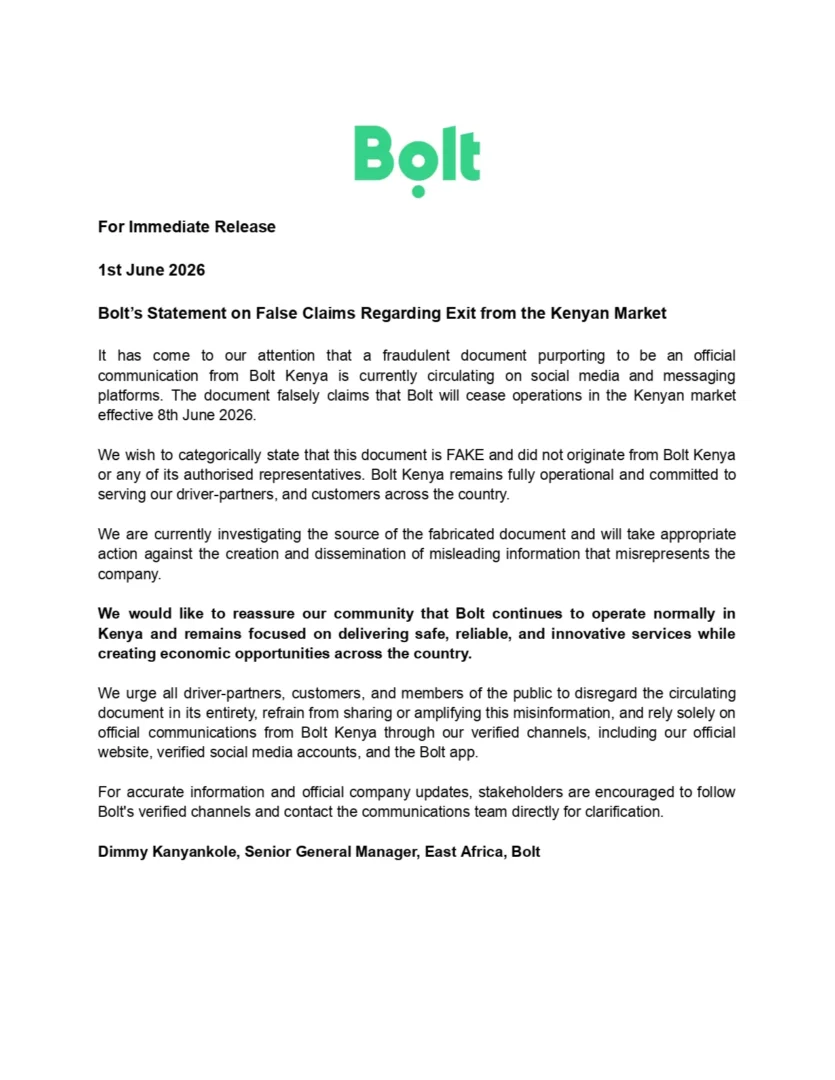
NAIROBI, Kenya — Ride-hailing company Bolt has dismissed claims suggesting it is exiting the Kenyan market, confirming that a widely circulated document alleging its closure is fake and should be disregarded.
The clarification comes after a fabricated notice began circulating across social media and messaging platforms, claiming that Bolt would cease operations in Kenya in June 2026.
The document triggered confusion among users and driver-partners who rely on the platform for transport services and income generation.
Fake document sparks online confusion
In a statement issued after the notice went viral, Bolt said the document did not originate from the company or any authorised representatives, and warned the public against sharing misinformation.
The company reaffirmed that its operations in Kenya remain fully active and that it continues to serve customers and driver-partners without interruption.
Bolt further indicated that it is investigating the origin of the fake notice and may take action against individuals responsible for creating and distributing it.
The circulating document reportedly mimicked official corporate communication, including a detailed shutdown date and operational justification—factors that contributed to its rapid spread before verification.
Bolt: Operations remain stable in Kenya
The company has reiterated that Kenya remains a key market in its African operations and that no decision has been made to exit or scale down services in the country.
It urged users to rely only on verified communication channels, including its official website, in-app notifications and authorised social media accounts, for accurate updates.
The clarification aligns with Bolt’s broader efforts to counter recurring misinformation targeting major digital platforms operating in Kenya’s competitive ride-hailing sector.
Misinformation risks in digital mobility sector
The incident highlights the growing challenge of misinformation within Kenya’s transport and gig economy ecosystem, where platform-based companies frequently become subjects of unverified claims that spread quickly across digital networks.
Industry analysts note that such false reports can temporarily disrupt driver activity, influence consumer behaviour and generate uncertainty in markets that rely heavily on real-time app-based services.
Also Read: Bolt raises fares in Kenya by 6% citing rising fuel costs and driver pressure
Bolt has in previous instances faced similar misinformation incidents globally, prompting companies in the sector to strengthen communication protocols and improve verification of official statements.
Bolt has urged users, drivers and the general public to verify information before sharing it, particularly when it concerns operational changes or service disruptions.
The company emphasized that any major announcements would only be communicated through official channels and credible media platforms.
As investigations into the origin of the fake notice continue, Bolt maintains that its Kenyan operations remain stable and unaffected.