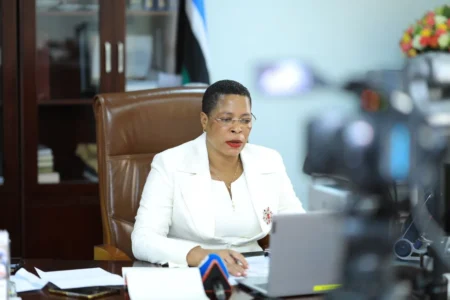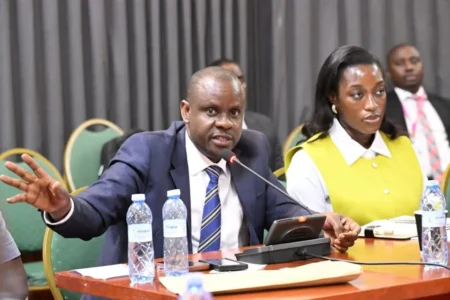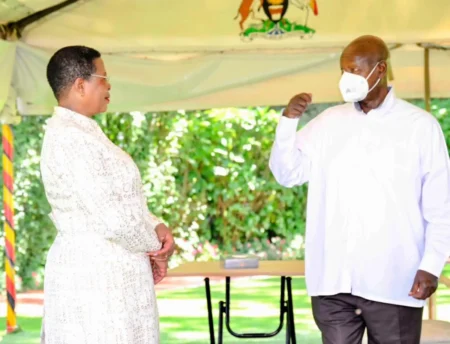



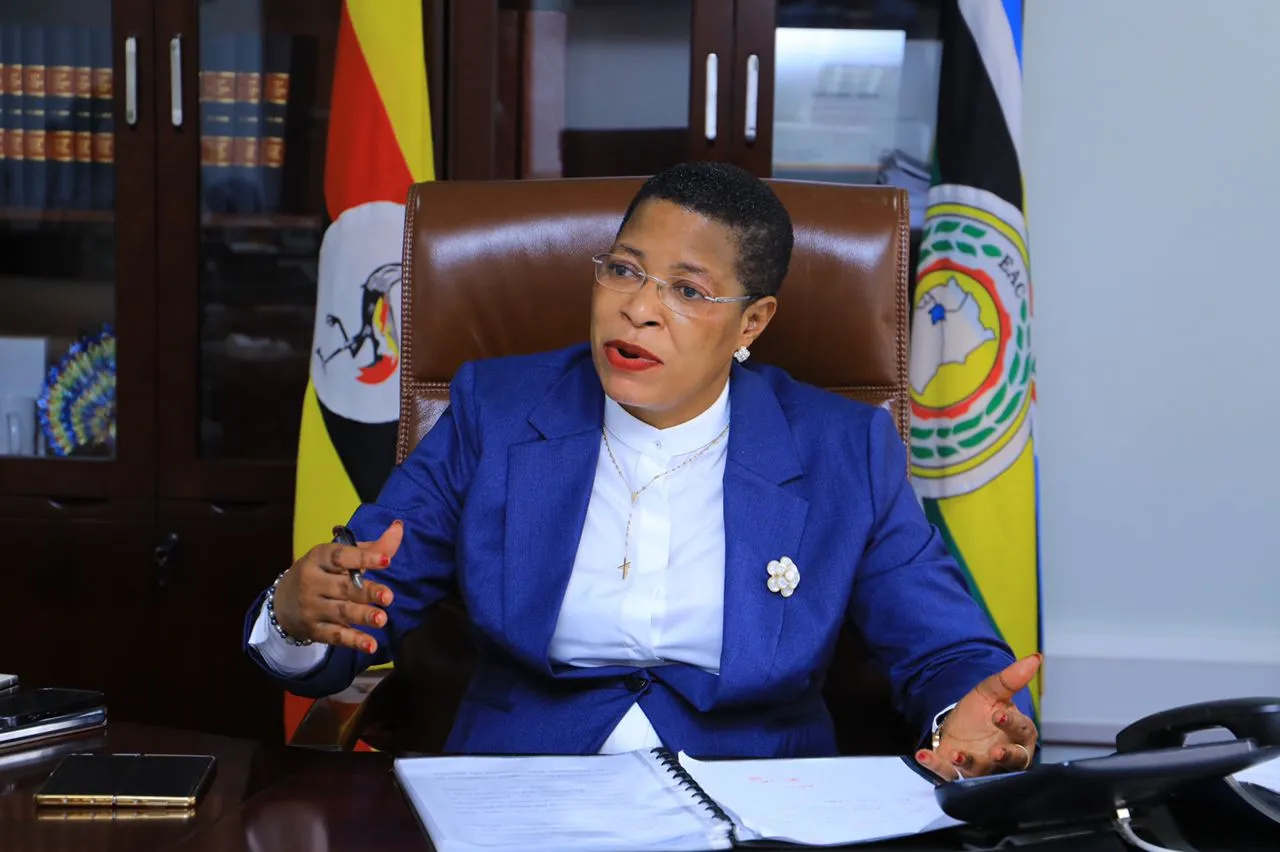
BUKEDEA, Uganda — Outspoken historian Prof. Mwambutsya Ndebesa argues that embattled former Speaker of Parliament Annet Anita Among has effectively had her “political protection,” which he describes as a “license for corruption,” withdrawn amid widening investigations into alleged abuse of office and illicit enrichment.
Speaking during a public lecture on political accountability themed “Public and Public Trust: Assessing Accountability in Uganda’s Governance,” Prof. Ndebesa said corruption in Uganda is often not determined solely by law enforcement, but by shifting political protection networks.
He described this protection as an informal system that determines when corruption allegations are pursued or ignored.
“In Uganda, corruption is licensed,” he said. “When you are involved in public corruption, be sure that you keep the license. Once it is revoked, you’re in trouble.”
Prof. Ndebesa cited Anita Among as an example of what he termed changing political fortunes that determine accountability outcomes.
“The one of Anita Among has been revoked. But before that, she had a license. She was operating under protection,” he said during the lecture hosted by the Uganda Law Society’s Radica New Bar.
He argued that individuals accused of corruption often remain insulated from scrutiny as long as they retain political backing, but become vulnerable once that protection erodes.
“Nobody touched her until the license was revoked,” he added.
Political protection and selective enforcement
Prof. Ndebesa linked his argument to what he described as inconsistencies in Uganda’s anti-corruption enforcement system, saying institutions often act selectively depending on political circumstances.
He referenced reports, including the AGORA exhibition, which documented alleged misuse of public funds in Parliament, including the controversial Shs 1.7 billion reportedly shared among parliamentary commissioners.
He also pointed to cases involving MPs Yusuf Mutembuli, Paul Akamba, and Lwengo District Woman MP Cissy Dionizia Namujju, who were previously charged with corruption but later saw charges withdrawn by the Director of Public Prosecutions.
According to Prof. Ndebesa, such developments reflect institutional hesitation and inconsistency in pursuing politically sensitive cases.
“The anti-corruption institutions, the IGG and State House Anti-Corruption Unit, went quiet. We are not serious,” he said.
“Political corruption” as the root problem
The historian argued that Uganda’s anti-corruption framework tends to focus on lower-level offences such as bribery and embezzlement while overlooking what he termed “political corruption,” which he described as the system that enables financial misconduct.
He further cited instances of alleged voter bribery during internal elections within the ruling National Resistance Movement (NRM), including Central Executive Committee (CEC) contests held at Kololo Ceremonial Grounds.
“Didn’t you see corruption? Didn’t you see aspirants buying voters?” he asked.
Also Read: Gen Sejusa: Anita Among ‘misread Museveni’, says power and wealth led to her downfall
Ndebesa said such practices are often normalized in political processes despite being widely reported.
Call for stronger institutions and civic space
In his broader remarks, Ndebesa called for stronger institutional independence, particularly for Parliament and the judiciary, arguing that both remain vulnerable to political pressure.
He also emphasized the importance of protecting journalists, civil society actors, and whistleblowers, saying they play a critical role in exposing corruption.
According to him, restrictions on civic space weaken what he termed “diagonal accountability” — the ability of society and oversight institutions to check abuse of power.
He concluded that anti-corruption efforts remain inconsistent because enforcement often depends on political alignment rather than uniform application of the law.