


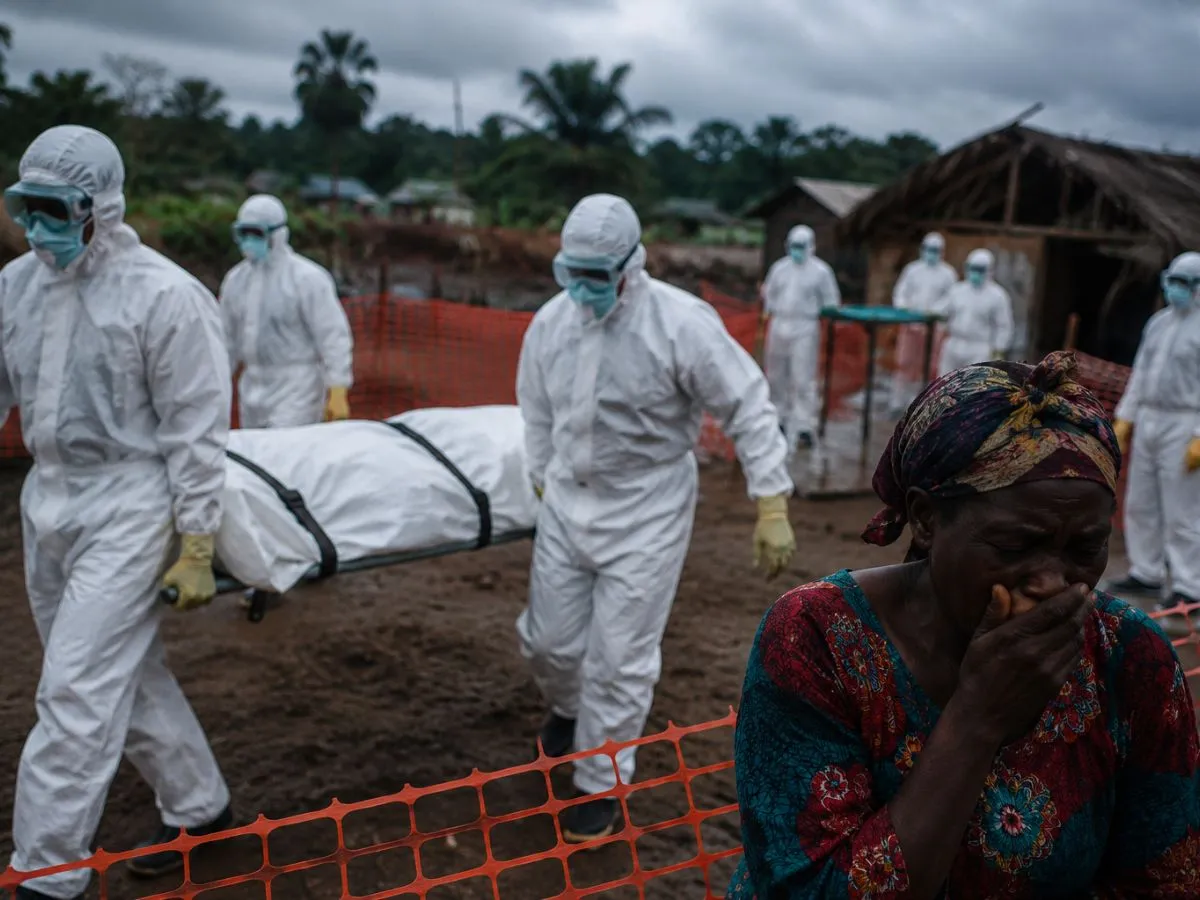
ITURI, DR Congo — Communities living near the epicentre of a growing Ebola outbreak in north-eastern Democratic Republic of the Congo (DRC) have described rising fear and uncertainty, as the World Health Organization (WHO) warns that infections may be spreading faster and more widely than initially recorded.
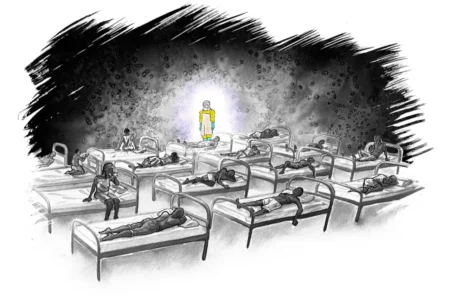
Residents in Ituri Province say the virus is moving quickly through affected communities, with some reporting rapid fatalities and limited access to protective supplies.
“Ebola has tortured us,” one resident said, describing the psychological toll of the outbreak.
Health authorities estimate that at least 136 people have died so far, with more than 514 suspected cases reported across the country. One death has also been confirmed in neighbouring Uganda.
However, WHO officials caution that the true scale may be significantly higher.
Dr Anne Ancia of the WHO told the Kampala Dispatch that ongoing investigations suggest wider geographic spread than initially understood.
Modelling by the London-based MRC Centre for Global Infectious Disease Analysis indicates there may have been substantial under-detection, with total infections potentially exceeding 1,000 cases.
The study describes the outbreak as “larger than currently ascertained,” with its full extent still uncertain.
Residents in affected communities describe growing anxiety as the virus spreads.
A local man identifying himself as Bigboy said people were taking basic precautions but lacked adequate protection.
“People are really scared,” he said, adding that while handwashing is common, many lack access to items such as face masks.
Another resident, Alfred Giza, said awareness of the disease is increasing but uncertainty remains high if infection occurs within families.
The Red Cross has warned that Ebola outbreaks can escalate rapidly when cases are not detected early, community awareness is limited and health systems are overstretched, conditions it says are present in the current outbreak.
The situation is further complicated by long-standing insecurity in eastern DR Congo, where conflict has damaged health infrastructure and displaced millions.
Large population movements—driven by displacement, trade and mining activity—are increasing the risk of transmission across wider areas.
Authorities also suspect the outbreak may have been circulating for weeks before it was officially detected on 24 April.
WHO Director-General Tedros Adhanom Ghebreyesus said he is “deeply concerned about the scale and speed of the epidemic” after declaring it a public health emergency.
The agency has already released nearly $4m (£3m) in emergency funding, though officials say more resources will be required if the outbreak continues to expand.
Dr Ancia warned that mobility across Ituri Province is complicating containment efforts.
“The more we are investigating this outbreak, the more we realise that it has already disseminated at least a little bit across border and also in other provinces,” she said.
Cases have also been reported in South Kivu and in Goma, a major city with an estimated population of 850,000 currently affected by ongoing insecurity.
Neighbouring countries have stepped up surveillance and preparedness measures.
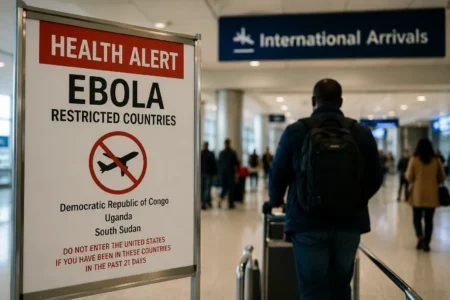
Rwanda has tightened border controls, while Uganda has issued public health advisories urging people to avoid physical contact such as handshakes and hugs.
International evacuations are also underway, with exposed foreign nationals being moved to Germany and the Czech Republic for monitoring and quarantine.
What is Ebola?
Ebola is a viral haemorrhagic fever that initially presents with flu-like symptoms such as fever, headache and fatigue. As it progresses, patients may experience vomiting, diarrhoea and, in some cases, internal and external bleeding.
The virus spreads through direct contact with infected bodily fluids, including blood and vomit.
The current outbreak is linked to the Bundibugyo strain, a relatively rare variant previously associated with only a small number of recorded outbreaks.
Also Read: Ebola fight in Uganda faces setback as three new cases emerge
Health officials warn that the outbreak is unfolding in one of the most complex environments for disease control, marked by conflict, displacement and fragile healthcare systems.
With vaccination options limited for this strain, authorities are focusing on containment, surveillance and community awareness while evaluating potential treatment options.
As investigations continue, health agencies warn that the situation remains fluid, with the possibility that the true number of cases could be significantly higher than current estimates.
For communities in eastern DR Congo, the challenge is immediate: limited resources, high mobility and deep uncertainty as the outbreak continues to evolve.