

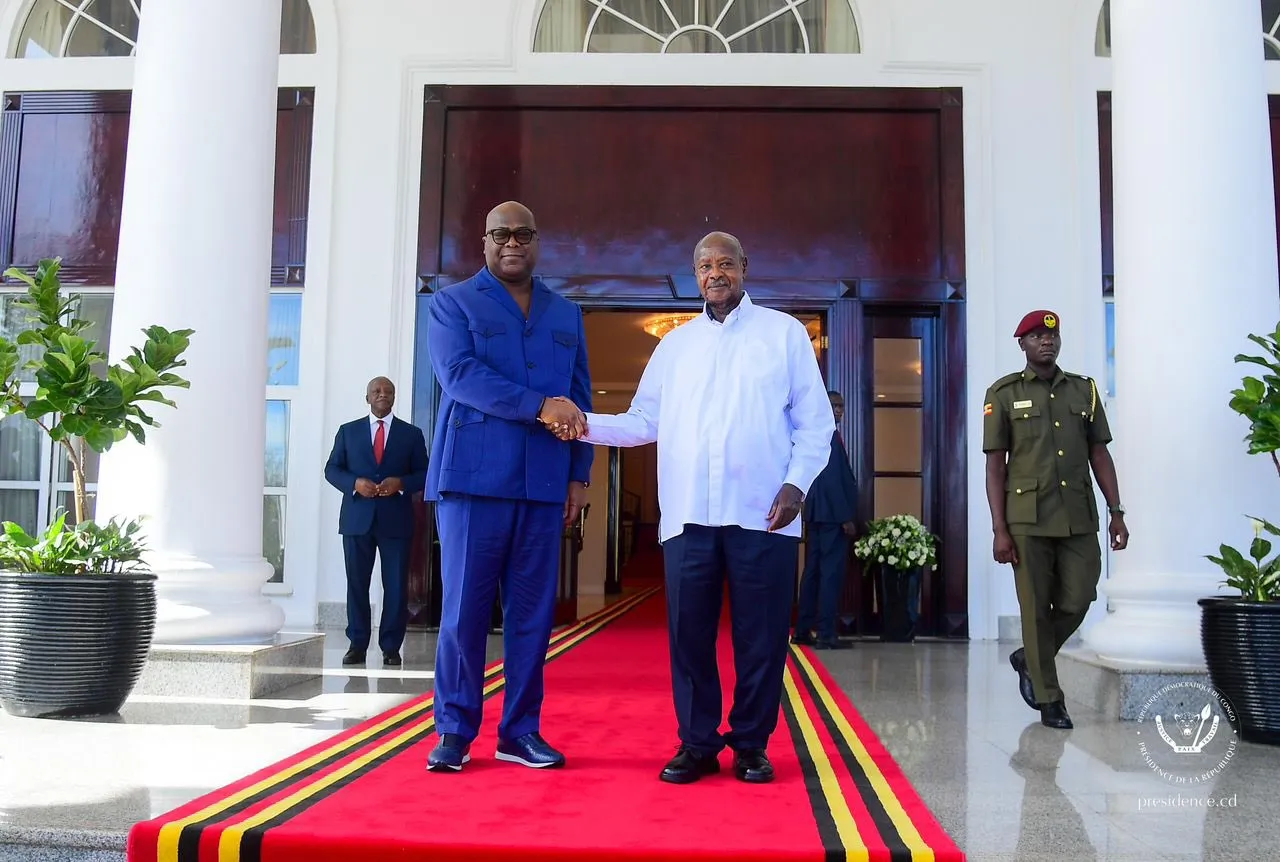
ENTEBBE, Uganda — Uganda and Democratic Republic of the Congo (DRC) have announced plans to jointly explore oil resources in the resource-rich Albertine Graben, marking a significant expansion of energy, security and economic cooperation between the neighbouring countries.
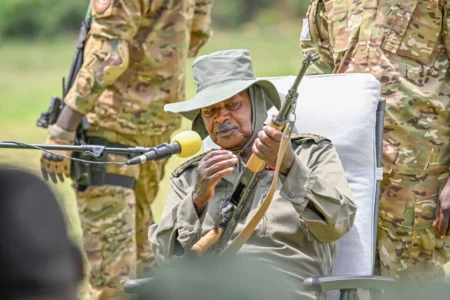
The development emerged following high-level talks between Yoweri Museveni and Félix Tshisekedi at State House Entebbe on Monday ahead of Museveni’s swearing-in ceremony.
In a statement issued after the meeting, Congolese Trade Minister Julien Paluku described the summit as “the dawn of a new era in the Great Lakes,” saying both governments had agreed to deepen cooperation in petroleum, infrastructure, trade and regional security.
Among the most significant outcomes was a commitment toward the “joint exploitation of oil in the Albertine Graben,” a vast petroleum basin stretching along the Uganda-DR Congo border that is considered one of East Africa’s most strategic untapped energy zones.
The announcement comes at a critical moment for regional energy development, with Uganda preparing for commercial oil production under the Tilenga and Kingfisher projects while also advancing construction of the East African Crude Oil Pipeline (EACOP).
Kinshasa has meanwhile intensified efforts to develop its own oil reserves in the Lake Albert region as the Democratic Republic of the Congo (DRC) seeks to diversify its economy and attract foreign investment into the energy sector.
Museveni said he held “productive discussions on security, trade, infrastructure and petroleum cooperation” with Tshisekedi, including efforts aimed at stabilising the conflict-hit eastern Congo provinces of North Kivu and Ituri.
The Ugandan leader also said the two countries reviewed progress on major cross-border infrastructure projects designed to strengthen trade integration and improve regional connectivity.
“African governments should not frustrate wananchi with unnecessary barriers to trade and movement,” Museveni said.
Beyond energy cooperation, Kampala and Kinshasa pledged to strengthen joint military operations against armed groups operating in eastern Congo through the continued implementation of Operation Shujaa, the security offensive launched by Uganda and DR Congo against Allied Democratic Forces (ADF) militants.
Regional security remains a key concern for both governments, particularly amid ongoing instability in eastern Congo involving multiple armed factions and worsening humanitarian conditions.
Officials said six memorandums of understanding were signed during the bilateral engagements, covering trade promotion, tourism development, ICT cooperation, export partnerships, search and rescue coordination and cross-border development programmes.
The two governments also committed to accelerating construction of one-stop border posts and modern cross-border markets in Kasindi, Bunagana and Mahagi to facilitate commerce and movement of people between the two countries.
The agreements followed the 9th Session of the Uganda-DR Congo Joint Permanent Commission held in Kampala between May 8 and 10 under the theme of accelerating shared prosperity through trade, infrastructure and security cooperation.
Analysts say the latest agreements reflect growing geopolitical realignment within the Great Lakes region as African governments increasingly pursue regional economic integration, joint infrastructure investments and energy partnerships to drive growth.
Also Read: Uganda’s fuel security at risk as storage, tanker limits expose supply vulnerabilities
Paluku said the new cooperation framework signalled a broader diplomatic shift between Kampala and Kinshasa.
The summit, he said, seeks to build “a diplomacy of proximity rooted in mutual trust” aimed at creating “a strong, connected and prosperous Central and Eastern Africa.”
The Albertine Graben has long attracted international attention due to its significant oil potential, with estimates suggesting billions of barrels of recoverable reserves across Uganda and eastern Congo.
However, development of the basin has also faced scrutiny from environmental activists and human rights organisations concerned about ecological risks, displacement of communities and the impact of oil infrastructure projects on sensitive ecosystems surrounding Lake Albert and Murchison Falls National Park.
Despite the concerns, both governments argue that petroleum development remains critical to economic transformation, industrialisation and regional revenue generation.