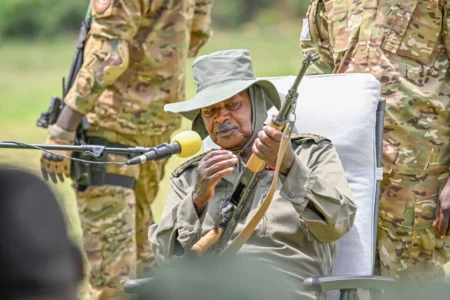


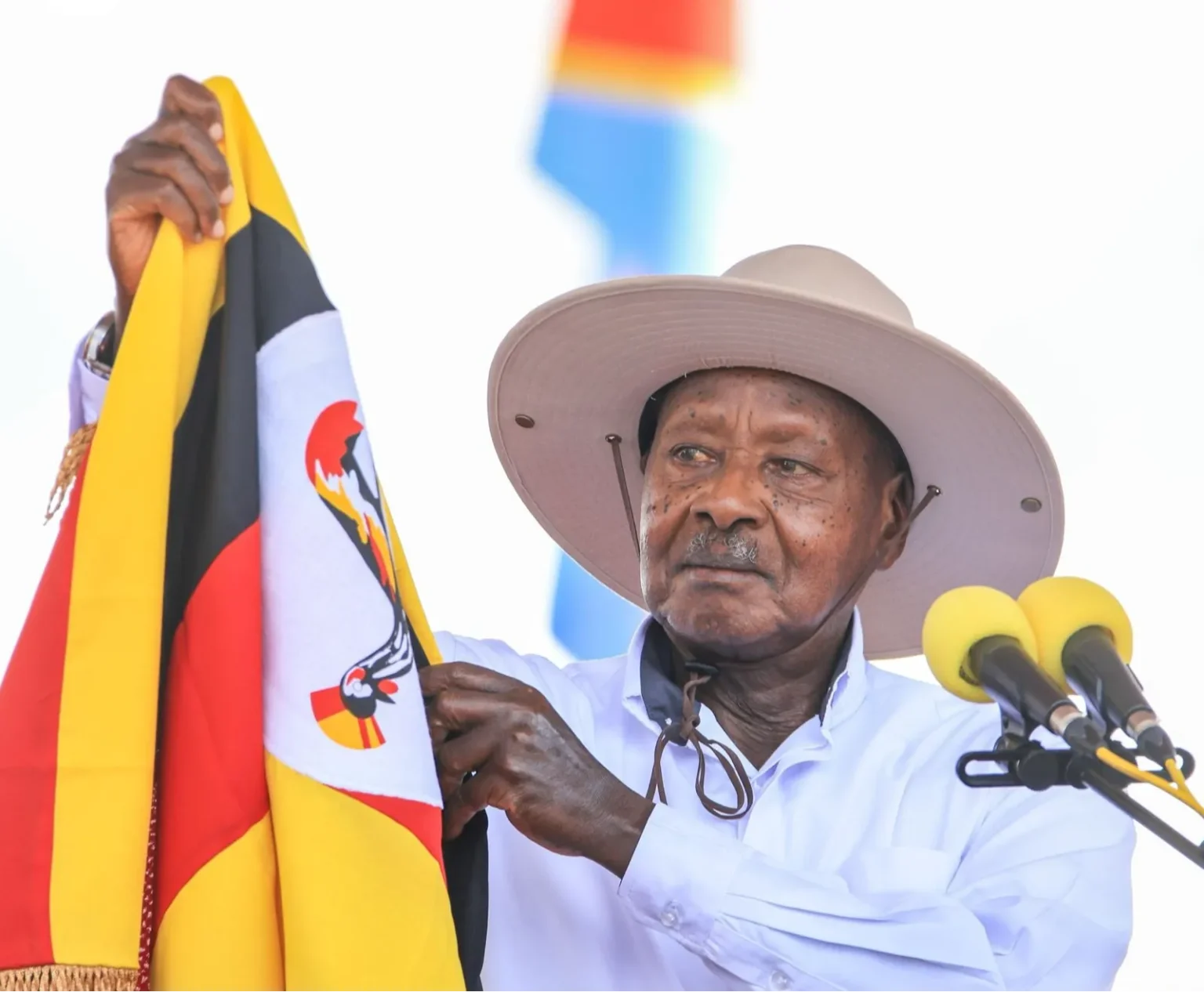
KAMPALA, Uganda — Ugandan President Yoweri Museveni was sworn in for another five-year term on Tuesday during a tightly choreographed ceremony at Kololo Independence Grounds in Kampala, extending a presidency that has now shaped Uganda’s political landscape for nearly four decades.
At exactly 11:50am, under Kampala’s intense midday heat, Mr Museveni took the oath of office as a 21-gun salute thundered across the capital and fighter jets streaked through the skies above the ceremonial grounds.
Military bands performed in formation while elite security units staged elaborate drills before regional leaders, diplomats and thousands of supporters gathered for the inauguration.
For many observers, however, the ceremony reflected not the beginning of a new political era but the continuation of a long-established system increasingly centred around the presidency and the First Family.
Mr Museveni, now 81, secured another term after Uganda’s Electoral Commission (EC) declared him winner of the January 2026 presidential election with 71.65 per cent of the vote, equivalent to 7,944,772 ballots.
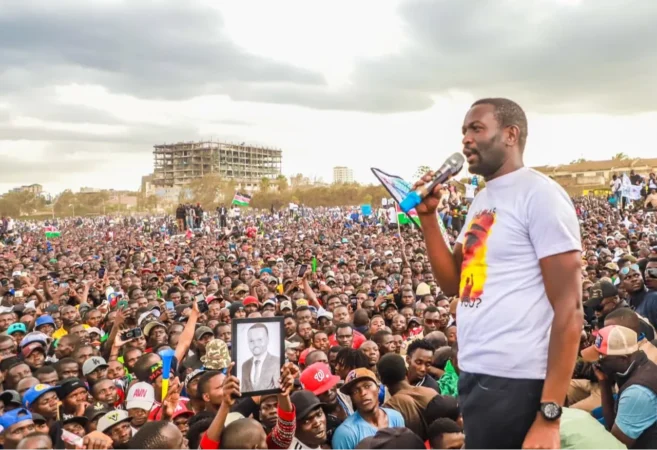
His closest challenger, opposition leader Bobi Wine, officially known as Robert Kyagulanyi, received 24.7 per cent or 2,741,238 votes.
The election period was marked by heightened political tensions, internet disruptions and allegations of intimidation from opposition groups. Kyagulanyi later travelled to the United States with his family following a tense post-election standoff in which security personnel reportedly surrounded his residence. Ugandan authorities denied accusations of misconduct.
The inauguration ceremony itself carried strong symbolism about the evolving nature of power in Uganda.
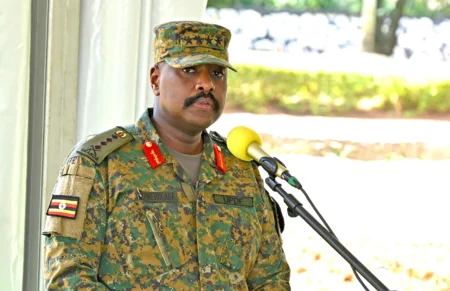
Standing prominently at the centre of events was Gen Muhoozi Kainerugaba, Museveni’s son and Uganda’s Chief of Defence Forces (CDF), whose growing political visibility has intensified speculation over succession within the ruling establishment.
Gen Muhoozi oversaw military parade rehearsals in the days leading up to the inauguration and remains widely viewed by analysts as a central figure in Uganda’s future political transition.
His role at the ceremony reinforced perceptions that succession discussions within Uganda’s political elite are no longer theoretical but increasingly active beneath the surface of official politics.
Members of the First Family continue to hold significant influence across political, military and policy circles, contributing to what critics describe as an increasingly personalised governance structure.
One absence at the inauguration drew particular public attention: Janet Museveni.
The First Lady, who also serves as Uganda’s Minister of Education and Sports, did not attend the ceremony, fuelling widespread speculation after weeks of reduced public appearances.
During prayers at Kololo Grounds, Bishop Sheldon Mwesigwa publicly stated that Janet Museveni had “healed and recovered,” remarks that triggered applause from sections of the crowd.
Her absence added another layer of intrigue to a political moment already dominated by questions surrounding continuity, succession and the future direction of Uganda’s leadership.
Economic pressure and criticism over spending
The inauguration also reignited debate over government spending priorities amid mounting economic pressures facing ordinary Ugandans.
The overall cost of the ceremony and related security operations is estimated to have exceeded Shs50 billion, according to local reports, with Parliament approving supplementary funding days before the event.
Government officials defended the expenditure as necessary for national security, prestige and unity.
Critics, however, argued that the scale of spending contrasted sharply with Uganda’s economic realities, including rising living costs, high youth unemployment and growing fiscal pressure.
The highly visible deployment of military hardware, including fighter jets and extensive security patrols across Kampala, further amplified debate about the state’s reliance on displays of authority and power projection.
New sovereignty law raises investor concerns
The inauguration came only days after Uganda’s Parliament passed the controversial Protection of Sovereignty Bill, 2026, legislation that has sparked concern among economists, civil society organisations and foreign diplomats.
The law introduces tighter controls around foreign funding and broad provisions linked to external influence and economic sabotage.
Supporters argue the legislation is designed to shield Uganda from foreign interference and protect national sovereignty.
However, financial analysts and economists have warned that ambiguities within the law could affect investor confidence and complicate foreign capital inflows into Uganda’s economy.
Uganda’s central bank governor, Dr Michael Atingi-Ego, reportedly cautioned lawmakers that uncertainty surrounding the legislation could negatively affect foreign investment and diaspora remittances, which remain critical to the economy.
Although President Museveni later clarified that the law was not intended to target investors or remittance flows, debate surrounding the legislation has continued within diplomatic and economic circles.
Focus shifts to cabinet and succession politics
Attention is now turning toward the formation of Museveni’s next cabinet, a process expected to reveal shifting alliances within Uganda’s ruling establishment.
Political analysts expect continuity in key ministries, though pressure remains over corruption allegations and public dissatisfaction surrounding governance and accountability.
Recent controversies involving senior officials, including investigations tied to the Karamoja iron sheets scandal, have intensified scrutiny over public sector management and patronage politics.
Also Read: ‘Healed and recovered’ First Lady misses Museveni’s swearing-in fete
At the same time, Gen Muhoozi’s expanding influence through the Patriotic League of Uganda has added another dimension to cabinet speculation, with observers expecting figures aligned to his political network to strengthen their positions within government.
The question of succession increasingly hangs over Uganda’s political future as Museveni extends his rule beyond four decades.
By the end of this latest term in 2031, Museveni will be 86 years old, while Uganda’s population remains overwhelmingly youthful, with the majority under the age of 30.
Regional leaders attend Kampala ceremony
Several African leaders and senior dignitaries attended the inauguration ceremony, underlining Uganda’s continuing regional influence despite mounting criticism from Western governments and rights groups.
Among those present were Félix Tshisekedi, Samia Suluhu Hassan, Salva Kiir, Faure Gnassingbé and former Kenyan President Uhuru Kenyatta.
Representatives from the United States and other international partners also attended, although notable regional absences included Kenyan President William Ruto and Rwandan President Paul Kagame.
Speaking after taking the oath, Mr Museveni declared:
“I, Yoweri Tibuhaburwa Kaguta Museveni, swear in the name of the Almighty God that I will be faithful and bear true allegiance to the Republic of Uganda and that I will preserve, protect and defend the Constitution. So help me God,” he said.