


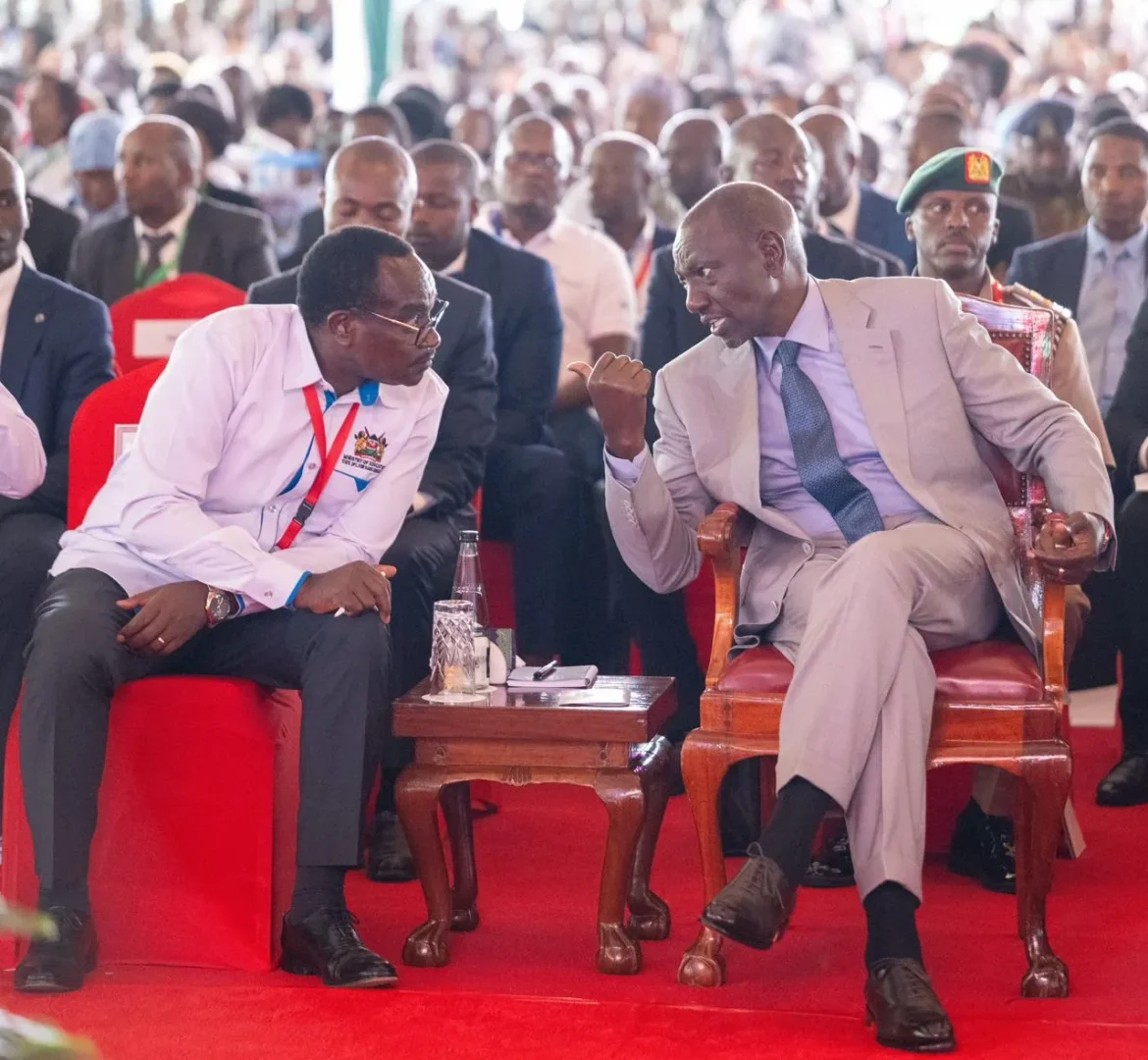
NAKURU, Kenya — William Ruto has raised concern over the escalating cost of school uniforms in Kenya, questioning why some institutions appear to have transformed basic school attire into expensive products beyond the reach of ordinary families.
Speaking on Thursday during the National Education Conference in Naivasha, Nakuru County, the President said the government, education stakeholders and parents must urgently confront the growing financial burden associated with school uniforms and procurement practices.
“There is a big debate about uniforms and how much they cost. You know, we have all manner of suppliers working with schools,” Ruto said.
“Still you find some uniforms, I don’t know if they are Stefano Ricci or what because they are very expensive.”
The remarks come amid mounting complaints from parents across the country over the rising cost of education, particularly at the beginning of school terms when families are required to purchase uniforms, branded sportswear, sweaters and other mandatory items from designated suppliers.
Ruto said there was a need for a structured national conversation on how school uniforms are sourced, supplied and priced to ensure they remain affordable, especially for low-income households already struggling with the high cost of living.
“We need to agree on uniforms, how they are going to be procured and how we ensure they are cost-effective,” he said.
The President also weighed in on a growing public debate over whether school uniforms should remain compulsory under Kenya’s education system, noting that some stakeholders have proposed doing away with them entirely.
“There are those who are saying we should not have uniforms. I don’t know what their ideas are,” he said.
“If granted that you do not have to be dressed in a certain way to learn, but I think it is a debate we must have. Certainly, we need to discuss the cost of uniforms.”
The issue of school uniform pricing has increasingly become a national concern as parents accuse some schools of enforcing exclusive supply arrangements that inflate costs and limit competition.
In several institutions, parents are reportedly required to purchase uniforms only from school-approved vendors, a practice critics argue has commercialised school attire and placed unnecessary financial pressure on families.
Education activists and consumer rights groups have previously called for tighter regulation of school procurement systems, warning that some institutions exploit parents through monopolistic supply chains.
The debate has gained further significance as Kenya continues implementing reforms under the Competency-Based Curriculum (CBC), which has already generated concerns over the affordability of learning materials and other school-related expenses.
Recent data from the Kenya National Bureau of Statistics shows that household spending on education remains one of the largest expenses for many Kenyan families, particularly in urban areas where the cost of private and semi-private schooling continues to rise.
Also Read: Learners must report to school with or without fees, Ruto orders
Education policy experts argue that while uniforms can promote equality, discipline and school identity, excessive pricing undermines access to education by excluding vulnerable learners from fully participating in school life.
Ruto’s remarks are likely to reignite national debate among policymakers, school administrators and parents over whether uniform procurement should be standardised, decentralised or opened to competitive market pricing.
The comments also align with the government’s broader push to lower the cost of education and expand access for disadvantaged households through reforms targeting capitation, digital learning and school infrastructure.
Analysts say any future policy intervention on uniforms could significantly affect schools, textile suppliers and retailers involved in Kenya’s multi-billion-shilling back-to-school market.