




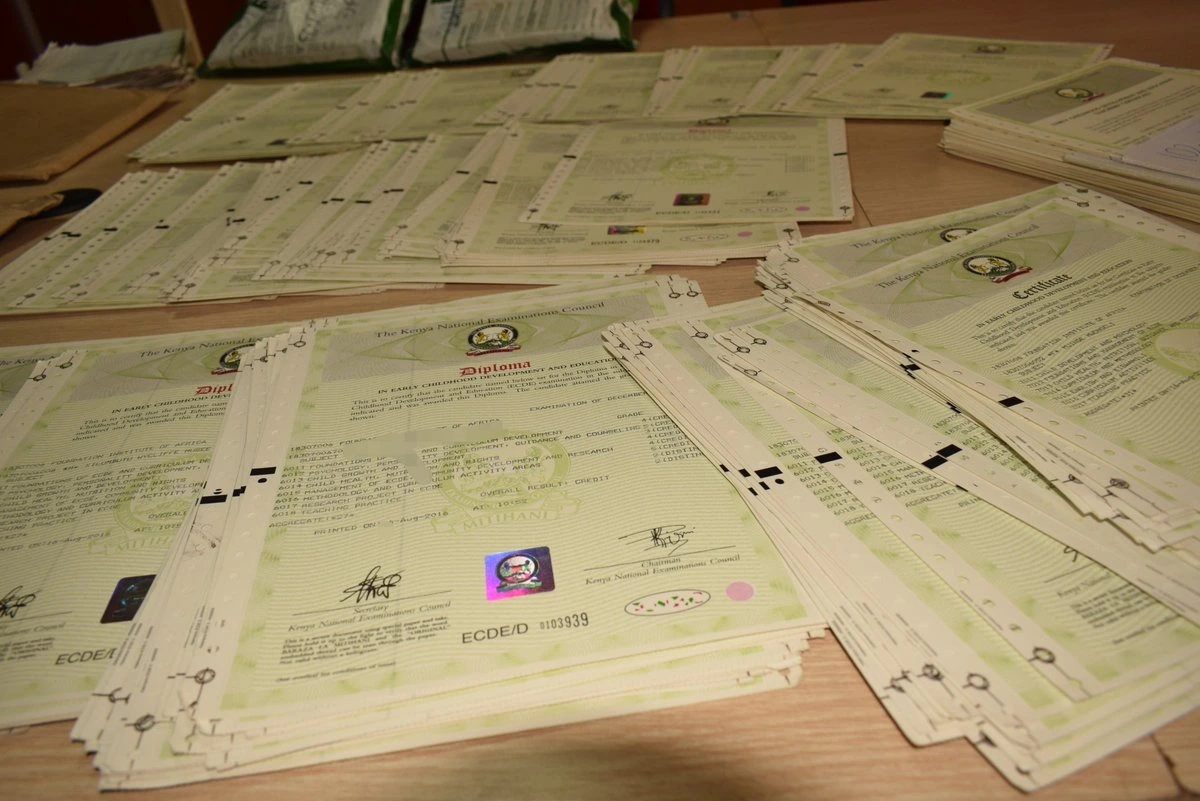
NAIROBI, Kenya — Employers, universities and institutions across Kenya can now instantly verify Kenya Certificate of Secondary Education (KCSE) certificates following the rollout of a new digital authentication system by the Kenya National Examinations Council.
The platform, unveiled on Wednesday, May 6, marks a significant shift from manual verification processes to a real-time, technology-driven model aimed at curbing widespread academic fraud.
“We have transformed certificate verification from slow, manual checks into instant, secure validation,” said Ahmed Mutanga at the 3rd Annual Educational Assessment Symposium, 2026.
How the system works
Under the new system, all KCSE certificates issued from 2023 carry a unique QR code, effectively converting each document into a secure digital token. Older certificates have also been digitised and integrated into the system.
The verification platform, known as TrueCert, uses advanced encryption and distributed ledger technologies to ensure authenticity and prevent tampering.
According to KNEC, the QR codes embed an AES-encrypted payload, a cryptographically secured package containing candidate details such as names, index numbers and grades.
The Advanced Encryption Standard is widely used in global financial systems and government security infrastructure, making it extremely difficult to compromise without authorised access.
“Every certificate from 2023 now carries a unique QR code that can be scanned by phone, while older certificates have been digitised and encrypted with blockchain, ensuring authenticity, cutting delays, reducing fraud, and protecting opportunities for learners and institutions alike,” Mutanga affirmed.
Verification process
To authenticate a certificate, users are required to submit details through the system and complete payment via the government’s eCitizen platform.
Alternatively, a mobile application allows users to scan the QR code directly after payment is confirmed. The system then decrypts the embedded data and cross-checks it against KNEC’s central database.
A successful match generates a verification response indicating authenticity, while discrepancies trigger alerts flagging the certificate as invalid.
Targeting widespread certificate fraud
The rollout comes amid growing concern over the scale of academic credential fraud in Kenya’s public and private sectors.
Recent findings by the Public Service Commission Kenya and the Ethics and Anti-Corruption Commission indicate that more than 2,000 cases of forged academic and professional certificates have been identified within the public service alone.
Also Read: Nairobi water employee charged for forging KCSE certificate
Analysts say the introduction of digital verification tools could significantly reduce opportunities for falsification, particularly in recruitment and admissions processes where document integrity is critical.
Towards a digital education ecosystem
KNEC Chief Executive Officer David Njengere said the initiative forms part of a broader effort to modernise education systems and safeguard academic credentials.
“This innovation is part of our efforts to secure the integrity of certificates in Kenya. The system is efficient and will allow anyone with a smartphone to authenticate certificates issued by KNEC,” he said.
The move aligns with Kenya’s wider digital transformation agenda, which has seen increased adoption of e-government services, including identity verification, tax administration and education records.
Experts note that similar verification systems are being adopted globally as institutions seek to combat credential fraud while improving efficiency in hiring and academic admissions.