



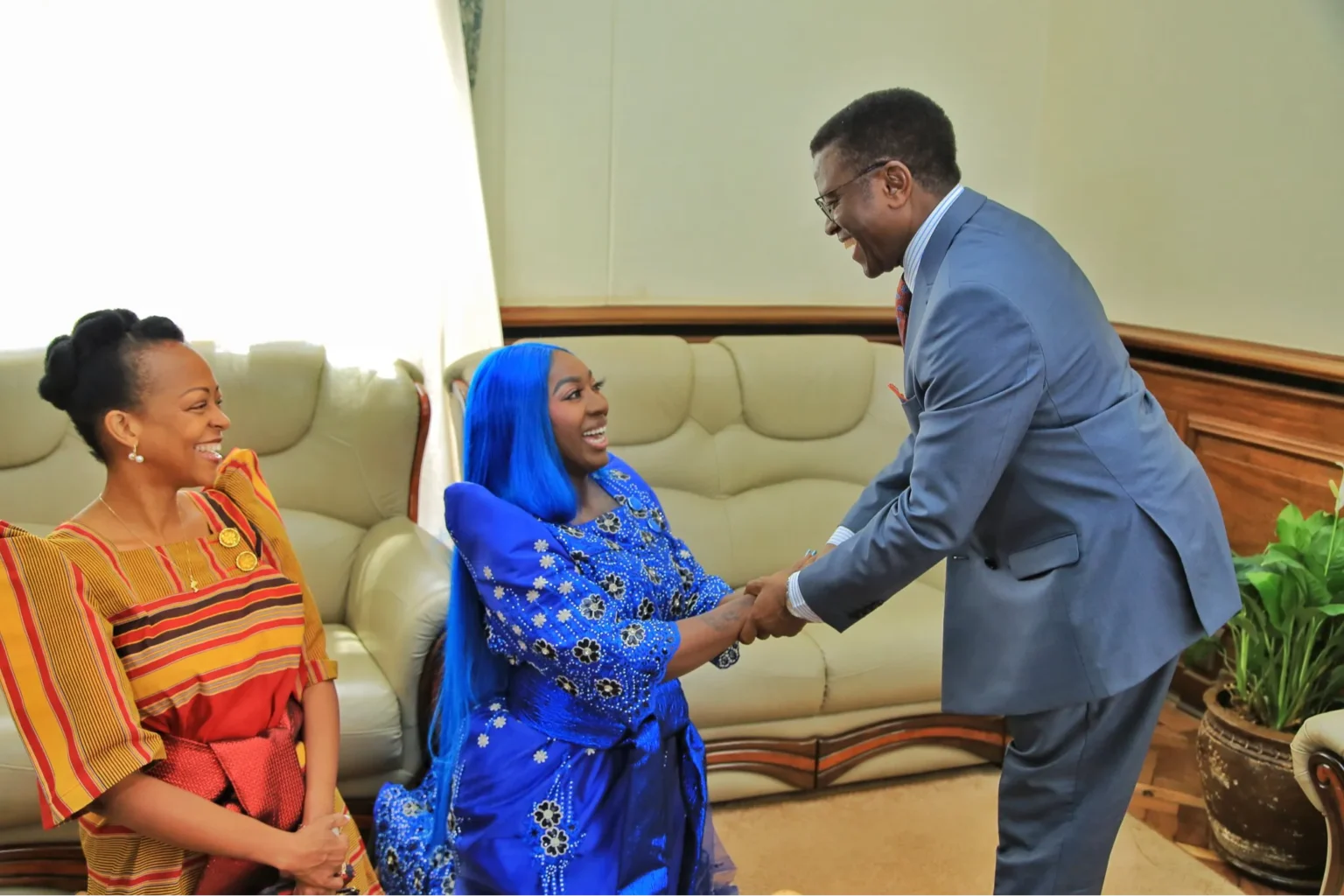
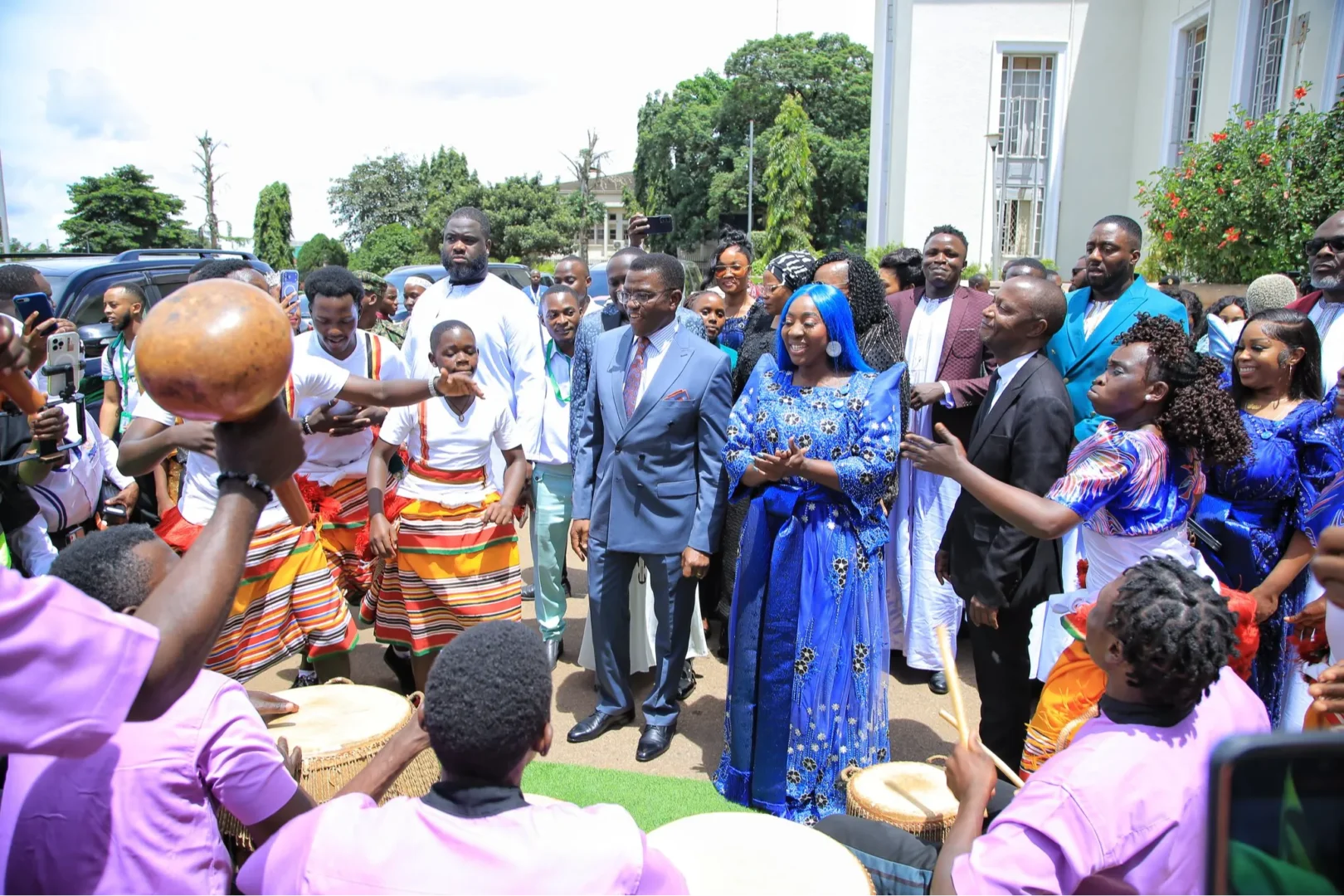
KAMPALA, Uganda — Jamaican dancehall star Spice has been formally welcomed at the seat of the Buganda Kingdom in Bulange Mengo, in a high-profile cultural visit that underscores Uganda’s growing push to position heritage tourism at the centre of its global brand.
The visit forms part of a week-long cultural immersion programme organised by the Uganda Tourism Board (UTB), ahead of the artist’s maiden performance in Uganda scheduled for May 9, 2026 at Lugogo Cricket Oval.
At a ceremony held in her honour, Spice was received by the Katikiro (Prime Minister) of Buganda, Charles Peter Mayiga, and bestowed the Kiganda clan name Nankula, formally placing her within the Enkula (Rhino) clan.
The naming carries deep cultural symbolism, linking the artist not only to Buganda’s clan system but also to wildlife conservation efforts, with proceeds from her concert expected to support rhino conservation initiatives.
The gesture reflects a broader strategy to merge entertainment, heritage and conservation into a unified tourism narrative.
Tourism strategy and cultural diplomacy
UTB Chief Executive Officer Juliana Kagwa described the visit as a milestone in Uganda’s tourism strategy, positioning cultural immersion as a prerequisite for international performers.
“We are making history here today. Spice is the first international artist to accept the invitation to truly explore Uganda, to walk through the Kasubi Tombs, to sit with the Buganda Kingdom, to name a rhino at Ziwa.
In the name of Explore Uganda, we must implore all international artists to explore Uganda before they leave. We will make it standard for every artist who performs on our soil,” Kagwa revealed.
The initiative aligns with a growing trend across African tourism boards to leverage global celebrities as cultural ambassadors, enhancing destination visibility through experiential storytelling rather than conventional marketing.
Buganda’s historical and cultural significance
Buganda remains one of Africa’s most influential traditional monarchies, with origins tracing back to the 14th century under Kabaka Kato Kintu. Today, it represents the largest cultural institution in Uganda, with an estimated 14 million people.
Among its most iconic landmarks is the Kasubi Tombs, a UNESCO World Heritage Site and burial ground for four Buganda kings; Muteesa I, Mwanga II, Daudi Chwa II and Sir Edward Muteesa II.
Welcoming the artist, Mayiga framed the visit as a symbolic reconnection between Africa and its diaspora.
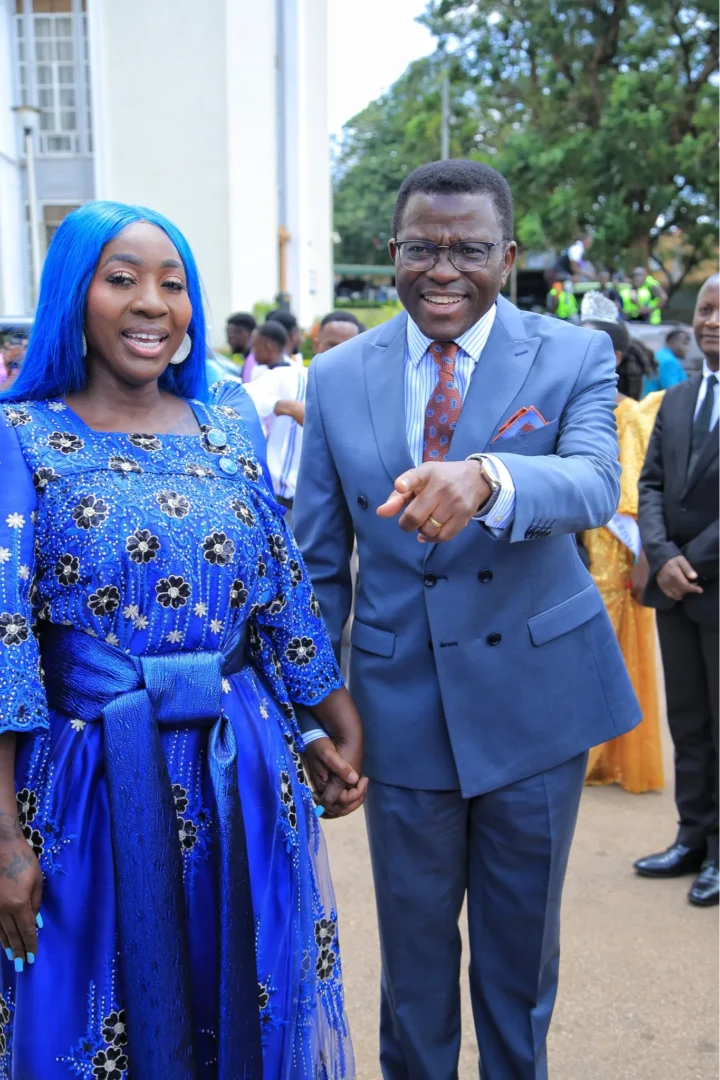
“I welcome our sister from Jamaica to the seat of the Buganda Kingdom, a kingdom that is over 900 years old and whose story is your story too. You are on the continent of your ancestors’ kingdoms, and this place holds that memory for you. Winston Churchill called Uganda the Pearl of Africa, and he was right. Beyond the Boda Bodas and the traffic, Uganda is one of the most beautiful countries on this continent and in this world. But the world needs to know more about our wildlife, our cultural way of life, our food and our music. These are among the most outstanding attractions on earth. Uganda’s cultural tourism is unique, and the Kingdom of Buganda is its living heart,” Mayiga said.
Spice: ‘I feel at home’
Spice, who has spent several days touring Uganda’s cultural and natural attractions, described the experience as deeply personal and emotional.
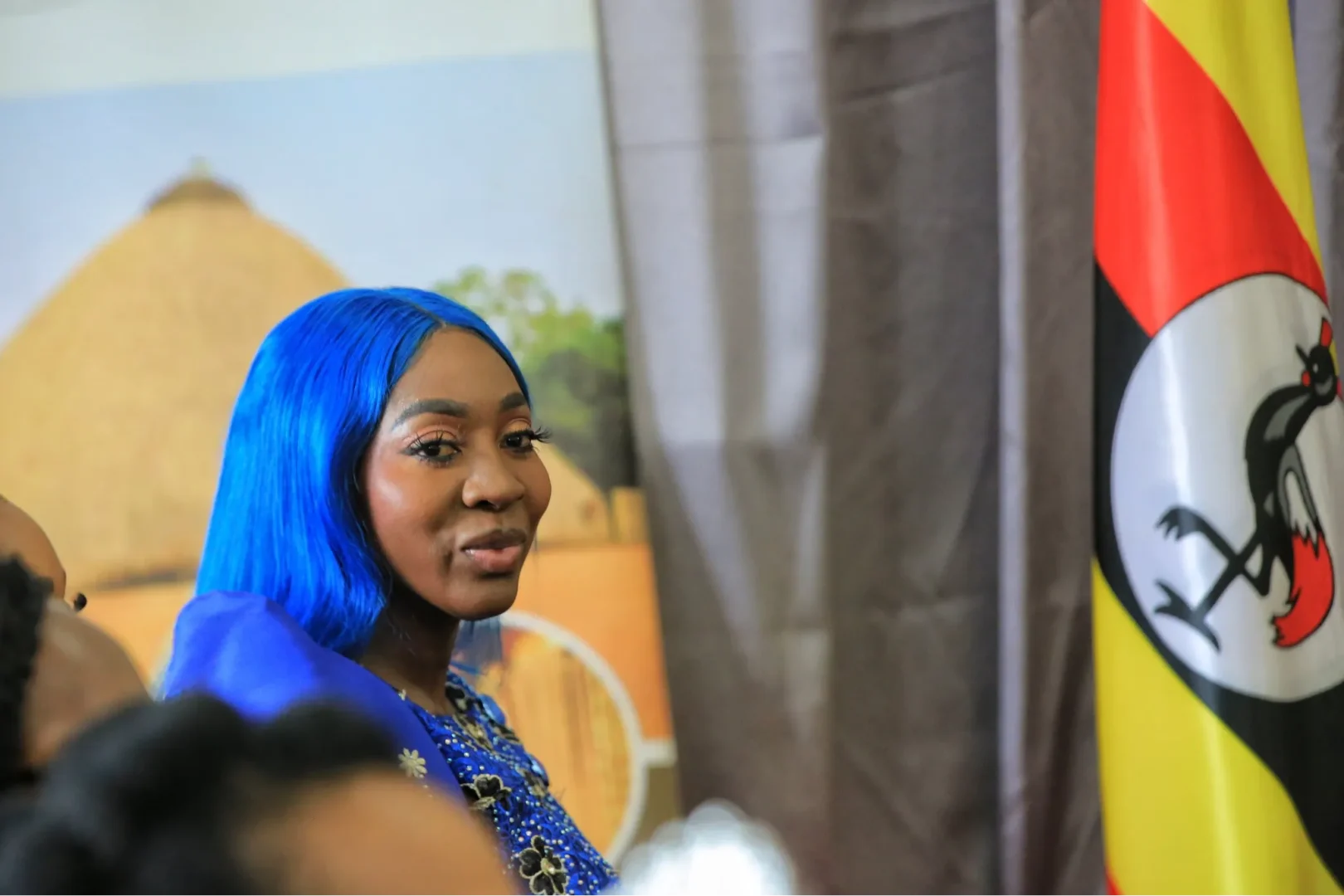
“It gives me great pleasure to be here. I have been taking in the awe of everything I have seen in Uganda, and what I feel most of all is love. I feel it everywhere I go. I feel at home. There is a bond here, a comfort that I did not expect and that I cannot fully explain. I am so grateful to explore your culture, because I want to explore all of it. The food is amazing, the culture, the warmth of the Ugandan people, the way this country loves dancehall it is an honour to be accepted here. And now to be given a name, to be placed in a clan, I am no longer just visiting Uganda. I belong to it,” Spice revealed.
The ‘Kabaka Trail’ and tourism expansion
The visit also highlights the development of the “Kabaka Trail” — a curated cultural tourism corridor linking heritage sites such as the Kasubi Tombs, Bulange, and the Uganda Martyrs Shrine Namugongo.
Tourism officials say the initiative is designed to deepen visitor engagement by combining history, spirituality and cultural identity into a single immersive experience.
Uganda’s renewed focus on cultural tourism comes amid wider efforts across Africa to diversify tourism revenue beyond wildlife safaris.
Industry analysts note that cultural tourism; including music, heritage and diaspora engagement, is becoming an increasingly important pillar in attracting global audiences, particularly younger travellers and the African diaspora.
By aligning global entertainment figures with heritage narratives, Uganda is positioning itself not just as a destination, but as a cultural experience rooted in identity, history and connection.