



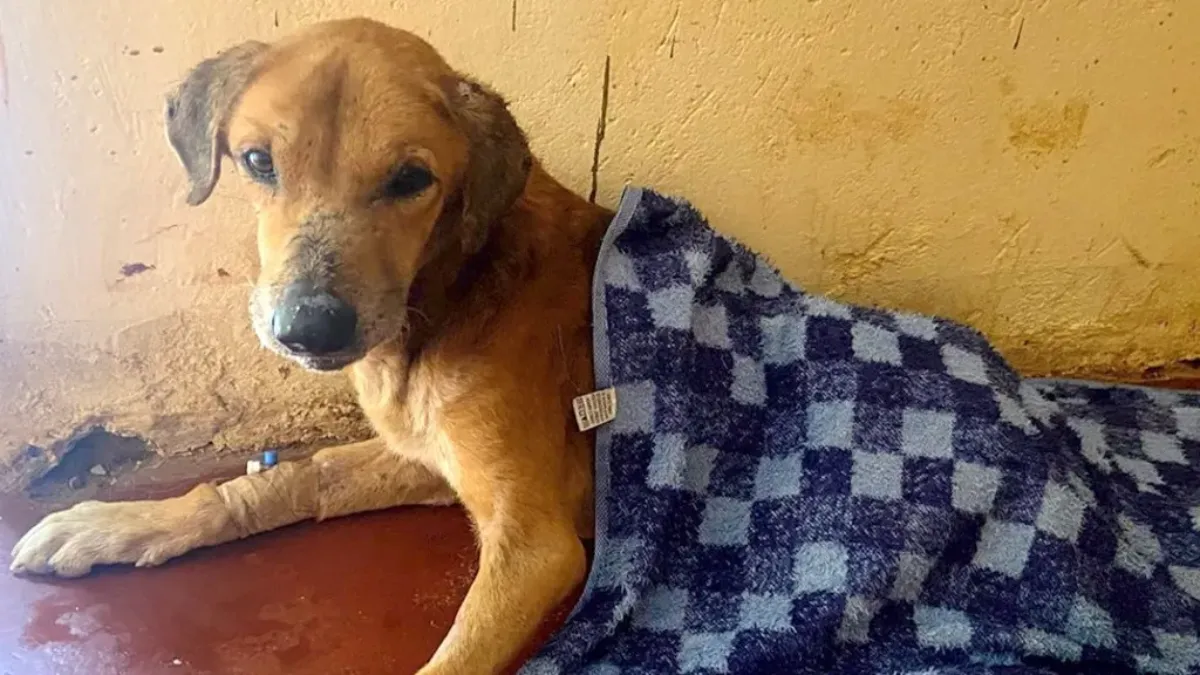
MITYANA, Uganda — A rust-coloured dog lying motionless by the roadside appears calm at first glance. But as the camera pans, severe injuries to its hind legs come into view. The animal is not resting, it is struggling to breathe.
The short video, posted on TikTok, urged viewers to donate to “save his life”, claiming the dog had been involved in an accident.
The dog, later given the name Russet by online users, would go on to feature in hundreds of fundraising posts across multiple social media platforms, despite never recovering from his injuries.
An investigation by the BBC has now uncovered how Russet became part of a wider network of alleged online animal rescue scams operating out of Uganda, where distressed animals are used to solicit donations from well-meaning international audiences.
Russet was filmed in Mityana, around 70km from Kampala, a location that has gained notoriety among online animal welfare communities for alleged fake rescue shelters.
According to animal welfare experts, the area has become a hub for content creators who exploit emotional videos of injured animals to raise money through platforms such as GoFundMe and PayPal.
Data reviewed by BBC Africa Eye suggests that over the past five years, more than $730,000 (£540,000) has been raised globally for Ugandan-based animal rescue campaigns, with nearly 40% linked to Mityana.
Bart Kakooza, of the Uganda Society for the Protection and Care of Animals, said the model exploits both local economic hardship and global emotional responses.
“There are young men in the countryside who are always looking for anything to do on the internet. On the other side, in the Western world, people are very passionate about animals. These young men realised they can make money if they can get a dog.”
BBC journalists conducting undercover work in Mityana found that multiple “shelters” operate from rented compounds, where the same animals are repeatedly used for different fundraising accounts.
Visitors are reportedly charged fees to film content, which is then uploaded with emotional narratives about starvation, injury, or abandonment.
A typical post shows dogs in cramped, unsanitary conditions with captions such as “our dogs are hungry” or “please help us save them.”
Investigators found that identical shelters and animals were being reused across multiple online identities, each linked to separate fundraising appeals.
During undercover filming, a man identified as Charles Lubajja allegedly admitted that some operators had escalated their methods to maintain donor interest.
“When they ran out of content, some people started cutting the dogs and asked for money,” he says.
He also described how funds raised were often diverted to personal gain.
“Once you receive the GoFundMe money, you use it to buy a car or build a house,” Lubajja says while being secretly filmed.
“Once you get a white donor, don’t treat them as a brother. You have to squeeze them [take their money]. Drain them.”
Lubajja later told the BBC he did not recognise Russet and denied personally harming animals, though he acknowledged that people pay to film at his shelter.
Russet’s story eventually reached a British donor who arranged his rescue from the scam network. He was taken to a veterinary clinic in Kampala for treatment.
Veterinarian Dr Isa Lutebemberwa later said the severity and symmetry of the injuries suggested they were unlikely to have been caused by a traffic accident.
“If you look at these bones, all of them were broken almost in the same position. If you are interested in breaking a bone, it’s the position you would go for, because it is the weakest.”
Despite surgery, Russet died days later.
“If you looked in his face, you would see that he had endured a lot of suffering,” Dr Lutebemberwa said. “Given everything he had gone through, he did not deserve to die.”
The BBC investigation highlights how viral compassion on platforms such as TikTok and Instagram can be manipulated into a monetised ecosystem built on emotional distress.
Nicola Baird, founder of the UK-based campaign group We Won’t Be Scammed, says she was previously deceived into donating.
“That’s when I thought: ‘Oh my goodness, I’ve enabled this abuse.'”
She now believes many injuries shown online are deliberately inflicted to attract donations.
“All that pain is just for a few donations,” she said. “No animal should have to live like this.”
However, others in Uganda argue that donors themselves are part of the problem, even if unintentionally.
Bart Kakooza said unchecked donations sustain the system.
“People who are donating money are causing the problem of animal cruelty here, because they keep on fuelling it, they are fanning the fire,” he said.
Also Read: Kampala woman offers Shs 1 million reward for missing dog ‘Scout’
Ugandan authorities previously conducted operations against suspected fake shelters, including a 2023 raid in Mityana where several injured dogs were rescued and suspects briefly charged before being released.
Activists are now pursuing private legal action in an attempt to hold organisers accountable.
However, enforcement remains inconsistent, and many shelters continue to operate under shifting online identities.
Animal welfare campaigners say the solution lies in donor awareness and stronger platform regulation, arguing that reducing funding flows would weaken the incentive structure behind the scams.
But with viral content still spreading across global platforms, rescuing animals already trapped in these systems remains a far greater challenge.
For dogs like Russet, investigators say, the internet’s appetite for emotional stories may have come at a devastating cost.