





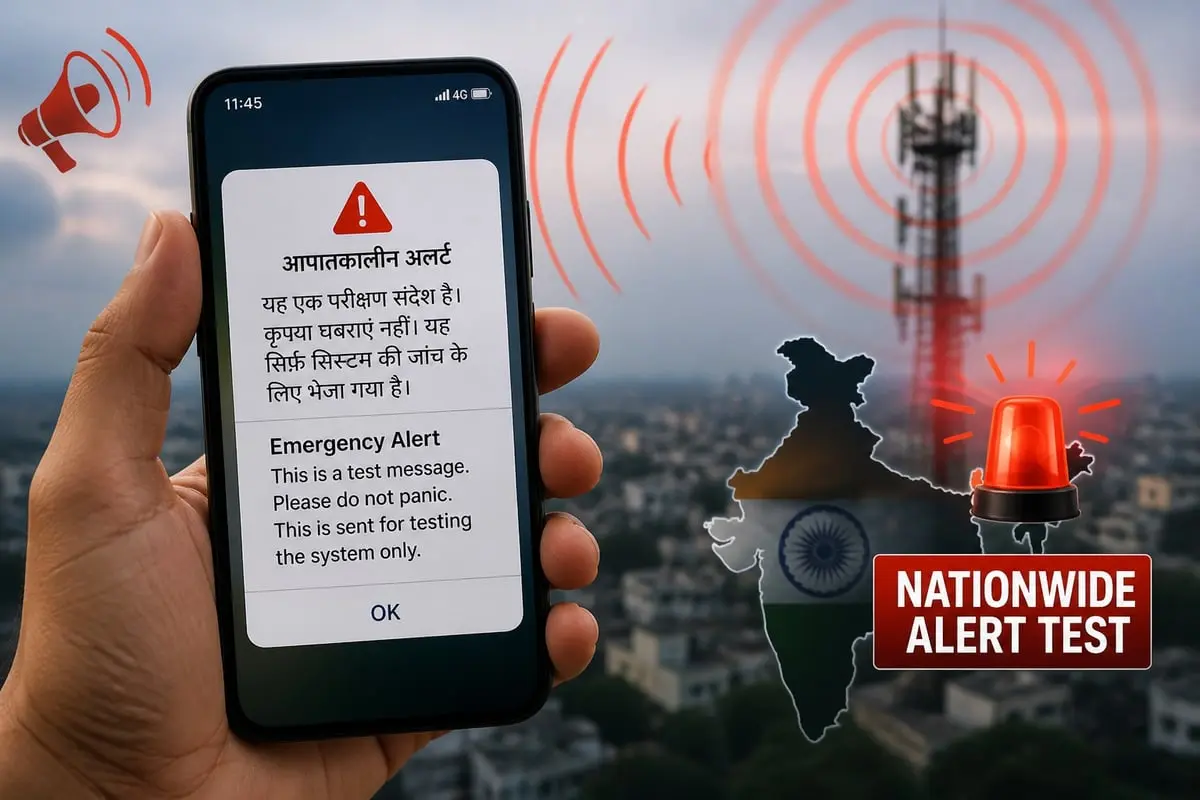
NEW DELHI, India — As global crises become increasingly frequent, from armed conflicts to climate-related disasters, India has rolled out a new cell broadcast messaging system designed to deliver instant emergency alerts to mobile phones across the country.
The system, built on indigenous technology, was activated in a nationwide trial on Saturday morning, with authorities confirming that a test alert was sent simultaneously to millions of devices.
In a post on X, the New Delhi Police said:
“The centre on Saturday sent a notification with a siren alert to almost all citizens around 11:42 to test the system,”
The message marked the operational testing of a platform designed to ensure rapid, wide-scale communication during emergencies.
Unlike traditional SMS alerts, cell broadcast technology allows messages to be transmitted simultaneously to all mobile devices within a defined geographic area. This enables near real-time warnings during crises such as natural disasters, industrial accidents, or security threats.
The test message read:
“India launches cell broadcast using indigenous technology, for instant disaster alerting service for its citizens. Alert citizens, safe nation. No action is required by the public upon receipt of this message. This is a test message. Government of India,”
Officials say the system is intended to reduce response times and improve public safety during high-risk events.
India’s Department of Telecommunications said the trial represents a significant step in strengthening national emergency communication infrastructure.
The department added that, in coordination with other agencies, it is preparing a broader public alerting framework aimed at ensuring timely and accurate communication during crises.
“This initiative reflects a continued commitment to building a more responsive and resilient communication ecosystem for citizens across the country,” the post noted.
The system has been developed under the National Disaster Management Authority (NDMA) using the Integrated Alert System known as SACHET, created by the Centre for Development of Telematics (C-DOT), the government’s telecom research and development arm.
“Sachet” translates to “alert”, reflecting its core purpose of rapid warning dissemination.
According to reports including The Indian Express, the platform operates on the Common Alerting Protocol (CAP) and is now functional across all 36 states and Union Territories.
Authorities say it has already been used extensively to issue warnings during cyclones, extreme weather events, and other emergencies, delivering more than 134 billion SMS alerts in over 19 Indian languages.
The introduction of Cell Broadcast Service (CBS) is intended to complement existing SMS-based systems, particularly in high-priority emergencies such as earthquakes, tsunamis, chemical leaks, gas explosions, and severe weather events.
Unlike SMS messages, CBS does not require phone numbers or personal data. Instead, it uses a one-to-many transmission model, broadcasting alerts to all compatible devices within a network coverage zone. This helps reduce congestion during emergencies when mobile networks are under heavy strain.
Technology references, including those cited by Google, describe CBS as a standardised telecommunications system widely used for emergency alerts globally.
Emergency alert systems using similar technology are already deployed in several countries, where they are used to warn civilians of imminent threats, evacuation orders, and natural disasters.
Also Read: Fire engulfs Kampala’s Haruna Tower as emergency response delayed
India’s rollout comes amid growing global emphasis on early warning systems as climate-related disasters become more frequent and severe.
Authorities say multiple test alerts may continue during the rollout phase to ensure system stability across telecom networks. Users will also have the option to manage alert settings on their devices.
Once fully operational, the system is expected to deliver alerts in multiple Indian languages, ensuring wider accessibility across the country’s diverse population.
Officials say the long-term goal is to create a unified, real-time national alert system capable of reaching virtually every mobile user instantly during emergencies, significantly strengthening India’s disaster preparedness framework.
