


NAIROBI, Kenya — A faction within Kenya’s opposition party, Orange Democratic Movement (ODM), is rapidly gaining traction, positioning itself as a significant force in the country’s evolving political landscape.
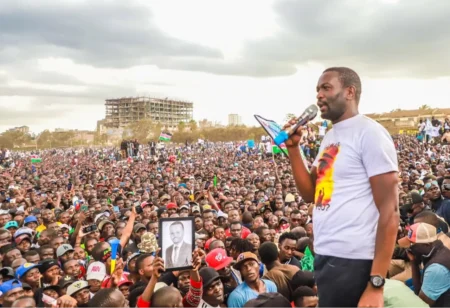
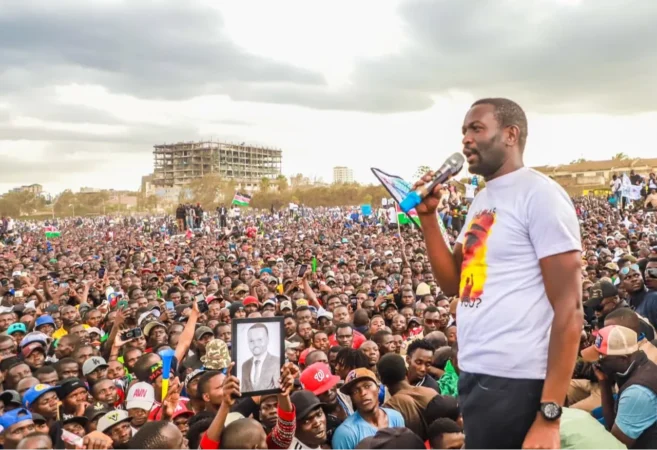
Known as Linda Mwananchi, the group, led by Nairobi Senator Edwin Sifuna, has drawn large, energetic crowds at its rallies, reflecting a growing appetite among sections of the public for an alternative political voice.
Analysts attribute the movement’s rise to its ability to simplify complex national issues into clear, relatable messaging.
Political analyst Fred Sasia notes that the faction has focused on everyday concerns such as the cost of living, taxation, governance and social justice, issues that resonate strongly with citizens facing economic strain.
“Sifuna’s communication style, often direct and confident, helps translate complex political ideas into language that people easily understand and connect with,” Sasia observed.
This approach has enabled Linda Mwananchi to frame itself as a citizen-driven movement rather than a conventional political bloc.
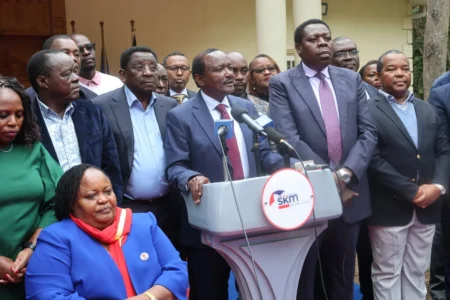
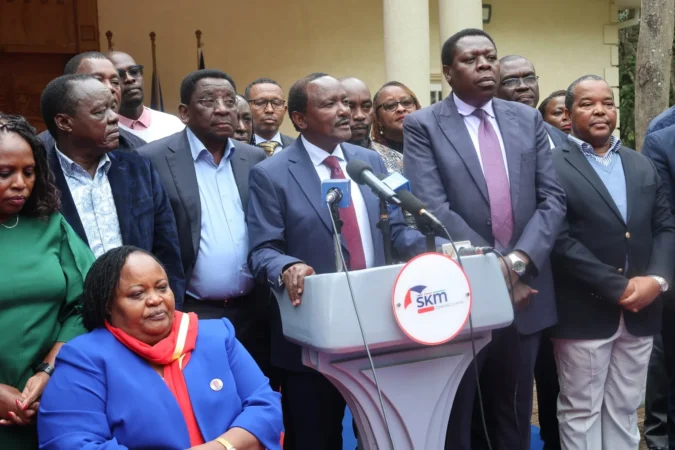
The faction’s rising prominence has also drawn recognition from broader opposition figures, including Mukhisa Kituyi, who described it as an unavoidable factor in any attempt to consolidate a united opposition.
“It is impossible to discuss a united opposition without factoring in Edwin Sifuna’s Linda Mwananchi; one cannot wish them away,” Kituyi said.
Despite this, efforts to unify opposition forces ahead of the 2027 elections remain fluid, with no clear framework yet in place.
Linda Mwananchi’s momentum has been reinforced by a dual mobilisation strategy—combining physical rallies with an aggressive digital presence.
Its events are marked by high turnout and organisation, while short, shareable clips of speeches circulate widely on platforms such as TikTok and X, extending its reach beyond rally grounds.
This hybrid strategy has proven particularly effective among younger voters, especially Gen Z, who are increasingly influential in shaping political narratives.
Political commentator Joseph Mutua notes that this demographic is actively engaged in amplifying the movement’s messaging.
“Many young people don’t just attend events; they actively participate, amplify messages online and shape the narrative themselves,” he said.
The faction’s composition reflects a blend of youthful leaders and experienced politicians, including Siaya Governor James Orengo.
Observers have drawn parallels with the “Young Turks” era within Kenya African National Union (KANU), when younger politicians began challenging established political structures from within.
This mix of experience and youth signals a broader shift in Kenyan politics, with increased emphasis on responsiveness, accountability and citizen engagement.
However, Linda Mwananchi’s rise has also been accompanied by a more confrontational tone.
Leaders within the faction have called for nationwide protests, framing them as a response to economic hardship, governance concerns and what they describe as shrinking democratic space.
James Orengo has already announced plans for a series of demonstrations in June, coinciding with the anniversary of Gen Z-led protests.
“We do not fear any prison, we do not fear death. We do not fear anything but fear itself,” Orengo declared.
While the movement has energised urban constituencies, analysts caution that electoral success in Kenya depends on more than public enthusiasm.
Also Read: IG Kanja intensifies crackdown on political gangs ahead of Kisumu’s Linda Mwananchi rally
“Elections in Kenya depend heavily on broad ethnic coalitions, regional kingpins, funding networks and grassroots structures across all counties,” Mutua explained.
“Without deeper penetration into rural voting blocs and strategic alliances with established political heavyweights, Linda Mwananchi’s impact may remain substantial but not decisive.”
Even so, the faction is already reshaping opposition politics.
By amplifying citizen concerns, mobilising younger voters and redefining political engagement, Linda Mwananchi is influencing both messaging and strategy within Kenya’s opposition.
“Whether it evolves into a central pillar of a United Opposition or remains a powerful but independent force, its role in shaping political discourse and mobilising citizens is unlikely to diminish,” Mutua added.