



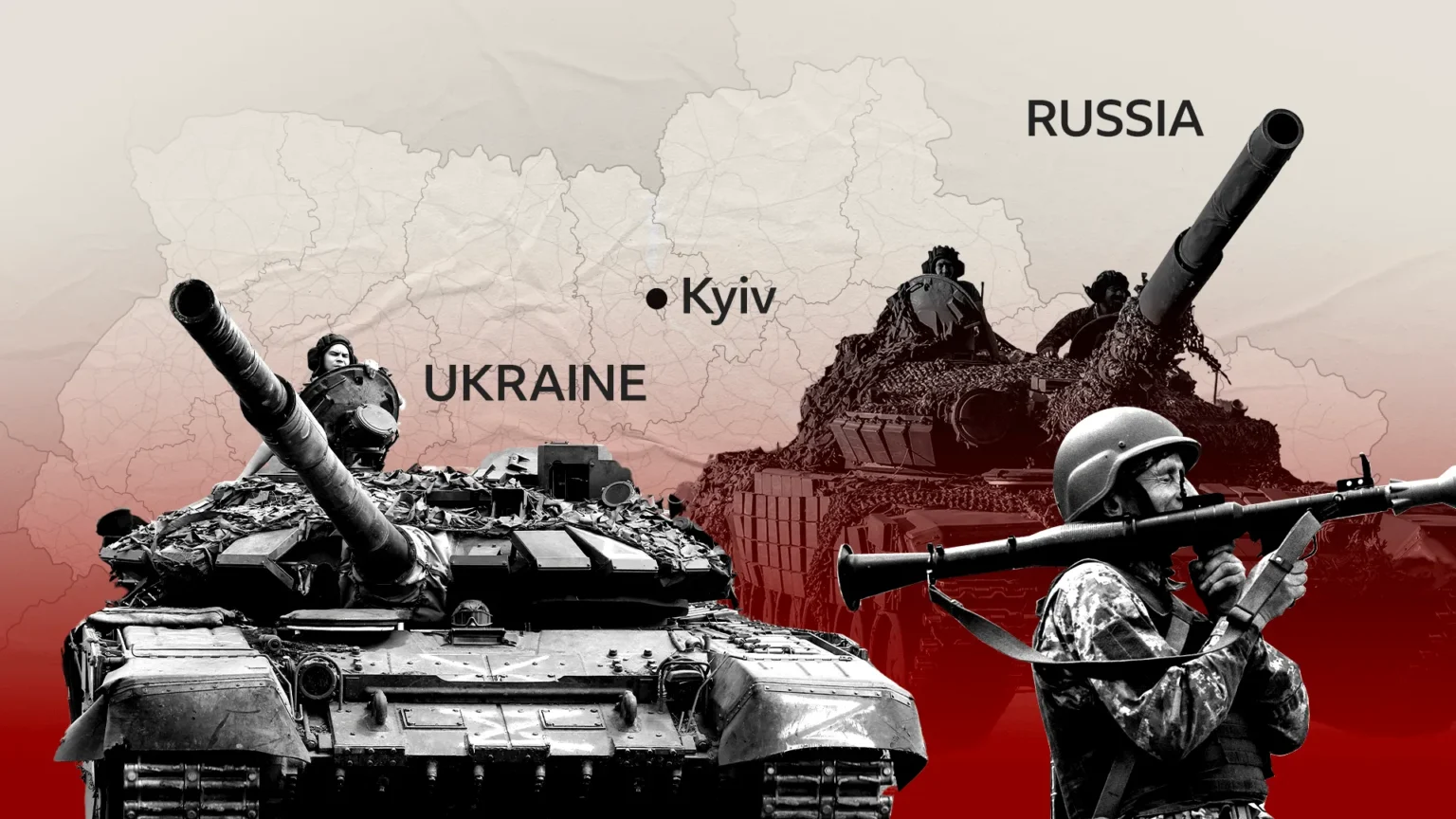
KYIV, Ukraine — Russia has launched one of its most intense aerial assaults on Ukraine in recent months, firing more than 700 drones and missiles in coordinated overnight strikes that killed at least 17 people, according to Ukrainian officials.
The attacks, which targeted multiple cities, mark a sharp escalation following a brief and fragile ceasefire over Orthodox Easter, during which both sides accused each other of repeated violations.
In the southern port city of Odesa, nine people were killed, while four others—including a child—died in the capital, Kyiv. A further four fatalities were reported in the central city of Dnipro.
Meanwhile, Russian authorities said two people, including a child, were killed in a Ukrainian drone strike in the Krasnodar region.
Air raid sirens sounded across Kyiv in the early hours, jolting residents awake before explosions lit up the skyline. Eyewitness footage circulating online showed fires raging and thick plumes of smoke rising from residential areas, with one video capturing a drone striking an apartment block.
Kyiv Mayor Vitali Klitschko said a 12-year-old boy was among those killed, with at least 45 others injured. He added that emergency teams rescued a mother and child from the rubble of a collapsed 16-storey residential building in the Podil district.
In the north of the capital, four emergency medical workers were among those wounded.
Regional authorities in Dnipro reported dozens of injuries alongside the fatalities, while images from the city showed buildings engulfed in flames following repeated drone strikes in recent days.
In Kharkiv, a drone attack injured two elderly civilians, while power outages were reported in the southern cities of Mykolaiv and Kherson.
Ukraine’s air force said Russia launched 659 drones and 44 cruise and ballistic missiles within a 24-hour period. While air defences intercepted the majority—636 drones and 31 missiles—officials confirmed direct hits in at least 26 locations.
The scale of the assault underscores the increasing intensity of long-range strikes, which have become a defining feature of the war since Russia’s full-scale invasion began in February 2022.
Ukrainian President Volodymyr Zelensky condemned the attacks, warning that weakening Western sanctions would embolden Moscow.
“Russia is betting on war, and that is exactly how the response should be – we must protect lives with all our might and press for peace with all our might as well,” he wrote.
Kyiv has also raised concerns over dwindling supplies of advanced air defence systems, particularly US-made Patriot missiles, which are critical for intercepting ballistic threats. Global stockpiles remain limited, with some diverted to other conflict zones, including the Middle East.
Ukrainian Foreign Minister Andrii Sybiha described the latest strikes as a “war crime” and urged allies to intensify sanctions and military support.
“All decisions required to increase pressure on the aggressor must be unblocked now,” Sybiha wrote on X.
The latest escalation comes as Ukraine seeks the rapid release of a €90 billion European Union support package aimed at bolstering both its defence capabilities and economic resilience.
The funding had faced political hurdles, notably opposition from Hungarian leadership, but recent political developments in Budapest have raised expectations of progress.
Also Read: Zelensky rejects Russian ceasefire demands, vows victory for Ukraine and global justice
Meanwhile, the broader diplomatic process aimed at ending the conflict remains stalled. Despite several rounds of negotiations, with the United States acting as a mediator, momentum has slowed amid shifting geopolitical priorities.
Ukraine continues to push for an immediate and comprehensive ceasefire as a starting point for peace talks. Russia, however, has maintained that a final settlement must be agreed before halting hostilities, a stance Kyiv argues undermines genuine peace efforts.
Now in its fifth year, the conflict between Russia and Ukraine has evolved into a prolonged war of attrition, characterised by sustained aerial bombardments, entrenched frontlines, and increasing strain on civilian infrastructure.
The latest wave of attacks highlights both the scale of Russia’s offensive capabilities and the growing challenges facing Ukraine as it seeks to defend its airspace while maintaining international support.