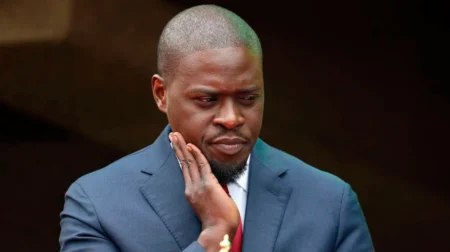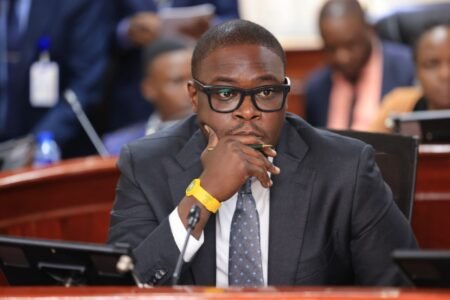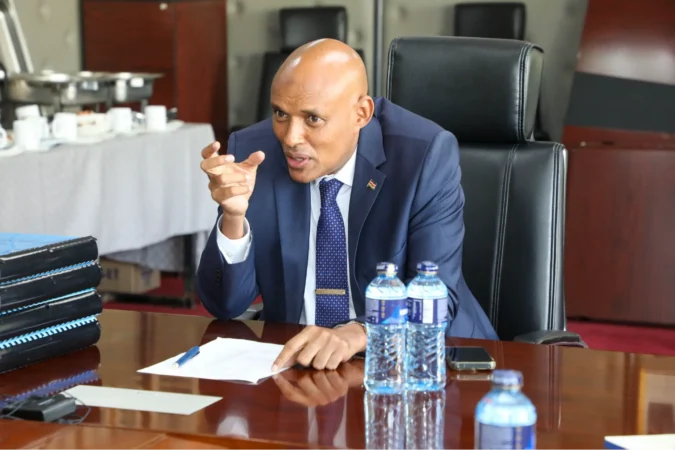
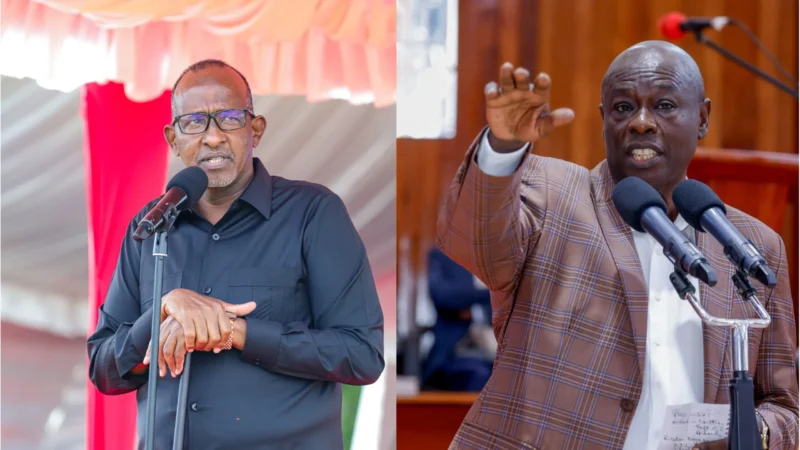




NAIROBI, Kenya — Nairobi Governor Johnson Sakaja appeared before the Senate on Tuesday, March 31, following an arrest warrant issued over his failure to honour summons by the Senate County Public Accounts Committee (CPAC).
His appearance comes amid escalating tensions between the Council of Governors (CoG) and the Senate over oversight processes, with governors accusing some lawmakers of misconduct.
Addressing the committee, Sakaja defended his earlier absence, stating it was in line with a directive from the CoG, which had advised governors to boycott the summons over alleged extortion claims involving some senators.
“I came to the Senate to meet the leadership and members of the committee. First, I am a law-abiding citizen,” Sakaja stated.
“I have appeared before these committees many times six times this year alone and about ten times last year. I have even responded to audit queries dating back to 2015, including those from my predecessors.”
The governor questioned why he had been singled out, noting that several county leaders had also failed to appear despite being summoned.
“It is wrong to single out one county or one governor. The drama we are seeing is not fair. The CoG is an institution just like the Senate, let the two institutions resolve the matter collectively,” Sakaja added.
He revealed that up to 29 governors had been summoned before the same committee, with most failing to attend, reinforcing his argument that the issue extends beyond an individual case.
Sakaja called for a negotiated settlement between the Senate and the CoG, emphasising the need for institutional engagement rather than confrontation.
“I have spoken to the Speaker of the Senate, the Chair of the Council of Governors, and my fellow governors. We need to resolve these issues so that we can be held accountable as required by the Senate,” he said.
He reiterated his willingness to continue appearing before the committee once the underlying dispute is addressed.
“I have appeared before the committee before and I will continue to do so. All we want is for the issues between the CoG and the Senate to be resolved,” he highlighted.
The development follows a tense standoff on Monday night, when police officers were deployed outside City Hall in an attempt to arrest the governor over contempt of Parliament.
Nairobi Regional Police Commander Issa Mohamud confirmed the operation, stating that authorities had been instructed to enforce the Senate directive.
Also Read: Police search for Nairobi Governor Johnson Sakaja after Senate orders arrest
“We have been looking for him, and we never got him, but we received information that he might be around. That is why we are here this evening. The work is not finished because we have not taken him to the Senate, but that we will do. We do not tolerate impunity. We have a country to protect,” Mohamud told the press on March 30, 2026.
The confrontation highlights deepening friction between county governments and the Senate over oversight authority in Kenya’s devolved system.
While the Senate is constitutionally mandated to scrutinise county spending, governors have increasingly raised concerns about the conduct of some committees, citing alleged intimidation and lack of procedural fairness.
The Sakaja case now sits at the centre of a broader institutional dispute that could shape future relations between the two arms of government, particularly as political alignments begin to shift ahead of the 2027 general election.